
Originally Published as: Building the Barndo Market: Elite Build Company Found a Niche.
Sean Jones had worked in the barndominium building industry in various positions for years when it occurred to him that something was missing. He considered the real estate business; there is a process for homebuyers. They work with a lender who helps them find out what they can reasonably afford, then they contact a realtor who helps them find what they are looking for and figure out the path to home ownership. However, if someone is starting out to build a barndominium, there isn’t really a process to follow.
Jones decided he wanted to fill that gap and help people who wanted to have a barndominium built, becoming a “concierge” who would help people through the whole process from finding land all the way to ownership. He moved from manufacturing to the construction side and started his own company.

Building wasn’t new to him; as a youth he had built pole barns.
“I knew I’d made millions of dollars for others, so why not go into business for myself?” Jones said.
Building Up the Company
Jones left a lucrative job and enthusiastically started building his company. Then, he was put to the test. COVID 19 hurt all business, but it was especially brutal to people who had just started out. The market was fairly stagnant. Happily Jones got a few jobs mostly based on referrals from people who knew him, and he had a great marketing strategy. The company hung on, and then in year two things began to pick up.
Marketing Strategy
The marketing strategy, at first, was to try everything. They had a well-designed website to provide leads and his marketing person invested in advertising, SEO, LinkedIn, and more. Eventually they found that the most successful marketing was photographs of their builds on social media, especially Instagram and Facebook, with links to the website.
“What’s interesting,” Jones said, “is at first we had a heavy emphasis on marketing, then the sheer amount of referrals meant the marketing had to diminish.”
Customers and Crews
While Jones started the company because of what he saw in the residential market, his biggest customers initially were his biggest suppliers. They had him building red iron commercial buildings.
“These supplier/customers gave me the ability to swim like a big fish from early on,” Jones said.
His main suppliers are Burrows Post Frame Supply and Taylor Building Systems.
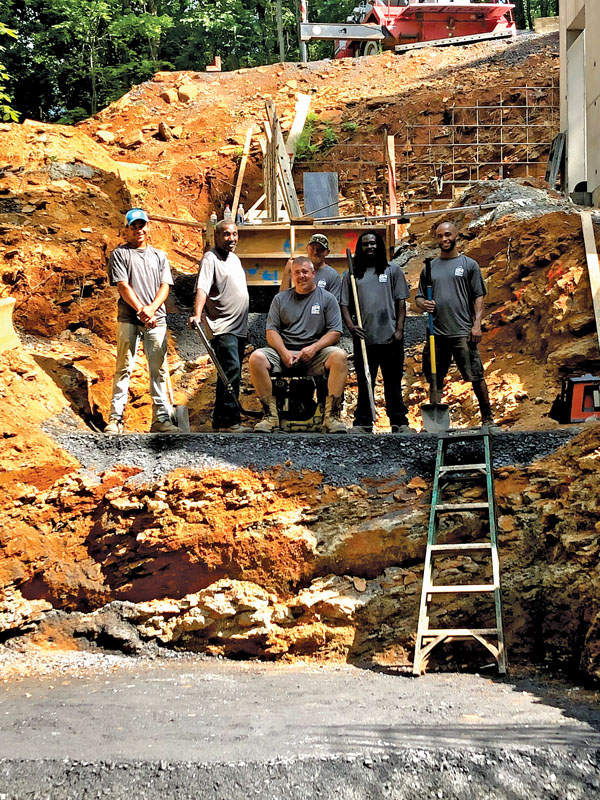
Early on Jones employed a handful of people. Now he has a pretty consistent complement of 24 employees. They do ground work prep, concrete, steel framing, steel roofs, cladding, and more.
Building in Oklahoma
Elite Build Company (EBC) is headquartered in Tulsa and completes projects across Oklahoma and adjacent states.
The area does not have seasonal frost; the soil rarely freezes, and if it does it’s short-lived. Once they dig through the top layer, they are good to go. This allows them to build year-round
Lots of rain and muck in spring and fall can cause challenges and delays as well as the occasional tornado passing through. Another challenge is the deep, thick rock, native to much of Oklahoma, driving the cost of ground prep upward.

Challenges
One of the challenges of ownership is managing people.
Jones said the people on your team can make a huge difference.He doesn’t like micromanagement; he feels that if you are doing that one of two things is going on: your leadership style needs adjustment or you have employees who don’t fit the job well.
“I work for my employees,” he said, “making sure they know what is expected and they have what they need to do it. Then I step aside and let them do their job.
“Surround yourself with problem solvers,” Jones advised. “If an employee is struggling, give them feedback and the chance to turn it around, but if they can’t then the sooner you cut ties with them, the better. It may feel unpleasant, but you have to put your company first.”
Another challenge can be the accounting side of the business. Presumably, you didn’t start a construction business because you love accounting and tax preparation, so you will need help.
“Find an accountant who loves tax code,” Jones said. “It can be a life changer. They may find loopholes that allow you to keep more money in the local economy, or spend money on a piece of equipment rather than sending a fat check to Uncle Sam. It’s better if the accountant is in-house,” he added. “The more functions you can bring in-house, the more you can control culture and mindset, and streamline efficiency. You are not at the mercy of someone else’s schedule and personnel.”
From Success to Super-sizing the Future
Jones said stubborness is his super power; it’s what kept him moving forward through challenges. He knew he had succeeded once he stopped questioning whether he could do it or not.
His wife’s support also helped, and there came a day when she said, “ Look around. You’ve done it! You built a full-blown successful company.”
It was an amazing feeling, Jones said.
Then the focus became how to scale it. The company began adding products and services as ROI drivers, bringing them in-house. He did red-iron and added steel frame, post-frame, prep work, then concrete.
Success Isn’t Just About Money
While making money is important, Jones believes there are other things that are just as important.
“I want a life first, then satisfying work,” he said. “I want time with my kids, I want to be at their functions, and I want to know their friends’ names. I want to have a church life, and I want to have time to date my wife,” Jones said.
The idea of family first isn’t just for management, it applies to every person on the team. If they have a function to attend, they let him know and they go.
Advice For Entrepreneurs
The hardest part of entrepreneurship is taking the leap Jones said, but there are things you can do to make it easier.
First do your due diligence. Check out the market, check out the competition, check out anyone you are thinking of partnering with. Next create a business plan and map out where you are going and how. Then once you feel confident that you have your plan, financing, and help possibly including a mentor or two in place, mentally burn your bridges. It’s sink or swim.
If you experience failure, that’s just an opportunity to pinpoint what went wrong and improve it. However, if you quit, then you have lost.
Advice For owners
Accountability is important. Jones said he is accountable to his employees as they are to him.
“They are encouraged to give feedback,” he said. “There is not time for egoes. If the team are not ‘yes-men’ and feel comfortable saying no and explaining why, that reflects good leadership.”
Lead by example Jones said, and never stop learning and growing. Improve your skills; work on improved communication and any other skills that could use some sharpening. For example, compare quotes given to customers at the beginning of jobs to reality, and research why they didn’t match so that quotes –or processes – can be improved in the future.
“Don’t try and chase everything,” Jones advised. “It’s okay to say no if it is done strategically. Take jobs that match your team’s skills and perfect those types of jobs.”
Finally, balance is an important thing to learn Jones said. “If you never turn your work off, you will run yourself ragged and become sloppy. Sometimes turn your phone to ring only for ‘Favorites.’ Other times you may have to leave the office and go out and work in the field until late to meet a deadline. That just shouldn’t become the every-day routine.”