Originally Published as: Home on the Range and in the Shop, the Studio, and the Garage: Barndominiums have evolved from a regional novelty to a national trend. This article outlines best practices for their construction and examines why industry leaders anticipate continued growth.
Barndominiums originated on a Connecticut horse farm and have become a significant residential segment nationwide. They now attract buyers in ranchlands, suburbs, and coastal areas, reflecting a notable shift in American housing.
Barndominiums appeal to buyers seeking faster construction, flexible interiors, and low-maintenance exteriors. They integrate living and working spaces, meeting the needs of homeowners who value adaptability.
To understand the drivers of barndominium growth and the qualities of high-quality builds, Rural Builder interviewed industry professionals. Their insights reflect a rapidly evolving market.
What the Barndominium Actually Is
The word itself was coined around 1989 by Connecticut real estate developer Karl Nilsen, who used it to describe planned residential communities built around horse boarding facilities—living quarters perched above or alongside working stables. The portmanteau of “barn” and “condominium” was precise for its moment: these were not converted agricultural buildings but purpose-designed mixed-use developments for equestrian-minded buyers who wanted their horses and their home address under one roof.
The concept expanded in the 1990s and early 2000s, moving beyond equestrian origins. By the mid-2000s, ‘barndominium’ had come to describe homes that combined living space with a workshop, garage, or multi-use bay, appealing to a wider audience. Texas became the trend’s primary hub due to available land and a tradition of versatile, cost-effective housing.
Barndominiums gained mainstream attention in 2016 when Chip and Joanna Gaines featured a conversion on HGTV’s “Fixer Upper.” The episode introduced the concept to a broad audience and generated significant interest. Today, barndominiums are rarely associated with horses and have become a mainstream residential category that challenges traditional housing norms.
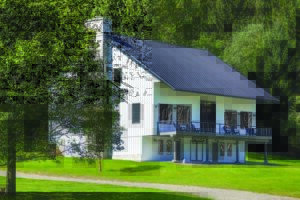
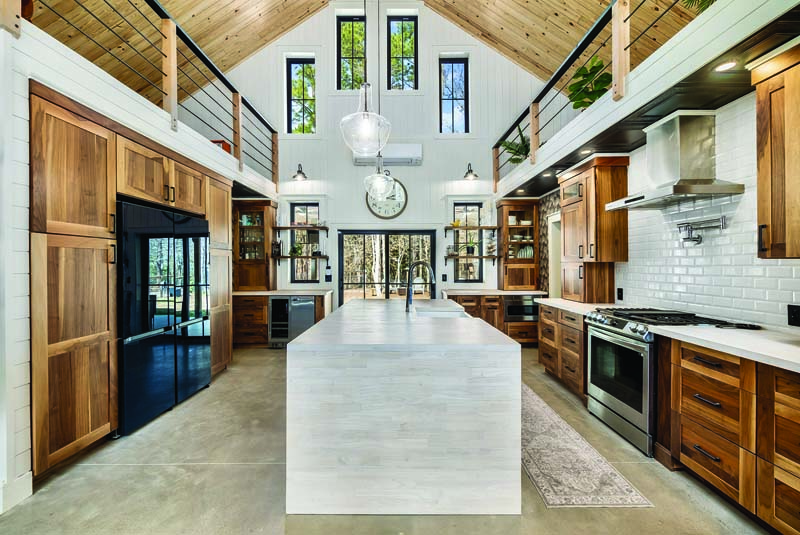
Modern barndominiums have little in common with their equestrian origins aside from the name. They are now purpose-built, fully engineered residences, often mixed-use, constructed with post-frame or steel-frame methods that eliminate interior load-bearing walls. This enables open, column-free interiors, flexible floor plans, low-maintenance metal exteriors, high ceilings, and integrated living and workspaces. These buildings serve as homes, workshops, storage, and entertainment spaces under one roof.
Barndominium construction costs typically range from $65 to $400 per square foot, with most projects averaging $100–$200 per square foot. Finish level significantly affects cost: basic builds are $65–$160, mid-range $160–$250, and luxury projects $250–$400+ per square foot. Build timelines are shorter than in traditional construction, with custom barndominiums often completed in six to nine months. Steel or metal exteriors also reduce long-term maintenance, eliminating the need for painting, siding, or rot remediation.
“Barndominiums offer consumers tremendous flexibility and options. The key advantage is that post-frame construction minimizes the need for interior load-bearing walls—that’s what creates the barn-like expansiveness people are drawn to.”
— Wick Buildings
The Case for Post-Frame Construction
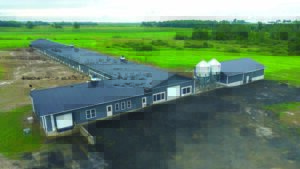
Post-frame construction—the structural method underlying most barndominiums—has deep roots in agricultural building. The basic principle relies on highly engineered, prefabricated, laminated columns (posts) set into the ground or anchored to a concrete pad, with trusses and secondary framing spanning the structure above. The load path runs directly from the roof to the column, bypassing the need for the network of interior bearing walls that defines conventional stick-frame construction.
For residential use, this method creates open, column-free interiors that buyers value. Structures up to 40 feet wide can be built without interior support columns, allowing floor plans to be based on preference rather than structural requirements. This design flexibility has fueled nationwide interest.
Post-frame construction offers an often-overlooked insulation efficiency advantage. While traditional stick-frame walls space structural members 16 or 24 inches apart, post-frame walls can space columns up to eight feet apart, allowing insulation to be installed in wide, continuous runs with fewer thermal bridges. This creates a more consistent thermal envelope and can lower heating and cooling costs over the building’s lifespan. Some builders have formalized this advantage into branded insulation packages that combine framing depth, insulation type, and vapor management to meet or exceed residential energy code requirements.
Post-frame construction also simplifies future expansion. Because columns carry the structural load, additions such as new bays or wings can be engineered without removing load-bearing walls, making expansion more cost-effective and less disruptive.
Specialized builders note that post-frame barndominiums typically require only a level site. Unlike stick-frame construction, which needs a continuous foundation, post-frame buildings can be built on a simple concrete slab, reducing preparation costs and timelines.
Design: From Open Canvasto Finished Home Structural Freedom and Floor Plan Flexibility
The clear-span interior of a post-frame or steel-frame barndominium is both its most celebrated feature and its most daunting design challenge. Buyers who arrive at the process imagining a blank warehouse-sized canvas often discover that the decisions required to turn that canvas into a functional, comfortable home are more numerous and consequential than they anticipated.
Custom barndominium design offers maximum flexibility but also greater complexity. Buyers must finalize all structural and mechanical details before construction. Experienced builders can guide this process, but careful planning is essential.
“We take the reins on layout planning, structural engineering, permitting, and physical construction. This allows our clients to focus on personalizing their home rather than juggling subcontractors or correcting miscommunications.”
— JJ Builders
Exterior Aesthetics: Beyond the Metal Box
Barndominium exteriors have evolved from functional, industrial designs to more sophisticated aesthetics, incorporating elements of agriculture, modern farmhouse, and contemporary design.
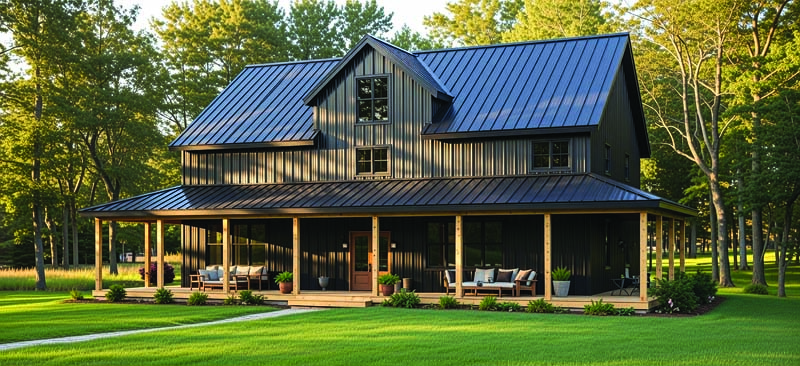
Covered porches are now common on premium barndominiums, serving both functional and aesthetic purposes. Deep front porches indicate residential use, soften commercial facades, and provide outdoor living space. Features such as hipped gable entries, cupolas, and dormers add architectural interest to otherwise utilitarian rooflines.
Wainscot, whether cultured stone, Versetta Stone, brick, or contrasting steel panel, has become a standard design element on higher-end builds. It protects the lower portion of metal siding from dents and damage common in rural settings and breaks up the exterior elevation, creating a more residential appearance. The visual warmth provided by stone or masonry wainscot is difficult to achieve otherwise.
Color preferences have shifted from white and gray to deeper tones such as matte black, charcoal, dark bronze, and deep green, often paired with lighter trim for a distinctive look.
Interior Finishes: Raising the Standard
Expectations for barndominium interiors have increased. Modern builds now feature finishes comparable to custom stick-frame homes while retaining the structural benefits of post-frame or steel construction.
Polished or stamped concrete floors are now a signature element, valued for durability, easy cleaning, and compatibility with radiant heat systems. Some owners have concrete stamped to resemble wide-plank wood flooring, capturing the warmth of wood without the maintenance concerns in spaces used for heavy equipment, animals, or vehicles.
Timber elements such as exposed ridge beams, heavy post-and-beam accents, and reclaimed-wood ceilings are widely used to soften the industrial character of steel and metal construction, creating a warmer, more residential feel. These features pair well with modern metal details, such as industrial-style light fixtures, cable railings, steel stair stringers, and exposed hardware, that highlight the building’s material heritage.
High-end barndominiums often include hardwood cabinetry, tile showers, stone fireplaces, custom metal railings, and luxury appliances. Dramatic vaulted ceilings and refined finishes define the premium aesthetic.
The Steel-Frame Approach: Engineering for Extremes
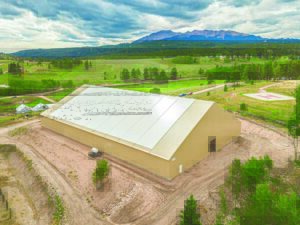
While post-frame construction is prevalent, a parallel approach uses pre-engineered steel buildings, historically found in warehouses and agricultural storage. This method introduces a different structural philosophy to residential applications.
Post-frame construction uses laminated wood columns as the primary structural element, while red-iron steel frame systems use welded steel moment frames engineered to precise load specifications. This distinction is most important in areas with extreme wind, heavy snowfall, seismic activity, or hurricane conditions, where conventional wood-frame construction is increasingly risky.
Pre-engineered steel buildings come with stamped engineering plans specifying wind speed ratings, snow load capacity, and seismic resistance for the building site. This provides buyers and lenders with structural accountability not always found in conventional residential construction. For homeowners who have seen stick-frame houses suffer storm damage, this documentation offers real reassurance.
Steel-frame residential builds often feature covered entries, overhangs, porches, lean-tos, solar panel provisions, finished drywall, drop ceilings, dormers, and varied rooflines. Buyers seek not only durability but also thoughtfully designed homes with industrial-grade materials.
“When I first saw the family’s plans, I knew this would be something special. The thoughtful details—from the welcoming front porch to the breezeway connecting the house to the shop—made this project a favorite of mine. Watching this home come together, from concrete pouring to steel framing, has been an incredible journey.”
— Gable Steel
Engineered steel construction differs from standard metal roofing in key ways. Some builders place roof fasteners on the high rib of steel panels, away from water flow, rather than in flat runoff areas. This reduces leak risk and extends the roof’s service life.
Custom Builds vs.Kit Packages:A Candid Assessment
Barndominium buyers must choose between a pre-packaged kit and a fully custom build. The best choice depends on budget, timeline, project complexity, and construction experience.
Kit packages—pre-engineered building systems that ship the structural components, metal panels, and roofing to the build site—offer a defined cost for the shell and can accelerate the initial framing phase. For buyers with construction experience or established subcontractor relationships, a kit can provide a cost-effective starting point. The shell typically arrives with stamped engineering drawings that meet the structural documentation requirements of most building departments.
With kit packages, buyers must manage all aspects beyond the shell, including foundation, utilities, and finishes. Without general contracting experience, this coordination can be challenging and increases the risk of miscommunication.
Custom builds, by contrast, bring a single contractor to manage every phase of the project from initial design through final punch list. The cost per square foot is typically higher, but the buyer is purchasing not just materials and labor but also the builder’s expertise, established subcontractor relationships, knowledge of permitting, and accountability for the finished product. For many buyers, particularly those building a primary residence rather than a secondary structure, the custom path represents the better long-term value.
“Don’t confuse shell completion with move-in readiness. The interior fit-out—everything from insulation to cabinetry—still takes time. Our role is to anticipate delays and keep the project moving forward with minimal disruption.”
— JJ Builders
The Detail That Defines the Building
Many barndominium owners consider the garage door the defining feature of their home. Unlike conventional houses, the overhead door in barndominiums is a key architectural focal point.
The barndominium door market presents technical and aesthetic challenges that go well beyond standard residential work. Oversized openings—any door wider than 10 feet or taller than 8 feet—are the rule rather than the exception. Common configurations include 12’ x 12’ bays for agricultural equipment, 10’ x 14’ openings for RV storage, and 14’ x 14’ or larger spans for commercial-scale shops. These sizes require engineered structural headers, commercial-grade torsion spring systems rated for 20,000 or more cycles, and openers—often jackshaft-mounted beside the door rather than overhead—designed for the weight and daily-use demands of a working space.
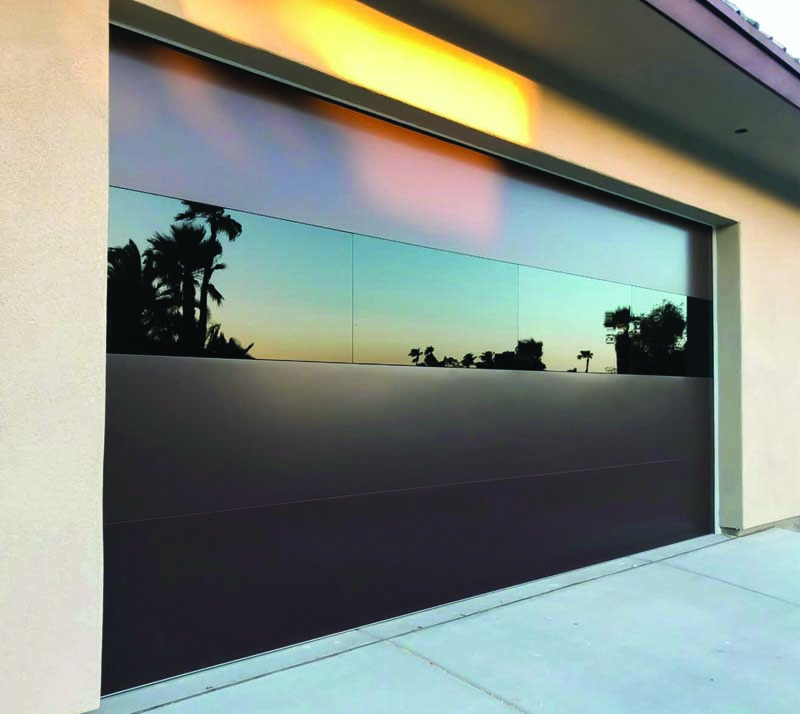
Beyond the shop and garage bay, the barndominium market has driven demand for a product category that barely existed a decade ago: residential-grade glass garage doors designed for installation in conditioned living spaces. Used as moveable walls in great rooms, dining areas, and sunrooms, these doors blur the line between interior and exterior living, flooding spaces with natural light and enabling the seamless indoor-outdoor connection that defines the barndo lifestyle at its most aspirational.
The technical requirements of this application are unforgiving. Standard commercial glass garage doors cannot simply be dropped into a conditioned residential wall opening. Building codes in most jurisdictions require these assemblies to meet residential R-value and U-value standards—thresholds for thermal resistance and heat loss that most commercial doors do not meet. Purpose-built residential glass door systems require higher-performance glazing, engineered thermal breaks, and precise specification to the climate zone of the building site. The result costs more than a commercial equivalent, but performs appropriately for a space that is heated and cooled year-round.
Oversized door openings require careful planning. Retrofitting them into a finished structure is costly and risky, so headers, column spacing, and foundations must be engineered from the start. Builders advise finalizing all door specifications before construction begins.
Door style is a major factor in establishing a barndominium’s character. Carriage-house doors add traditional warmth, while full-vision glass-and-aluminum doors create a contemporary industrial look. Flush steel doors in dark finishes provide a bold, cohesive exterior.
“A garage door in a barndominium is more than just security—it’s a statement. The right door ties the whole exterior together and gives the building its personality.”
— All American Overhead Door
Smart home integration is standard in premium barndominiums. Modern garage door openers offer remote access, automation, and security, meeting buyers’ expectations for convenience and connectivity.
Financing: The Final Frontier
Financing remains a challenge for the barndominium market. The hybrid nature of these structures has led to confusion among lenders, appraisers, and underwriters, who often lack comparable sales data and familiarity with the product.
The most reliable financing pathways currently available to barndominium buyers fall into three categories. USDA single-close construction-to-permanent loans are the strongest option for buyers building on land in eligible rural areas: a single closing covers land acquisition, construction costs, inspection fees, and even landscaping, with no down payment required for qualified borrowers. Farm Credit lenders—a nationwide network of customer-owned financial institutions that serve rural landowners and agricultural producers—are the second-most-reliable source, with a long track record of financing non-traditional rural residential construction. Local portfolio lenders, community banks, and credit unions that hold their own mortgages rather than selling into the secondary market represent the third path, offering more underwriting flexibility than national lenders in exchange for potentially shorter initial terms.
Buyers report that describing their project as a “custom home” rather than a “barndominium” can help secure approval from national lenders, reflecting underwriter unfamiliarity rather than a real property distinction.
Financing options are improving as the market matures. More comparable sales are helping appraisers and lenders accurately value barndominiums, making conventional mortgages more accessible.
What the Market Wants in 2026 and Beyond
Across the builders and product providers who serve the barndominium market, several converging trends define the category’s direction in the near term.
Storm resilience is now a national priority. As severe weather becomes more common, the engineered integrity of post-frame and steel construction has become increasingly important. Many buyers now prioritize durability after seeing traditional homes damaged by storms.
Solar readiness is now a standard design consideration. Standing-seam metal roofs, common in barndominiums, are well-suited for solar panels. Builders who plan photovoltaic layouts early are well-positioned as energy costs and sustainability influence buying decisions.
Multi-generational living has emerged as a significant driver of larger barndominium footprints. The ability to build a structure that accommodates two households—whether an aging parent’s suite, an adult child’s apartment, or a fully independent secondary dwelling connected by a breezeway—within a single post-frame envelope is a capability that conventional residential construction delivers only at high additional cost.
Demand for home-based business and hobby spaces is growing. As remote work increases, buyers are investing in barndominiums that support professional-grade workspaces —such as workshops, studios, and small manufacturing areas—uses that are often impractical in traditional homes.
Virtual planning tools are now standard in the builder-client relationship. Visualization software reduces miscommunication and shortens the design phase. Builders using these tools report higher client satisfaction and fewer costly changes.
Building the New American Dream
Barndominiums are now a mature housing category, supported by a strong supply chain, experienced builders, and a diverse national buyer base.
Barndominium buyers recognize that traditional homes often do not meet modern living needs. Barndominiums provide a faster, more affordable, and more adaptable alternative with lower long-term maintenance costs, better suited to today’s diverse lifestyles.
For the builders, manufacturers, and product specialists who have built their businesses on post-frame and steel construction, the barndominium market represents a validation of what they have known for decades: that the structural principles developed for agricultural and commercial buildings—clear-span efficiency, steel durability, engineered load paths—translate powerfully to residential construction when paired with genuine design attention and a real understanding of how clients want to live.
Barndominiums are now an established housing segment. The industry must continue advancing in design, financing, code compliance, and quality to meet evolving buyer expectations. Current trends show strong progress.
Builders & Manufacturers Featured in This Article
- Gable Steel | Pre-engineered steel barndominiums and “Steel dominium” systems gablesteel.com • Florida
- Morton Buildings | Post-frame homes, shophominiums, and agricultural structures since 1903 mortonbuildings.com • Morton, IL
- JJ Builders (JJ King) | Custom post-frame barndominiums and residential buildings jjbuilders.com• (717) 740-9570 • Holtwood, PA • Serving PA, MD, NJ
- Wick Buildings | Post-frame homes, barndominiums, and agricultural structures wickbuildings.com • Wisconsin
- All American Overhead Door | Residential and commercial overhead door sales, installation, and service allamericanoverheaddoor.com • (610) 932-4999• Oxford, PA • Serving DE, MD, PA
- Stoney Ridge Farmer | Pole Barn v/s Steel Building your dream shop or barndominium explained https://youtu.be/Jpgm5zVB4p8?si=7Qem67iGQM_-AsRx
Key Takeaways
To understand the factors behind the category’s growth and what distinguishes a well-built barndominium, Rural Builder interviewed builders, manufacturers, and product specialists. Their perspectives reveal a market undergoing real transformation.
Here are the key takeaways and best practices shared by industry experts:
• Invest time in upfront planning, including thorough site preparation
and clear prioritization of must-have features before design begins.
• Prioritize structural flexibility by choosing post-frame or steel-frame
building methods, which allow for customizable open floor plans
and easier future expansions.
• Work closely with experienced builders who can help navigate code
compliance, permitting, and specialized mechanical needs
unique to these structures.
• Plan for high-quality, well-specified garage doors and oversize
openings early, as they are a defining feature both technically
and aesthetically.
• Incorporate energy efficiency from the outset by selecting insulation
strategies and building envelopes that meet or exceed
residential code.
• Leverage virtual design and visualization tools to prevent
miscommunications and speed decision-making during
the design phase.
• Be realistic about schedules: while shells go up quickly, finishing a
barndo to residential standards takes time and attention to detail.
• Following these best practices helps ensure barndominium projects
deliver the performance and long-term value buyers expect.