Originally Published as: There Are Challenges with Everything: …But nothing we can’t handle!
As a result of a collaboration with mikeroweWORKS Foundation (www.mikeroweworks.org), Rural Builder is featuring profiles of Work Ethic Scholarship recipients in each of its issues. Over 3,000 scholarships have been awarded to trade-school students who value hard work and taking personal responsibility. Rural Builder applauds these students and wants to acknowledge their choice to apply their talents to skilled trades. Thank you, mikeroweWORKS Foundation, for your continuing efforts to close the skills gap and “reconnect the average American with the value of a skilled workforce.”
“The only way you are ever going to make any money is by going to college.” That statement has been made many times by many people, and James D’Eliseo heard it a lot. His dad was a banker and his mom was a nurse. They went to college, got degrees, and worked hard at well-paying jobs. Common wisdom has been saying that is “the thing to do” for decades. However, D’Eliseo didn’t like school. He had a hard time paying attention, and he knew college wasn’t for him.

Graduating Into the Working World
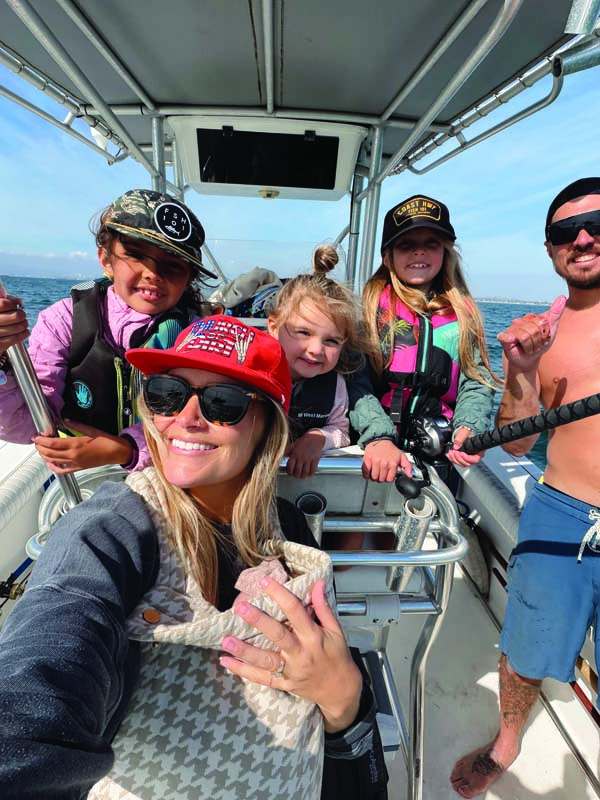
Headed toward high school graduation, D’Eliseo considered going into law enforcement, but he decided that wasn’t a job he would be comfortable with. Eventually he took a job as a bartender at a restaurant, and the work was alright, but then D’Eliseo started a family. With a wife, a child, and another baby on the way, a bartender’s paycheck wasn’t cutting it.
Then COVID-19 struck. At that point, he lost his job and had to make a plan quick. He knew a couple of linemen, so he knew there were lots of openings and the trade paid well. He applied and was accepted to NW Linemen College, CO.
A Quick Transition to Trade
The mikeroweWORKS scholarship was a lifesaver for D’Eliseo. The course he wanted to sign up for was only four months long, but it was four months without a paycheck.
“I wouldn’t be where I am today if it wasn’t for the mikeroweWORKS Scholarship,” D’Eliseo said. “My wife and our two children were living in an RV, while I trained and the scholarship money paid my educational expenses. We were traveling all over the state, working and learning.
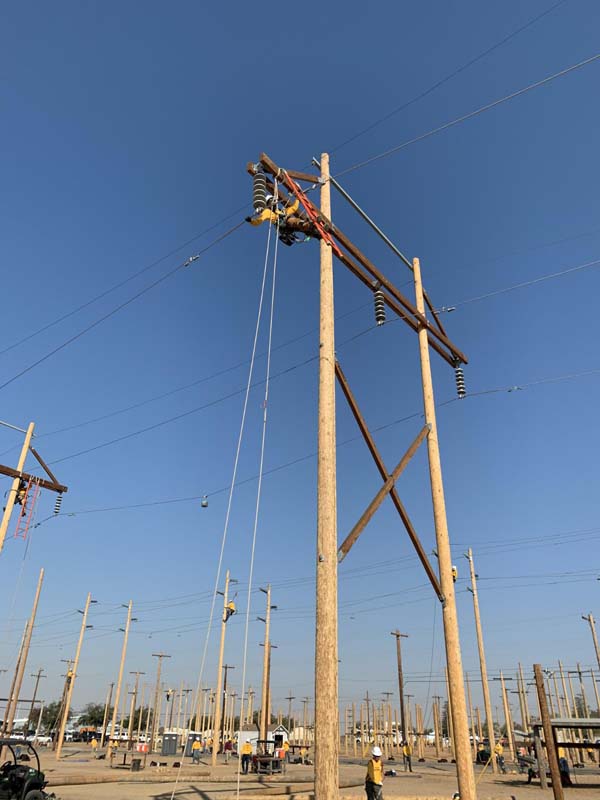
The lineman course was mainly about conditioning for the job’s physicality, climbing, and using the tools. The instructors were journeymen and D’Eliseo learned a lot by picking their brains.
On the Job
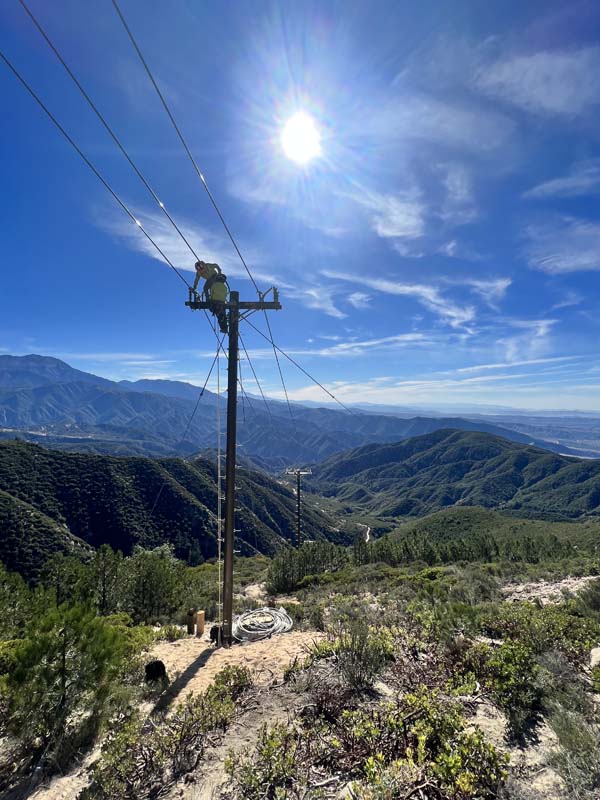
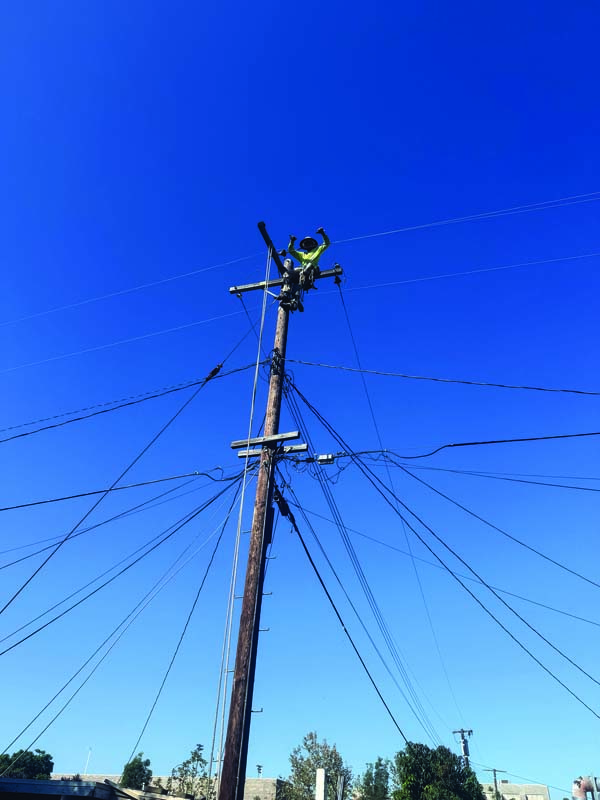
At the completion of his time at Northwest Lineman College, D’Eliseo began working as a transmission apprentice in Texas. He worked on high voltage towers from 66kb to 35,000 kb. He worked at that job for about a year and a half, and then he and his family moved to California where he got a job working for Southern CA Edison power company.
As an apprentice, D’Eliseo was required to continue his education, a month at a time twice a year. One perk: the company picks up the check for this extended training.
D’Eliseo said that his job is great; six months ago, he was upgraded to Journeyman status.
On an average day, D’Eliseo shows up at work early to find out the scope of the job he and his crew will be doing that day. Perhaps they are replacing a pole. He gathers the materials they will need and pulls the crew together for briefing. The crane is recruited and they deenergize or ground the pole, remove it, replace it, and put everything back as it was. At times, that would have been the end of the day, but more recently there has been a lot of work due to bad weather.
Crews are required to have a journeyman at all times, in case of emergencies, and the number of linemen who have reached that level are fewer than apprentices. For this reason, journeymen can end up working many hours. D’Eliseo said that in California a journeyman lineman can be required to work 24 hours straight, so they could start at 6am and continue working until the next day at 6am. However, the amount of time a lineman can be required to work is dependent on where you are working; different states can have different guidelines. This many hours can be difficult, but you stay hydrated, and you always have someone with you. Linemen look out for each other,
He has two friends who became journeymen before he did, and he could always call them and get the benefit of their experience. Now sometimes people call him to ask for his help.
“If I haven’t got an answer, I will call someone who does. Senior journeymen all help other linemen and each other,” he said.
Challenges Amidst Success
His biggest challenge on his career path was when he worked as an apprentice. Apprentices put in hundreds of hours in training. He had four kids, and he was trying to learn a new job while still being there for his family. He credits his wife’s help for getting them through that time.
The time challenge has not disappeared because he has been promoted; journeymen are needed so much that his employers want him to work all of the time, but of course family is important, too.
One thing D’Eliseo said that he would do differently if he could go back. He would have started his lineman training earlier, and that could have meant he got through the apprenticeship before his children were born.
The future holds more work as a lineman, D’Eliseo said. He would like to travel to different states, learning the differences in the code and how things are done as he goes. As far as the challenges of traveling around with four kids, he responded, “There are challenges with everything, but nothing we can’t handle.