Ventilation is critical in greenhouses and serves more purposes than you might think. Ventilation is, of course, climate control (heat retention and cooling) but also humidity and condensation control, which plays a major role in disease prevention and also impacts pest control and human comfort.
Greenhouse Designs Vary Depending on Purpose
Let’s consider for a moment the use of the greenhouse. I have visited an operation that was using greenhouses for three different specific purposes, all with very different demands requiring different ventilation systems and approaches.
One greenhouse was simple and focused just on season extension with in-ground plants. The second greenhouse was winter-ready and was focused on starting seeds and growing seedling plants in the winter and doing some continued production in the summer. The third was a multi-use space that included functioning as a dining room for an on-farm restaurant in the fall and into winter. This broad array of uses may not be typical for most operations with greenhouses, but it does provide a good example of the breadth of uses and their demands for ventilation and climate control.

Types of Greenhouses
There are a few types of structures that fit the term “greenhouse,” but some distinctions need to be made. Some are designed mostly for season extension, some for year-round use regardless of the weather, and some are a variation in between. For the purposes of this article, we will define the extremes, and what is in between will become pretty clear. In any case, ventilation is important in a greenhouse to control temperature and humidity.
Season-Extending Greenhouses
Structures designed for extending the season are often simpler in design and generally shorter-longevity structures. Hoop houses would fit this category. In addition, some unheated greenhouses designed for in-ground plants or plants on platforms or tables would also fit this type of structure. Growing plants in the ground is often a feature of season-extension type greenhouses, as the heat from the ground is used to help keep the greenhouse warm.
Ventilation for a season-extension greenhouse is usually accomplished by means of side curtains that can be raised and lowered. Side curtains are a type of passive ventilation system that are quite effective but are impractical in the winter or at times with lots of weather fluctuation, as they require manual adjustment (raising and lowering).
Year-Round, All-Weather Greenhouses
Classic greenhouses are all-weather structures designed to provide a year-round growing season or adjust for a different climate to deliver a subtropical climate inside a structure built in a temperate or even frigid climate. These types of structures require significantly more for ventilation, as they’re likely to be dealing with both heating and cooling associated with their ventilation, as well as humidity control.
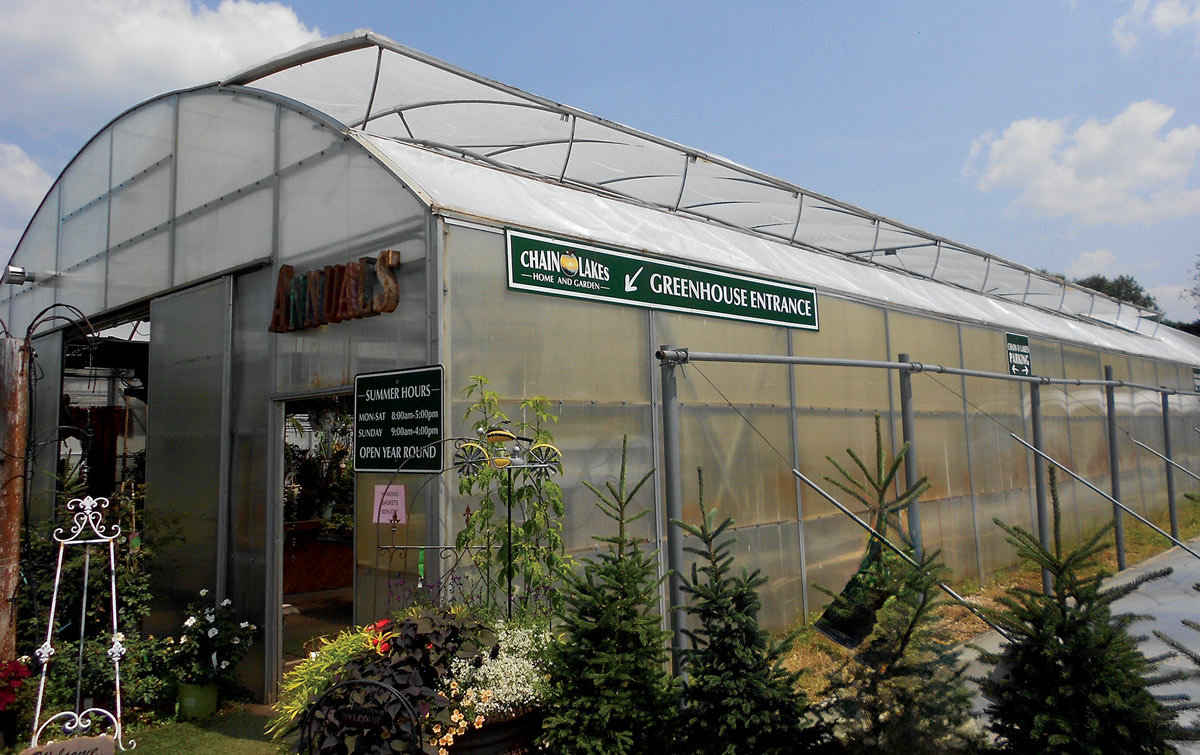
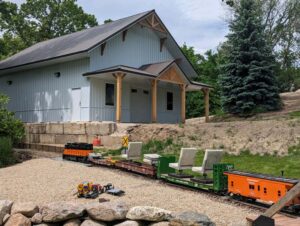
In this Chain O Lakes Home and Garden greenhouse, a roof panel opens along half the length of the building to allow passive ventilation. Warm air rises out the top, drawing cooler air from below to replace it. Shield Wall Media photo.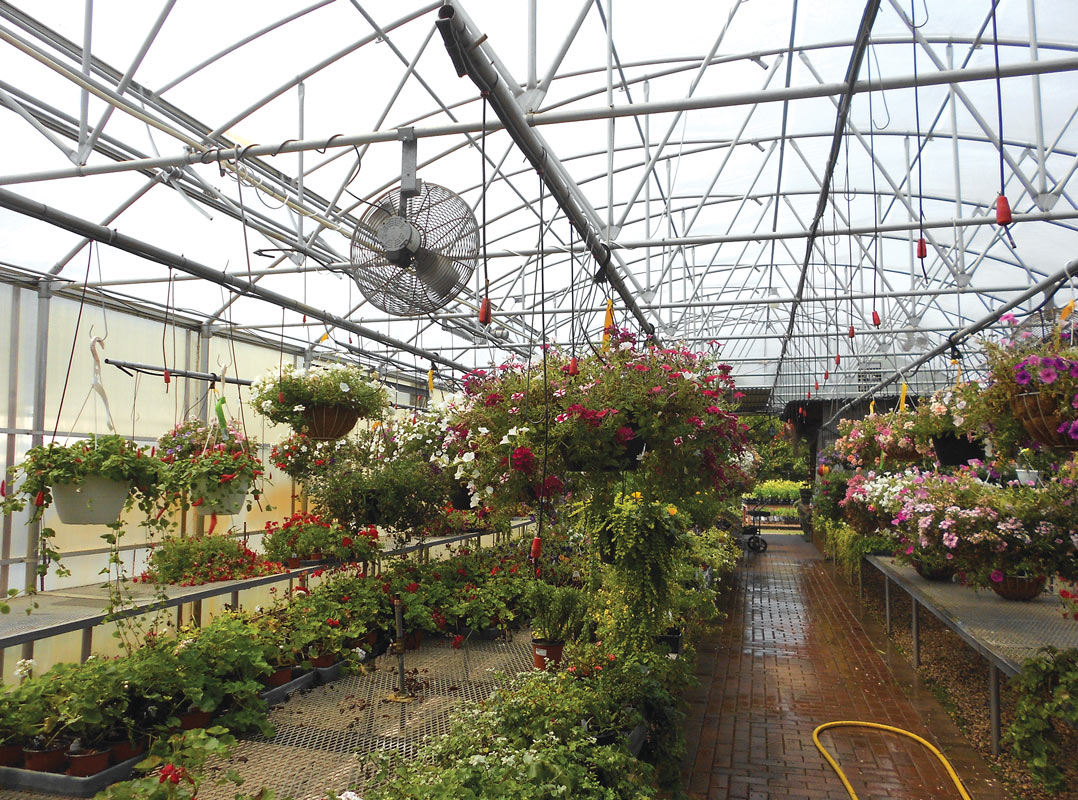
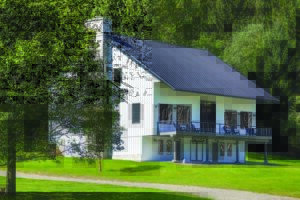
Strategically positioned fans circulate air to help regulate ventilation in this greenhouse operated by Chain O Lakes Home and Garden in Waupaca, Wisconsin. Shield Wall Media photo.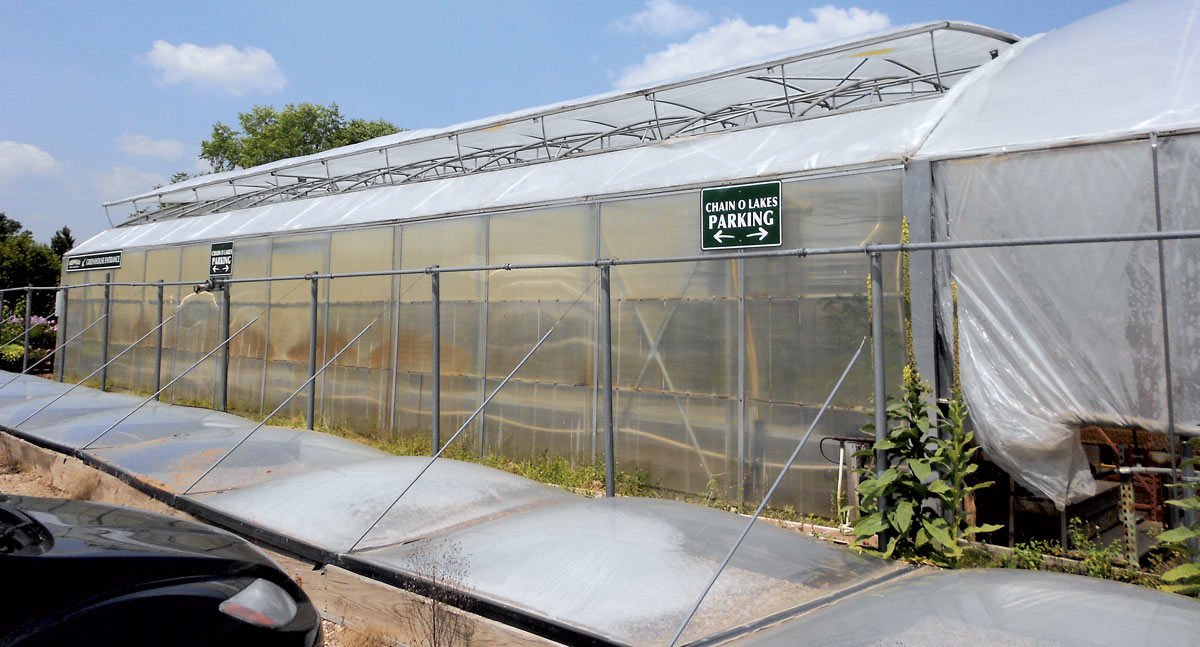
During the summer, Chain O Lakes Home and Garden’s passive ventilation system requires relatively little intervention. They only close the roof for a storm or high winds. However, early in the season, when there are colder temperatures, the roof opening and closing needs to be monitored more closely. Shield Wall Media photo.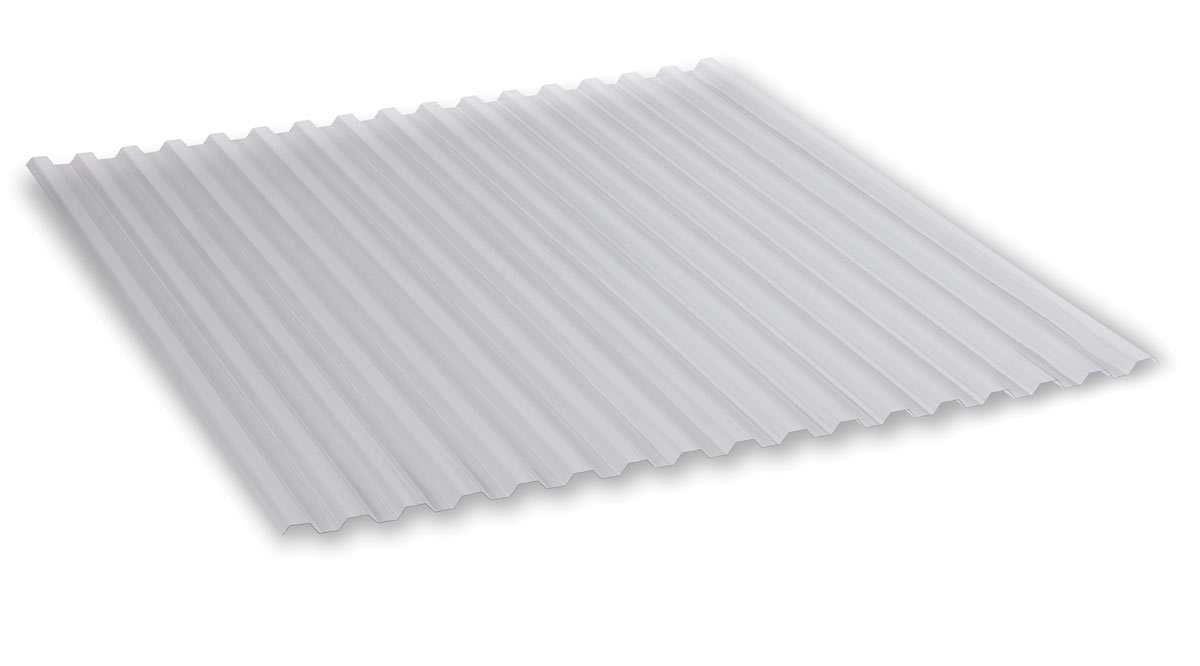
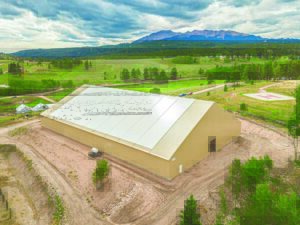
Some higher-end commercial greenhouses are covered with polycarbonate panels rather plastic film. The polycarbonate shown here is Palram America’s DYNAGLAS corrugated monolithic sheet. It is more durable than plastic film but is generally used in warmer climates that don’t need insulation. Photo courtesy of Palram Americas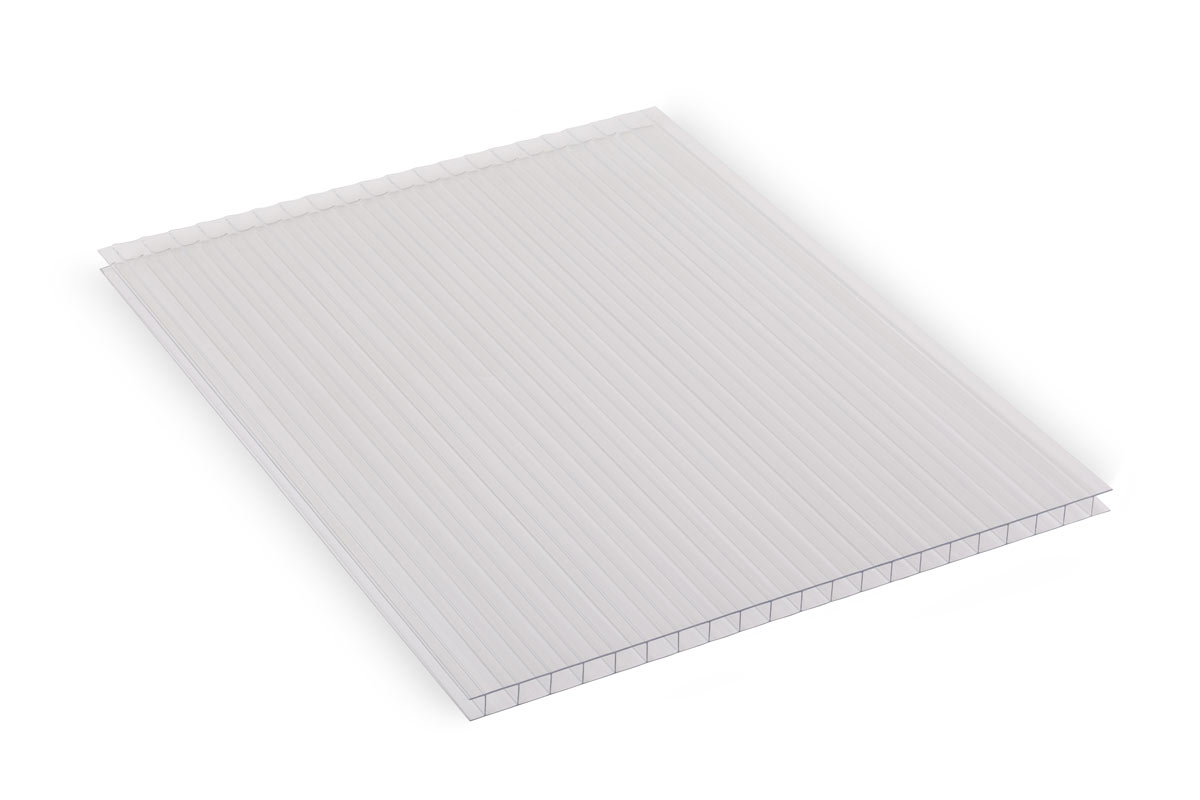
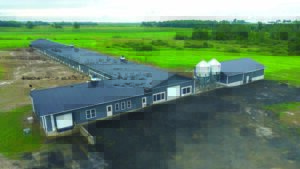
Palram America’s twin-wall THERMAGLAS polycarbonate has a single layer of air spaces that help insulate a greenhouse. Photo courtesy of Palram Americas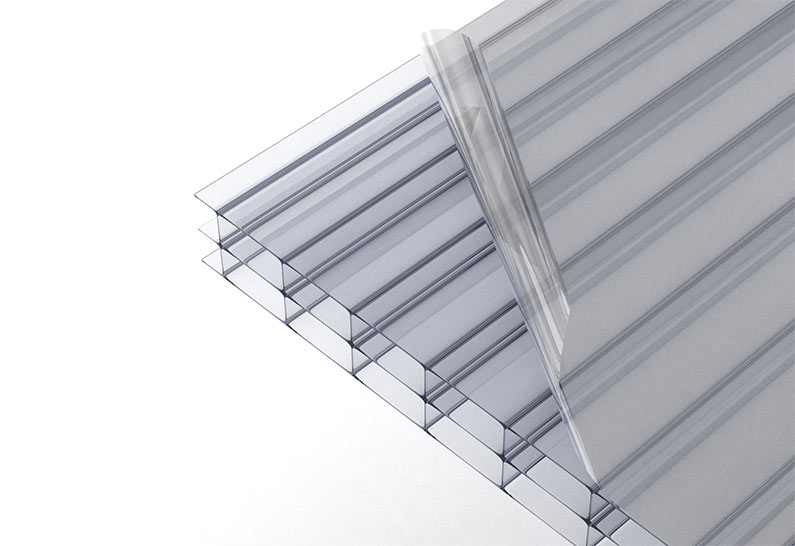
V
entilation is critical in greenhouses and serves more purposes than you might think. Ventilation is, of course, climate control (heat retention and cooling) but also humidity and condensation control, which plays a major role in disease prevention and also impacts pest control and human comfort.
Greenhouse Designs Vary
Depending on Purpose
Let’s consider for a moment the use of the greenhouse. I have visited an operation that was using greenhouses for three different specific purposes, all with very different demands requiring different ventilation systems and approaches.
One greenhouse was simple and focused just on season extension with in-ground plants. The second greenhouse was winter-ready and was focused on starting seeds and growing seedling plants in the winter and doing some continued production in the summer. The third was a multi-use space that included functioning as a dining room for an on-farm restaurant in the fall and into winter. This broad array of uses may not be typical for most operations with greenhouses, but it does provide a good example of the breadth of uses and their demands for ventilation and climate control.
Types of Greenhouses
There are a few types of structures that fit the term “greenhouse,” but some distinctions need to be made. Some are designed mostly for season extension, some for year-round use regardless of the weather, and some are a variation in between. For the purposes of this article, we will define the extremes, and what is in between will become pretty clear. In any case, ventilation is important in a greenhouse to control temperature and humidity.
Season-Extending Greenhouses
Structures designed for extending the season are often simpler in design and generally shorter-longevity structures. Hoop houses would fit this category. In addition, some unheated greenhouses designed for in-ground plants or plants on platforms or tables would also fit this type of structure. Growing plants in the ground is often a feature of season-extension type greenhouses, as the heat from the ground is used to help keep the greenhouse warm.
Ventilation for a season-extension greenhouse is usually accomplished by means of side curtains that can be raised and lowered. Side curtains are a type of passive ventilation system that are quite effective but are impractical in the winter or at times with lots of weather fluctuation, as they require manual adjustment (raising and lowering).
Year-Round, All-Weather Greenhouses
Classic greenhouses are all-weather structures designed to provide a year-round growing season or adjust for a different climate to deliver a subtropical climate inside a structure built in a temperate or even frigid climate. These types of structures require significantly more for ventilation, as they’re likely to be dealing with both heating and cooling associated with their ventilation, as well as humidity control.
Ridge/Roof Vents
Ridge or roof vents form an important part of a greenhouse ventilation system, especially for smaller commercial greenhouses that rely mainly on passive ventilation, where the warm air rises and escapes through the roof and pulls cooler air in to replace it.
“We have three greenhouses where the roof opens up,” said Colton Wegener, co-owner of Chain O’ Lakes Home and Garden in Waupaca, Wisconsin. “In each greenhouse, one half of the roof opens up two to three feet. We’ve found that the opening in the roof works pretty well for us. There’s a track by each of the roof framings, and it opens the roof up, and we have one wall that rolls up and down. We also have small fans inside, four fans per greenhouse. They create a circular motion. The new greenhouse we’re putting up this fall will have an exhaust fan about 4’ x 4’ or 5’ x 5’ square. It’s a pretty good size.”
During the summer, the passive ventilation system they currently use requires relatively little intervention, Wegener explained. “The only time we close the roof is when there’s a storm coming or high winds. Otherwise, we leave them open. However, early in the season, when there are colder temperatures, the roof opening and closing needs to be monitored more closely, so in the spring, it’s a little more labor intensive. But Chain O Lake Home and Garden is constantly changing and adapting. “As we continue to grow, we will be switching to an automated system, where we can control everything from our phones,” Wegener said. “It’s currently expensive, but as AI becomes the new normal and automated systems become more widespread, prices will drop.”
Polycarbonate-Covered
Greenhouses
Some higher-end commercial greenhouses are covered with corrugated monolithic sheet or flat twin-wall or triple-wall polycarbonate panels, rather than plastic film. Polycarbonate is lightweight yet sturdier than plastic film, and the multi-wall polycarbonate panels have air spaces that provide more insulation than single-layer plastics. “Typically, multi-wall is used for its improved insulation properties in colder climates and corrugated polycarbonate is used in warmer climates,” said Mark Weaver, Technical Services Manager at Palram Americas. “This is a general rule of thumb, as obviously type of crop and other variables play a role in greenhouse covering selection.”
Polycarbonate panels can also be used to help regulate ventilation. “They are typically installed on the greenhouse, and the structure of the greenhouse has the venting built in such that an entire supporting member of the greenhouse will open and close with the polycarbonate panels attached. That is, they form passive venting,” said Weaver. These sections of the greenhouse can be opened and closed manually or automatically as needed.
Calculating Air Turnover Required
For an active ventilation system (using fans), it’s important to determine the amount of air turnover needed. Since summer will require the greatest need for ventilation (otherwise it will get way too hot in the greenhouse), a general rule is that it should be able to exchange all the air inside in one minute. The first step, then, is to determine the volume of the air it holds. The simplest method is to use the dimensions of the greenhouse and not worry about subtracting space taken up by objects in the greenhouse.
With that figure in cubic feet, calculate a fan/ventilation capacity that can handle that volume of air each minute. This will provide the maximum ventilation capacity to handle your largest seasonal need. Keep in mind, though, that the system needs to be able to operate at that maximum capacity for long periods when the weather is hot, so make sure it can handle running at that number of cubic feet per minute for an extended time when necessary. A slightly oversized system or one with a heavier duty cycle (built to run at max most of the time) will perform better and require less maintenance than an undersized or light-duty ventilation system.
Inlet Vents and Fans
The greenhouse’s inlet vent should be at least the size of the exhaust fan and, on a smaller greenhouse, can be a louvered vent. Larger greenhouses may benefit from inlet fans as well as exhaust fans and perhaps two on each end for large greenhouses. If the greenhouse is longer than 200 feet, then ventilation needs to extend across the greenhouse (side to side) rather than along its length (end to end).
Compensating for Static Pressure
Beyond this sizing and air turnover, it’s important to make sure that the fans can operate and move the desired amount of air under static pressure. A general rule is that the fans should be able to operate at 0.06 inches of water static pressure. This allows the fans to overcome the resistance that the louvers on vents and screens create. If additional features are added, like evaporative cooling setups (think swamp coolers), then fans that can operate at a higher static pressure may be needed.
Combining Passive and Active Ventilation
Ventilation systems that combine passive ventilation and active ventilation can be very effective options in some instances. If your client wants to maximize the greenhouse square footage but isn’t concerned about relying on open-side curtains in the summer, then a smaller system may be just fine, since the greenhouse can rely on a high volume of ventilation coming from the passive system in the summer. With this option, a winter season ventilation rate is around two to three air exchanges per hour (a much smaller volume of air movement needed than in summer), and smaller vent fans could be used.
Keep in mind that, in the winter, there may be situations in which air needs to be exchanged faster than two to three air changes per hour. For example, it may be important if there is a buildup of moisture/humidity or condensation in the greenhouse that may cause disease issues and mold growth. This could require either dehumidification or a heating system to cope with the heat loss from increased ventilation.
Horizontal Air Flow Fans
The greater the length of the greenhouse, the more important it is to ensure airflow along its full length and not just in and out at the ends. Horizontal air flow (HAF) fans can be a valuable addition to a greenhouse ventilation system as, without them, a greenhouse may have a horizontal temperature gradient of as much as 15 degrees at night. This may not sound like a major issue, but that temperature difference may be enough to cause dew on the cold end, depending on the humidity, and that dew may lead to fungal diseases taking hold on plant leaves. Most plant pathogens simply need a susceptible host and the right environment for them to take hold. In most cases, that best environment for pathogens is wet or damp leaves and warm temperatures.
Air movement from HAF fans also helps keep CO2 levels uniform and, thus, plant growth uniform as well. (Sometimes CO2 may be added to a greenhouse.) CO2 equilibrium is important because, otherwise, plants will grow larger and faster at the inlet-vented end than the exhaust end of the greenhouse.
HAF fans should be sized to move twice the floor square footage, in volume, per minute (cubic feet per minute, cfm). This means a 30’ by 100’ greenhouse should have fans capable of moving 6,000 cfm. This amount can and should be split into several fans (four at 1,500 cfm each, for example). The HAF fans should be mounted above the height that plants can grow and should be durable enough to run constantly, except when the exhaust and inlet fans are running.
The air movement pattern should circulate the air along one side and back on the other. Best practice has the fans on the ends closer to the end walls (10’ to 15’) and then further apart (40’ to 50’) in the long stretches of the main part of the greenhouse. This placement helps capture and turn the air at the ends more effectively. A longer greenhouse would benefit from more fans than a short one in maintaining horizontal air circulation.
Conclusion
When working with a client, take note of their goals and planned use to help them determine what sort of ventilation they need, so you end up with a happy customer. As always, making it oversized and thoroughly explaining the various options is usually a good approach. RB
Jacob Prater is a soil scientist and associate professor in Wisconsin. His passion is natural resource management along with the wise and effective use of those resources to improve human life.
Ridge/Roof Vents
Ridge or roof vents form an important part of a greenhouse ventilation system, especially for smaller commercial greenhouses that rely mainly on passive ventilation, where the warm air rises and escapes through the roof and pulls cooler air in to replace it.
“We have three greenhouses where the roof opens up,” said Colton Wegener, co-owner of Chain O’ Lakes Home and Garden in Waupaca, Wisconsin. “In each greenhouse, one half of the roof opens up two to three feet. We’ve found that the opening in the roof works pretty well for us. There’s a track by each of the roof framings, and it opens the roof up, and we have one wall that rolls up and down. We also have small fans inside, four fans per greenhouse. They create a circular motion. The new greenhouse we’re putting up this fall will have an exhaust fan about 4’ x 4’ or 5’ x 5’ square. It’s a pretty good size.”
During the summer, the passive ventilation system they currently use requires relatively little intervention, Wegener explained. “The only time we close the roof is when there’s a storm coming or high winds. Otherwise, we leave them open. However, early in the season, when there are colder temperatures, the roof opening and closing needs to be monitored more closely, so in the spring, it’s a little more labor intensive. But Chain O Lake Home and Garden is constantly changing and adapting. “As we continue to grow, we will be switching to an automated system, where we can control everything from our phones,” Wegener said. “It’s currently expensive, but as AI becomes the new normal and automated systems become more widespread, prices will drop.”
Polycarbonate-Covered Greenhouses
Some higher-end commercial greenhouses are covered with corrugated monolithic sheet or flat twin-wall or triple-wall polycarbonate panels, rather than plastic film. Polycarbonate is lightweight yet sturdier than plastic film, and the multi-wall polycarbonate panels have air spaces that provide more insulation than single-layer plastics. “Typically, multi-wall is used for its improved insulation properties in colder climates and corrugated polycarbonate is used in warmer climates,” said Mark Weaver, Technical Services Manager at Palram Americas. “This is a general rule of thumb, as obviously type of crop and other variables play a role in greenhouse covering selection.”
Polycarbonate panels can also be used to help regulate ventilation. “They are typically installed on the greenhouse, and the structure of the greenhouse has the venting built in such that an entire supporting member of the greenhouse will open and close with the polycarbonate panels attached. That is, they form passive venting,” said Weaver. These sections of the greenhouse can be opened and closed manually or automatically as needed.
Calculating Air Turnover Required
For an active ventilation system (using fans), it’s important to determine the amount of air turnover needed. Since summer will require the greatest need for ventilation (otherwise it will get way too hot in the greenhouse), a general rule is that it should be able to exchange all the air inside in one minute. The first step, then, is to determine the volume of the air it holds. The simplest method is to use the dimensions of the greenhouse and not worry about subtracting space taken up by objects in the greenhouse.
With that figure in cubic feet, calculate a fan/ventilation capacity that can handle that volume of air each minute. This will provide the maximum ventilation capacity to handle your largest seasonal need. Keep in mind, though, that the system needs to be able to operate at that maximum capacity for long periods when the weather is hot, so make sure it can handle running at that number of cubic feet per minute for an extended time when necessary. A slightly oversized system or one with a heavier duty cycle (built to run at max most of the time) will perform better and require less maintenance than an undersized or light-duty ventilation system.
Inlet Vents and Fans
The greenhouse’s inlet vent should be at least the size of the exhaust fan and, on a smaller greenhouse, can be a louvered vent. Larger greenhouses may benefit from inlet fans as well as exhaust fans and perhaps two on each end for large greenhouses. If the greenhouse is longer than 200 feet, then ventilation needs to extend across the greenhouse (side to side) rather than along its length (end to end).
Compensating for Static Pressure
Beyond this sizing and air turnover, it’s important to make sure that the fans can operate and move the desired amount of air under static pressure. A general rule is that the fans should be able to operate at 0.06 inches of water static pressure. This allows the fans to overcome the resistance that the louvers on vents and screens create. If additional features are added, like evaporative cooling setups (think swamp coolers), then fans that can operate at a higher static pressure may be needed.
Combining Passive and Active Ventilation
Ventilation systems that combine passive ventilation and active ventilation can be very effective options in some instances. If your client wants to maximize the greenhouse square footage but isn’t concerned about relying on open-side curtains in the summer, then a smaller system may be just fine, since the greenhouse can rely on a high volume of ventilation coming from the passive system in the summer. With this option, a winter season ventilation rate is around two to three air exchanges per hour (a much smaller volume of air movement needed than in summer), and smaller vent fans could be used.
Keep in mind that, in the winter, there may be situations in which air needs to be exchanged faster than two to three air changes per hour. For example, it may be important if there is a buildup of moisture/humidity or condensation in the greenhouse that may cause disease issues and mold growth. This could require either dehumidification or a heating system to cope with the heat loss from increased ventilation.
Horizontal Air Flow Fans
The greater the length of the greenhouse, the more important it is to ensure airflow along its full length and not just in and out at the ends. Horizontal air flow (HAF) fans can be a valuable addition to a greenhouse ventilation system as, without them, a greenhouse may have a horizontal temperature gradient of as much as 15 degrees at night. This may not sound like a major issue, but that temperature difference may be enough to cause dew on the cold end, depending on the humidity, and that dew may lead to fungal diseases taking hold on plant leaves. Most plant pathogens simply need a susceptible host and the right environment for them to take hold. In most cases, that best environment for pathogens is wet or damp leaves and warm temperatures.
Air movement from HAF fans also helps keep CO2 levels uniform and, thus, plant growth uniform as well. (Sometimes CO2 may be added to a greenhouse.) CO2 equilibrium is important because, otherwise, plants will grow larger and faster at the inlet-vented end than the exhaust end of the greenhouse.
HAF fans should be sized to move twice the floor square footage, in volume, per minute (cubic feet per minute, cfm). This means a 30’ by 100’ greenhouse should have fans capable of moving 6,000 cfm. This amount can and should be split into several fans (four at 1,500 cfm each, for example). The HAF fans should be mounted above the height that plants can grow and should be durable enough to run constantly, except when the exhaust and inlet fans are running.
The air movement pattern should circulate the air along one side and back on the other. Best practice has the fans on the ends closer to the end walls (10’ to 15’) and then further apart (40’ to 50’) in the long stretches of the main part of the greenhouse. This placement helps capture and turn the air at the ends more effectively. A longer greenhouse would benefit from more fans than a short one in maintaining horizontal air circulation.
Conclusion
When working with a client, take note of their goals and planned use to help them determine what sort of ventilation they need, so you end up with a happy customer. As always, making it oversized and thoroughly explaining the various options is usually a good approach. RB
Jacob Prater is a soil scientist and associate professor in Wisconsin. His passion is natural resource management along with the wise and effective use of those resources to improve human life.