Originally Published as: Aircraft Hangars: What It Takes To Create These Structures
Request editorial topic coverage by reaching out to Kathleen Riley at [email protected].
Aircraft Hangars and Building Materials
Whether building a huge, grand, multi-use aircraft hangar or a small functionality-focused hangar, there are unique demands on the building’s structure, layout, and components that engineers and builders must take into consideration. Unlike general-purpose storage buildings, a hangar’s primary job is to protect a high-value aircraft while meeting airport requirements for clearance, height, and access. For that reason, steel-frame construction is often the preferred approach.
Steel construction offers several features that are important in hangar applications, according to Warren Bott of Worldwide Steel, with strength at the top of the list. Aircraft represent a significant investment, and owners expect a building that can protect that investment from severe weather. Steel framing provides predictable structural performance and long clear spans, which are critical for accommodating aircraft wingspans and tail heights. Speed of construction is another benefit; steel buildings typically go up fast, helping owners get aircraft under a roof quickly. Some steel building systems also offer flexibility in siding options and make it easier to incorporate living quarters, either on the main level behind the aircraft area or on a second floor above it.
One of the biggest challenges in hangar construction is balancing large clear spans and oversized doors with exposure to wind, snow, and extreme temperature swings. In colder climates, ice management and air infiltration can directly affect safety, door operability, and overall energy performance. Height requirements also vary by airport and location, and builders must ensure the structure complies with those rules while still providing adequate interior clearance for the aircraft. Those hangars that incorporate living quarters add another layer of coordination between structure, layout, and code requirements. These challenges are best addressed by prioritizing envelope performance and climate-responsive design early in the project rather than relying on operational fixes after construction.
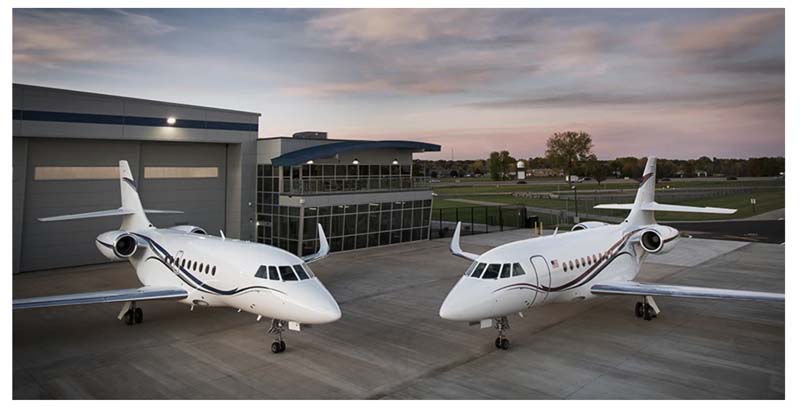
Image courtesy of Star Building Systems® / Cornerstone Building Brands
According to Cornerstone Building Brands, successful hangar projects depend on a well-coordinated building design, with all components properly engineered and installed. Systems that affect airtightness, durability, and thermal efficiency deserve particular attention to achieve long-term performance and protect sensitive aircraft. Insulated wall and roof assemblies with tight seams help limit air infiltration, while properly engineered framing systems efficiently support wide spans for clearance. Door selection is a major consideration according to Powerlift Doors. Large hydraulic doors are common in hangar construction and can be designed to work as part of the building’s structural system. Hangar projects that deliver the best results don’t treat the door as an accessory to the building, but instead look at the building and door as an integrated system. When large doors are installed in an end wall, the structure must be specifically engineered to support the door’s weight, movement, and required clearances. In mixed-use hangar facilities, hybrid construction approaches can provide flexibility while maintaining performance standards and accommodating architectural and occupant needs.
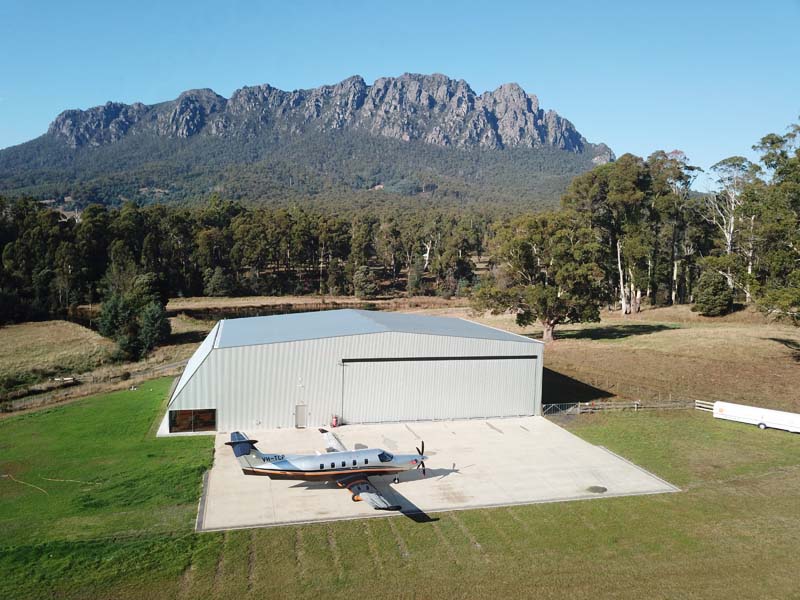
Another consideration when choosing the door is safety, according to Schweiss Doors. Things like override switches and warning lights add an extra layer of protection to people and aircraft.
One of the most common mistakes made on hangar projects is not determining early on what door will be used, then not designing the building around it from the start. Underestimating environmental exposure, particularly wind, snow, and ice, can also lead to performance issues with doors and exterior assemblies.
Another frequent misstep is insufficient coordination between structural systems, which can create constructability challenges or scheduling delays. Builders and material specifiers must also understand site-specific and airport requirements early in the process, including whether sheet metal siding is permitted and what maximum peak height is allowed.
Successful hangar projects prioritize early collaboration and careful coordination among designers, material suppliers, and builders. Aligning structural systems, door selection, envelope performance, and regulatory requirements from the outset helps ensure the finished building does what it is supposed to do: protect the aircraft and serve the owner reliably for decades.
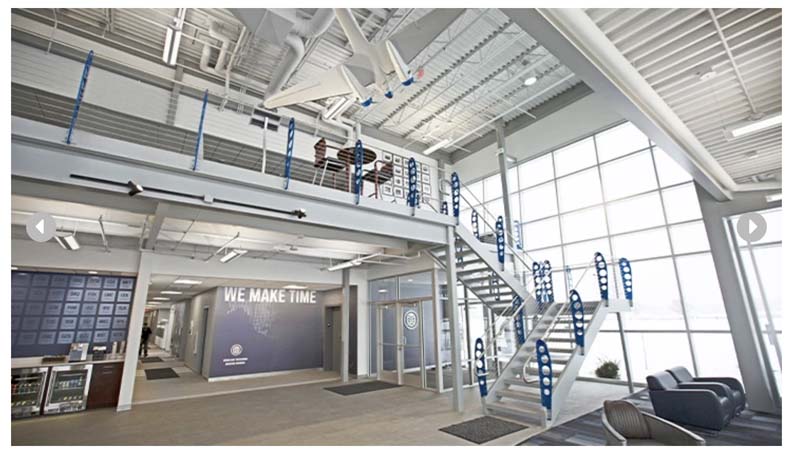
Image courtesy of Star Building Systems® / Cornerstone Building Brands
Green Bay Packaging Aircraft Hangar
The 25,200-square-foot private aircraft hangar for Green Bay Packaging is part of a five-building corporate aviation and operations campus in Green Bay, Wisconsin. Designed by Fisher & Associates LLC, the final development includes the hangar and mezzanine, an equipment bay, offices, a parking garage, and a central lobby — bringing together flight operations and daily business functions within a cohesive site. Blending pre-engineered and conventional steel construction, general contractor SMET Construction Services Corp. teamed up with M.R. Neubert Construction LLC to erect a facility that accommodates large clear-span requirements alongside architecturally complex, occupied spaces.
Design and construction decisions prioritized performance, safety and long-term reliability in a cold-weather environment. In-ground heating beneath the slab at the hangar door and exterior ramp helps prevent ice buildup and supports reliable door operation during winter conditions. The exterior envelope incorporates insulated metal wall panels, including Double-Lok® concealed fastener panels provided by Star Building Systems, a brand in the Cornerstone Building Brands portfolio, paired with enhanced roof insulation to reduce air infiltration and thermal loss.
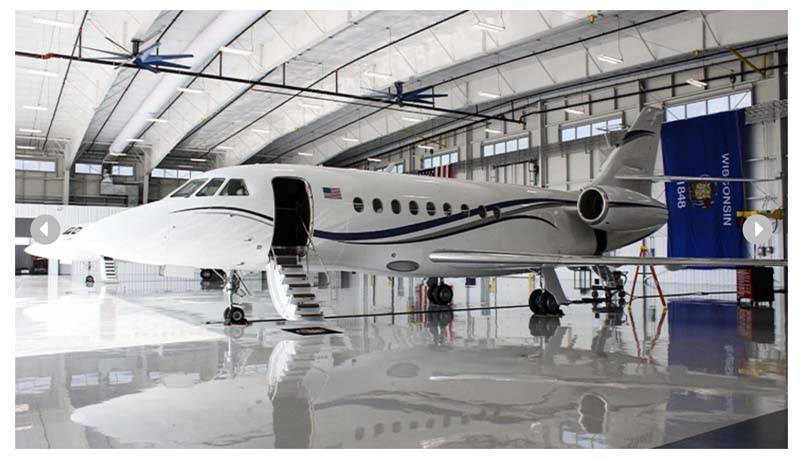
Image courtesy of Star Building Systems® / Cornerstone Building Brands
Tension Fabric Rigid-Frame Aircraft Hangars
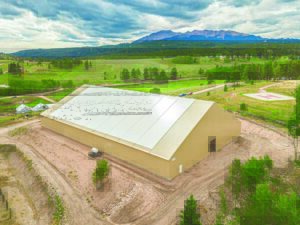
Rigid frame and tension fabric aircraft hangars have the same demands upon them as any other hangar. Legacy Building Solutions uses structural steel I-beam framing, combining tension fabric cladding with rigid-frame engineering. This approach allows them to easily customize every project to provide the exact dimensions and building features required by the customer. The use of I-beams allows for complete design flexibility, including the ability to add offset peaks, lean-tos or other layout arrangements for a hangar.
Tension fabric provides a variety of operational benefits. Its translucency allows for natural daylighting inside a building, which cuts down on artificial lighting needs. Fabric also has thermally non-conductive properties, which help keep building interiors warmer in the winter and cooler in the summer. In some cases, building owners will opt to insulate the structure, which can be done by applying insulation behind a fabric liner.
Fabric buildings can be designed and constructed much more quickly than tilt-up construction or other conventional methods – up to four times faster, in fact, depending on the supplier.
Many fabric buildings — especially rigid-frame structures — are engineered to be permanent while being designed to be portable. Should the need arise to change locations, some buildings can be disassembled and reconstructed elsewhere. In some cases, aircraft hangars and other aviation facilities are built on leased property, which can present a conundrum: The building must be solid enough to handle all required tasks, but its use on the original site may be limited to 10 years or less, requiring a balancing act.

The climate in a given location can present a challenge to an aircraft hangar. The steel frame and attached fabric must be designed to handle all environmental factors, such as wind loads, snow loads and seismic codes. This is particularly important for airports, which tend to be located in wide open areas with higher exposure to the wind and other elements. Fabric rigid-frame buildings can stand up to these challenges. For example, Legacy has achieved a number of applicable certifications related to weather, such as Florida Product Approval for high-velocity hurricane zones.
Corrosion protection is an important issue. Solid I-beams are well suited to withstanding the basic long-term effects of corrosive elements as well as surviving high-humidity environments. Hot dip galvanizing has been among the most popular techniques for protecting steel, but it’s important to note that galvanization only slows down the corrosion process by sacrificing its thin layer of zinc over time. For applications that require it, a more robust epoxy coating can create a permanent barrier between corrosion and steel surfaces.
For hangars housing large aircraft, the hangar doors can measure hundreds of feet wide, so they demand substantial load support from the building frame. Quality rigid-frame fabric buildings can support even their most massive door offerings, as verified by major door manufacturers.
The I-beam design has been proven in the engineering community to bring strength and longevity to these structures. Another benefit of a rigid-frame structure is the ability to handle hanging or live loads, such as overhead maintenance cranes or fire suppression systems.
The type of fabric used can have a big impact on longevity. At one time, Polyethylene (PE) fabric was the most widely used material in the industry, while polyvinyl chloride (PVC) was usually reserved for higher-end projects due to its price point. However, many building owners have realized that PVC’s long-term benefits and increased lifespan effectively offset the initial investment. A high-strength woven fabric with additional primer and lacquer layers to provide more durability, such as ExxoTec™ PVC, retains more than double the tensile strength of a standard PE fabric and carries a longer life expectancy.
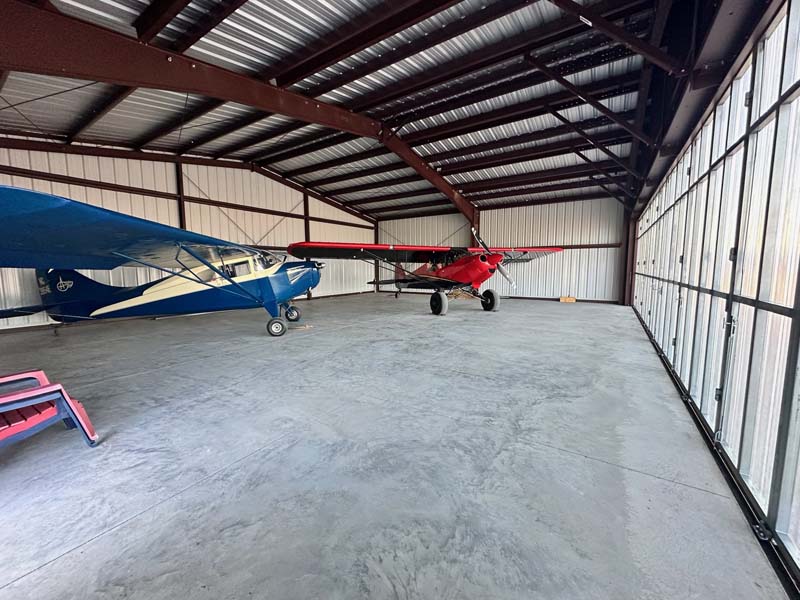
Prime Metal Buildings and Components Hangar
Prime Metal Buildings built their own corporate hangar at the Stephenville Clark Regional Airport in Stephenville, Texas. They wanted something more than just a simple metal hangar building. They were planning a showcase project, something to present to customers and demonstrate what Prime Buildings can do.
The uniqueness of the Prime hangar begins with its slanted roof, a necessary design choice so they could get the height they wanted while staying under the airport’s height restrictions. The slant is repeated on the shorter side addition, which houses a lounge space for pilots and passengers. The lounge has large windows, seating and even a kitchenette, creating a comfortable place to relax while waiting for takeoff. The hangar itself has plenty of space for aircraft and even has a separate garage area for land vehicles with its own garage door. A line of windows lets in natural light. When deciding on the hangar door, Prime decided to go with a hydraulic door from Schweiss Doors. The door is 70-feet wide by 17-feet high and includes additional features such as top over-ride switches, warning lights, a horn and a two-speed valve. With the two-speed valve the door opens and closes smoothly and allows the door to close softly also.
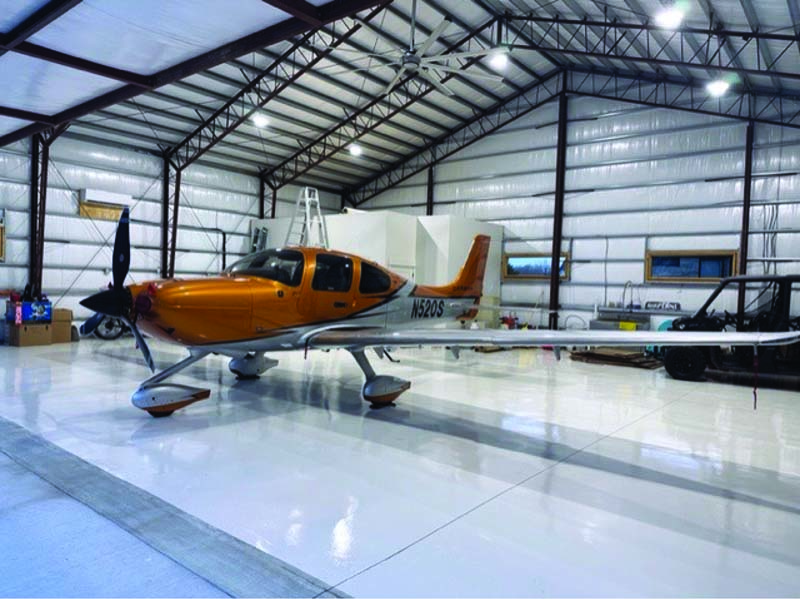
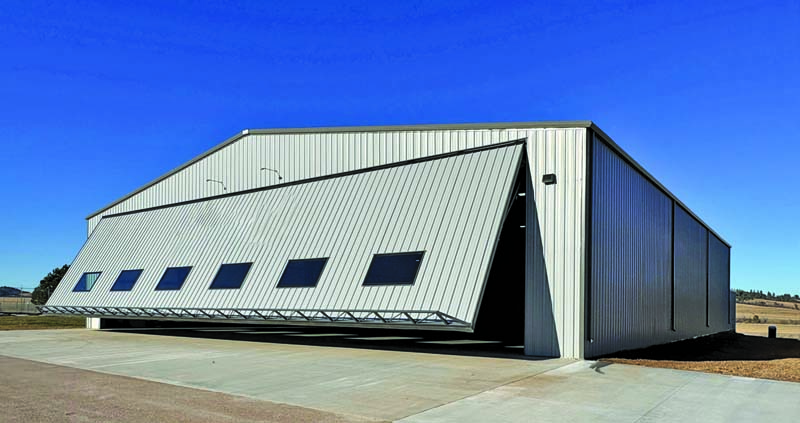
Photo Courtesy of Powerlift Door.
Photo Courtesy of Legacy Building Solutions.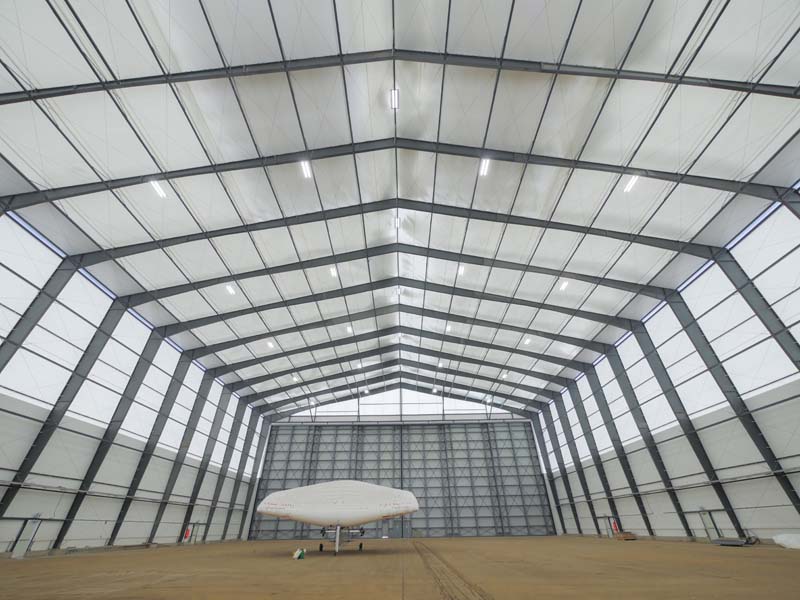
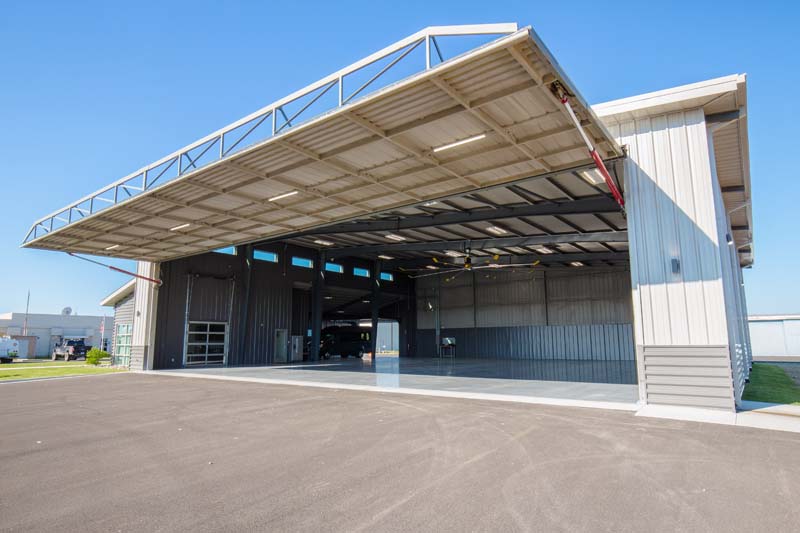
Photos Courtesy of Schweiss Doors.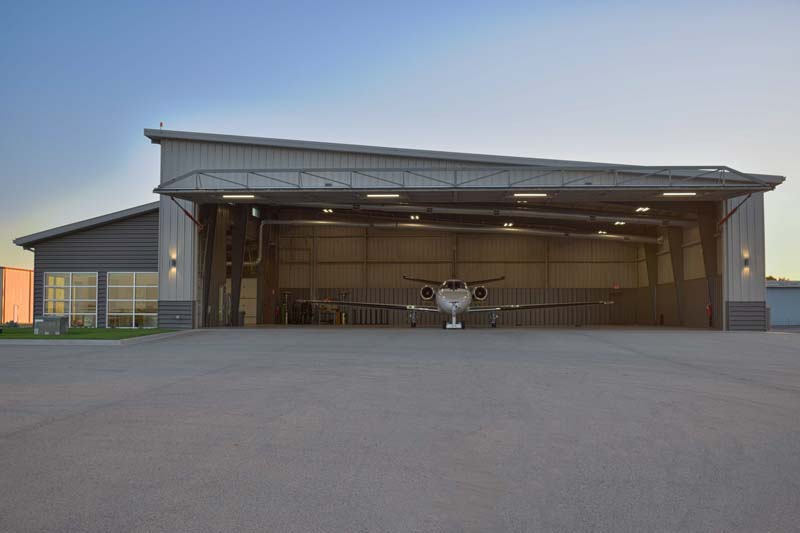
Photos Courtesy of Schweiss Doors.