A Farm-Grown Work Ethic: opens the door to many opportunities
As a result of a collaboration with mikeroweWORKS Foundation (www.mikeroweworks.org), Rural Builder is featuring profiles of Work Ethic Scholarship recipients in each of its issues. Nearly 3,000 scholarships have been awarded to trade-school students who value hard work and taking personal responsibility. Rural Builder applauds these students and wants to acknowledge their choice to apply their talents to skilled trades. Thank you, mikeroweWORKS Foundation, for your continuing efforts to close the skills gap and “reconnect the average American with the value of a skilled workforce.”
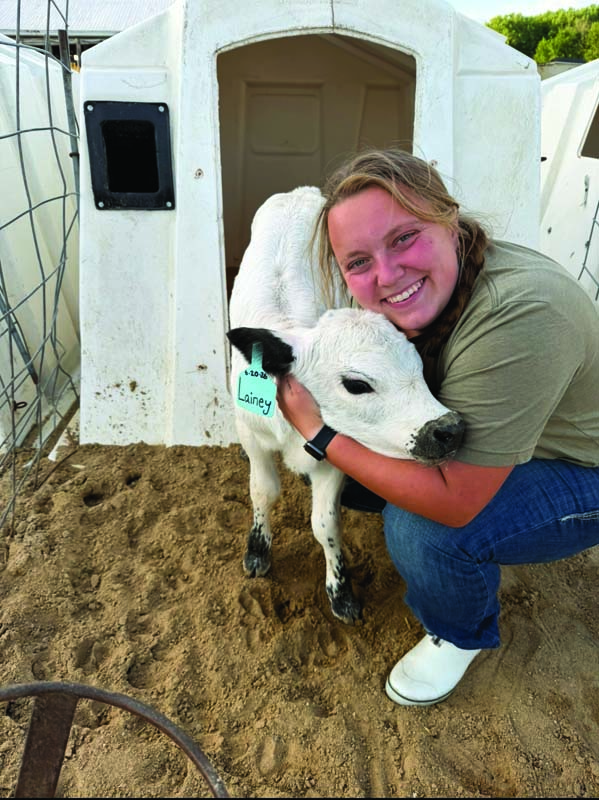
Rachael Kuperus’ parents never owned a farm, though she grew up in the countryside among farmers. There was a pasture at the end of her backyard, and every day she watched the farmers gather at the local diner for breakfast. Whether farming or doing any other job, her parents instilled in her a strong work ethic, in part by modeling hard work and in part by getting her a job on the farm where her dad had worked during high school. Rachael had expressed an interest in veterinary work, so the job served as an introduction to working with animals.
She started out feeding the calves when she was 14 years old. Then she moved on to milking the cows and running the equipment. During her junior year of high school, Rachael was cut from the soccer team, which gave her more time to spend at the farm. The owners were happy to have more of her time and gave her additional responsibilities.
Looking for a Career Path
Along the way Rachael shadowed a veterinarian and then a nutritionist. The veterinarian was just out of school and deep in debt, and she wasn’t making much more than Rachael could make as a nutritionist. Rachael viewed nutrition as a possible career choice.
Michigan State University offered a two-year Dairy Management Agricultural Technology program. It was the only agriculture program available, and Rachael decided to try it. She had taken a lot of AP classes in high school, so she didn’t have to take too many core classes, such as math and English. Instead she learned about cow reproduction, lactation, nutrition, and husbandry in general.
It was a one-and-a-half- to two-year program, but as she neared completion, a four-year program that extended the certificate program she was enrolled in became available.
Rachael completed her Bachelor of Science degree in animal science with a concentration in the dairy industry.
“Apply for Scholarships”
While she was taking classes, instructors told students that if they applied for scholarships, they would receive them simply because so many went unclaimed. It turned out that it wasn’t quite that simple.
When Rachael began applying for scholarships, Mike Rowe’s book, The Way I Heard It, had just come out and was all over the internet. She had grown up watching Mike on Dirty Jobs, so she decided to apply for a scholarship from his foundation.
“I remember that applying for this scholarship was more intense than applying for other scholarships,” Rachael said. “I’d never seen anything like the S.W.E.A.T. Pledge before. It’s like the Pledge of Allegiance for hard work, but if you are going to award the scholarship to hard workers, it makes sense to make them work for it.”
Rachael was awarded the scholarship, so the work was worth it. She attended college for three years and graduated debt-free.
Working in the Agricultural Industry
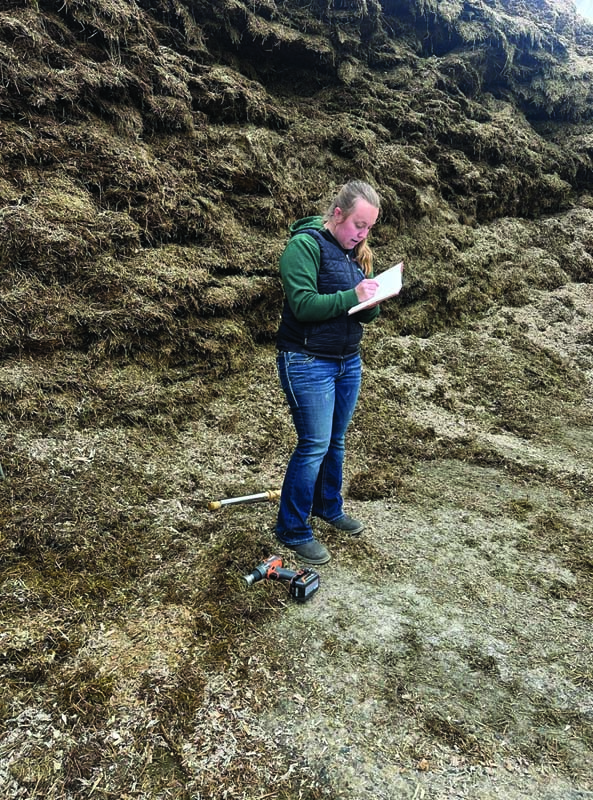
An internship at a local feed mill led to one of the positions she now holds in the industry: drone operator. Rachael explained that feed is a dairy farmer’s greatest expense. Further it is not in the best interests of the cows to feed them newly harvested silage. That is better left to dry and store for next year. The drone operator’s job is to take photos of the farmer’s inventory because the lender wants to know what is available. The information also benefits the farmer, who may receive recommendations about what can be used as an alternative for something that is in short supply.
When her internship ended, the feed mill had no full-time opening for her, but the company recommended her for the drone operator position because its staff wanted to continue working with her.
Her other position is back at the farm where she had worked for many years. However, she now helps manage it alongside her husband, the son of the farmer she began working for as a teenager.
“Managing a farm entails checking in with employees, putting out fires, and filling in for sick employees,” Rachael said. “That’s after I come home from my day job, and I work a half day on Saturdays.”
As a drone operator, she has to keep track of the weather because the drone costs $6,000 to replace. She connects with farmers, sometimes helping them by walking cows or doing whatever else they may need.
“One of the things I love most about my work is that I get to spend a lot of time outdoors at both jobs, though I do have to spend some time each week on reporting,” Rachael said. “As a drone operator, I get to go to different farms and talk to farmers, vets, and others. I go to conferences and meet people from all over the world, and I get to compare agricultural processes here with those in other places.”
Advice for People Starting Out
“Keep your ears open, and don’t be afraid to try something new,” Rachael advised. “I had absolutely no interest in drones, but when the opportunity was offered, I gave it a shot. Don’t be afraid to network through people you know.”
Think about what you enjoy. “People who want to go into the trades want to run their own crew, be the boss, and be outside,” Rachael said. “White-collar people are generally looking for other things. Whichever way you choose, there are many opportunities out there.”
Rachael and her husband are about to embark on a new opportunity of their own. They plan to open a farm store that will offer beef and a few other farm products. We wish them success in this new undertaking!