Originally Published as: “If something needs doing, just do it.” As true in life as it is in your career
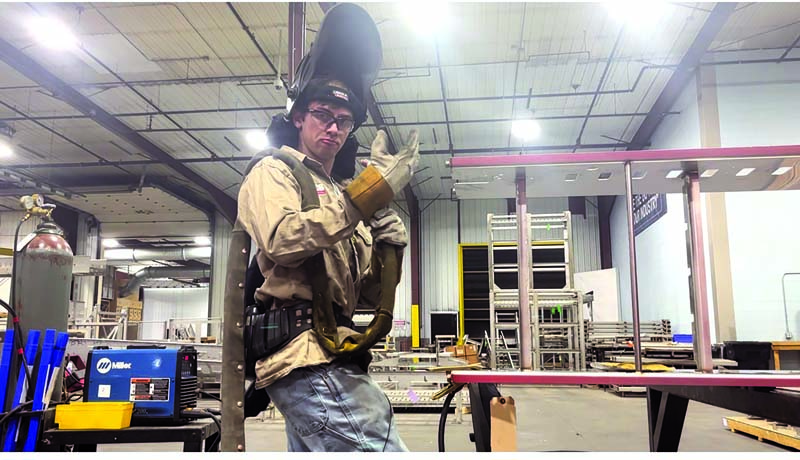
Jacob Trout was a farm kid who enjoyed the usual farm kid fun… helping out with chores, playing outside, and learning to fix things. In fact, he was the only one on the farm who knew how to weld.
His grandfather, who was a welder, taught him. He was unable to weld anymore due to a heart condition, so he would tell Jacob what to do. Then Jacob would go do it and report back to his grandpa, and grandpa would tell him everything he had done wrong.

His experiences told him that sitting at a desk somewhere wasn’t for him. He knew he liked working with his hands and going outside. He had also enjoyed welding, so he started attending trade school.
Trade school was a novel experience for Trout.
“In high school you have all these people going here and there, following different paths, and chasing different dreams. When you start taking classes at the trade school, you are all going down the same path together. I felt like I found my people,” he said.
The Work Ethic Scholarship
Growing up, Trout had watched Mike Rowe on the TV show Dirty Jobs; his parents always tuned in, so when the scholarship came to his attention, he thought, “I’ll just apply and see what happens.”
He was required to answer some essay questions, as is generally true when applying for scholarships. He had to provide references and make a video so scholarship committee members could see a bit of who he was. Trout thought it was fun.
Receiving the scholarship was helpful financially, but it also gave him confidence. A lot of people apply for the scholarships, and they chose him because they believed in him.
The Man Himself…Meet Mike Rowe
When Trout was awarded his scholarship, he, his mom, and his grandfather met Mike Rowe. He was excited at meeting the Dirty Jobs star.
“You know, he talked to me, a twenty-year-old kid, and just as easily spoke to my grandfather, a 90-year-old farmer from Minnesota.
“The guy I talked to was the guy I watched on TV. He is just that down-to-earth.
“He gave me a signed copy of the S.W.E.A.T. (Skill & Work Ethic Aren’t Taboo) Pledge, and he said, ‘Keep it dirty.’”
The Right Job
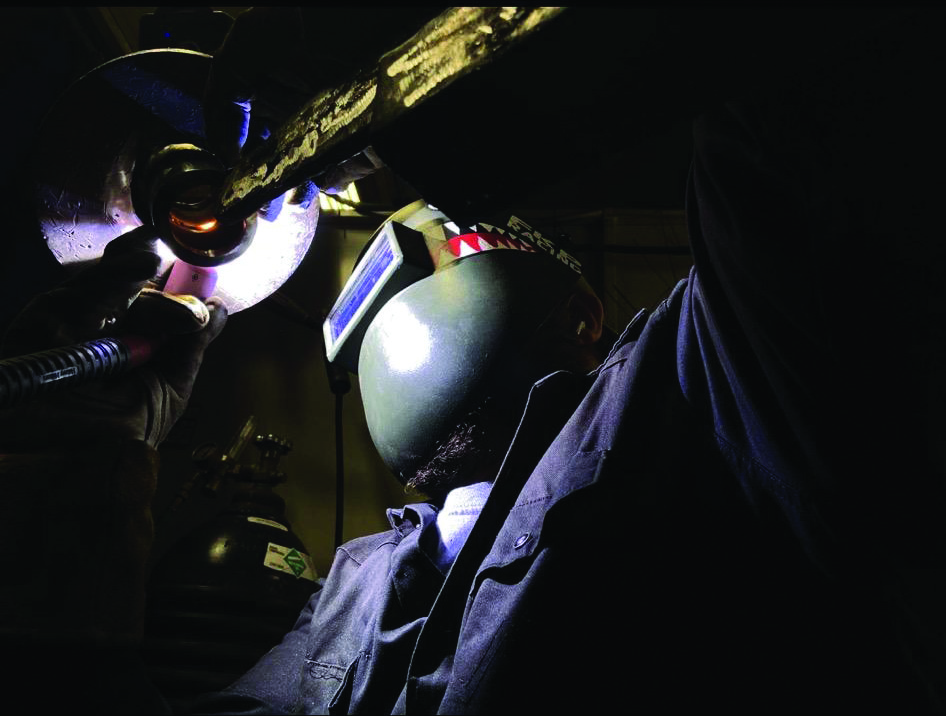
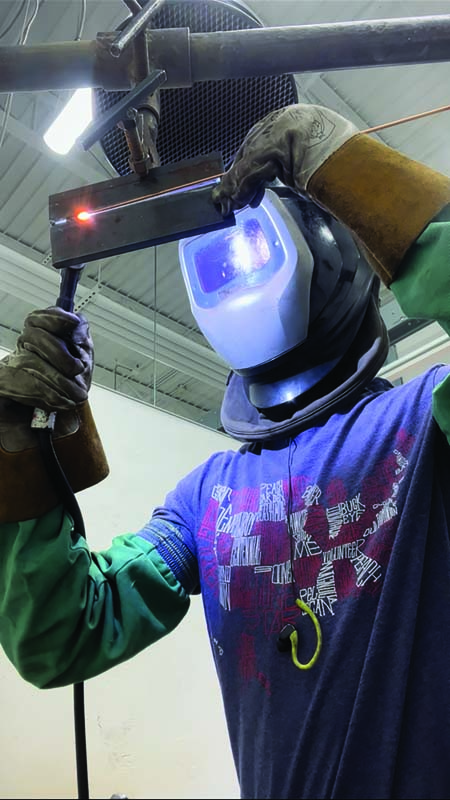
In his second year at school, Jacob began learning pipe welding. He liked it, and when he started looking at job openings, he knew he was pursuing the right path. The jobs looked enticing, and he realized he was being prepared to qualify for them.
Then he graduated, and it was time to look in earnest. An experienced tradesman told him, “Don’t worry about the pay when choosing your first job.”
Trout said it was good advice. He saw jobs that paid well, $40 or $50 per hour, but there was always a trade-off. Most of the jobs in his local area were in factories, which could be great jobs, but he knew that he didn’t want to be inside all day. Some jobs involved doing things he didn’t particularly want to do, or they were located very far away. In the end, he took a more modestly paid job that included going from one place to another to do repairs. It wasn’t in his hometown, but it was in the next state, at Grand Forks, North Dakota.
Trout is very happy with his choice. When he began his job, he was doing gofer work; since then he has become a certified welder, and he is doing the welding work he enjoys. The pay has increased along with his status.
Importantly, he is not stuck inside all day, every day, doing the very same thing. The company at which he works does plumbing work as well as welding, so one day he may be at the potato processing plant fixing flanges for a high-pressure water system, and the next he might be at the water treatment plant fixing the stainless steel piping.
What the Job Takes
Problem-solving is a big part of the job, Trout said.
“At first when I was called in after hours to fix something, I would be calling others and asking them what they would do,” Trout said. “But eventually you realize you don’t have to call anyone; you see that something needs to be done and you just do it.”
Trout continued, “I think it’s a combination of time and experience – and the confidence that experience brings.”
His advice for others who are thinking about entering the welding industry is to stick with it. Trust your gut. That’s what he did, and it worked pretty well for him.
Future Works
Trout sees himself continuing to work in the job he is in because he really likes it. He does think that eventually he would like to work his way up in the company and become a foreman. He wants to lead and mentor a crew in doing quality work.
The welding trade offers great opportunities, and even if you completed a training program and ended up not liking the job, there are always other opportunities if someone likes your work ethic and your attitude. Trout applied for a position with an excavating company, and they told him that in the future he wouldn’t be limited to just pipe welding. If he wanted to he could end up training for and becoming an equipment operator. For example, he could operate a bulldozer or an excavator.
“Anybody out there who is thinking of entering the trades or deciding whether they should apply for the mikeroweWORKS Foundation scholarship… Just do it,” he said. “It’s a good program.”
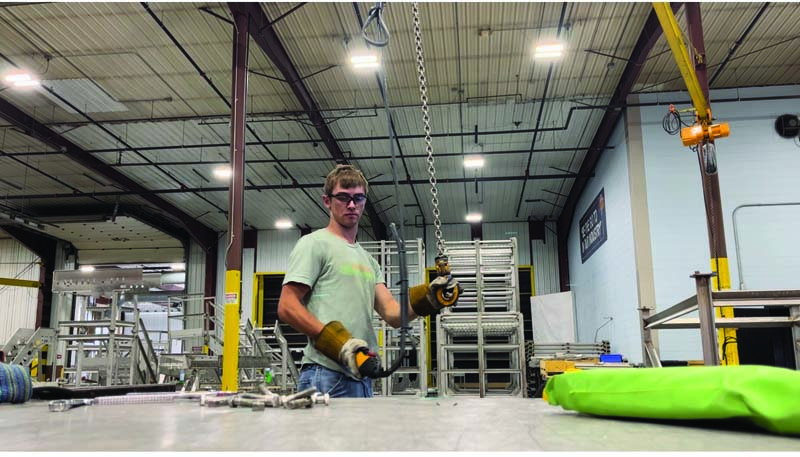
Are You (or Someone You Know) Learning a Trade?
Every year the mikeroweWorks Foundation awards dozens of applicants with money to help them pay for school. Would you like the next award to go to you? Check out the details at www.mikeroweworks.org/scholarship/. As Jacob Trout says, “Just do it.”