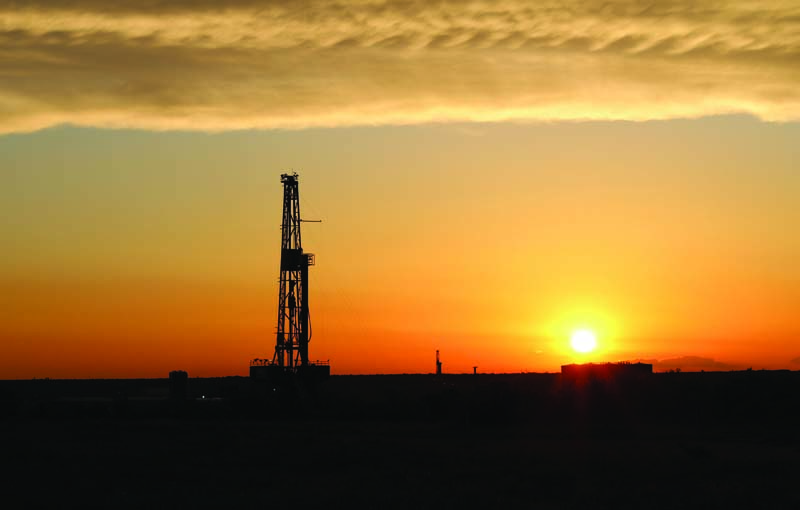
Originally Published as: BUILT FOR THE PATCH: Post-Frame and Metal Buildings Rise to Meet Oil & Gas Infrastructure Demands
From compressor stations in the Marcellus to wellhead enclosures on remote Permian leases, low-rise construction has become the go-to solution for an energy industry that needs buildings fast, tough, and code-compliant — and the builders who understand that market are finding a durable niche.
Drive the back roads of eastern Ohio, western Pennsylvania, or the Permian Basin outside Midland, Texas, and the skyline isn’t skyline at all — it’s tank batteries, pump jacks, gathering lines, and, increasingly, a scattering of clean-lined metal buildings doing the unglamorous work of keeping the oil and gas industry running. Compressor buildings. Wellhead enclosures. Control rooms. Chemical injection skids. Crew quarters and equipment storage on leases that may not see a paved road for miles. None of it looks like the barns and pole buildings that built this industry’s reputation. Still, the bones underneath are strikingly familiar: post-frame and pre-engineered metal building systems, adapted for one of the most demanding built environments in North America.
For post-frame and metal building contractors willing to learn a new rulebook, the oil and gas sector represents a market that rewards precision, documentation, and relationships as much as it rewards square footage. It is also a market with its own vocabulary — API, NFPA, Class I Division 2, hazardous area classification — that can feel like a foreign language to a builder used to talking trusses and snow load. This Project Focus is a primer on what’s driving demand for these buildings, what makes them different from a standard agricultural or commercial structure, and where the opportunity sits for builders who want in.
WHY THE ENERGY SECTOR TURNEDTO LOW-RISE CONSTRUCTION
Oil and gas operators did not arrive at pre-engineered metal and post-frame buildings by accident. Midstream and upstream construction budgets are driven by a variable that traditional commercial construction rarely faces head-on: the clock. A compressor station or gathering site generates no revenue while it sits unbuilt, and drilling programs move on schedules set by lease terms, not by construction crews. Framing systems that can be engineered, fabricated, and erected in weeks rather than months have become the default. That timeline advantage is the single biggest reason steel-frame and post-frame construction now dominates oilfield building specs.
The economics reinforce the pattern. Clear-span framing eliminates interior columns that would otherwise crowd compressor skids, separators, and the maintenance access around them. Panelized wall and roof systems ship efficiently to sites that are, by definition, often remote — a consideration that matters enormously in shale plays like the Marcellus, Utica, Bakken, and Permian, where the nearest fabrication yard may be hours away. And because leases and production profiles change, a bolted, modular structure can sometimes be disassembled and relocated to a new pad rather than demolished outright, an option that stick-built or masonry construction doesn’t offer.
None of that is new to builders who already work in post-frame agricultural and commercial construction. What’s different is the operating environment the building has to survive, and the paperwork that has to prove it will.
A FIELD GUIDE TO OIL & GAS BUILDING TYPES
“Oil and gas building” is a broad label covering a range of structures, each with its own design drivers. Builders entering this market benefit from understanding where each type sits in the production chain.
Compressor and Pump Buildings
Found throughout midstream gathering and transmission systems, compressor buildings house the engines and equipment that move natural gas through pipelines. These structures carry some of the sector’s toughest requirements: sound attenuation to meet local noise ordinances, ventilation systems engineered around the heat load of the equipment inside, and framing designed to handle vibration loads a typical pole barn never has to consider. Acoustic wall and roof panel systems, often layered with insulation and mass-loaded barriers, are common upgrades over a standard metal building envelope.
Wellhead and Production Enclosures
At the wellhead itself, smaller enclosures protect metering equipment, chemical injection systems, and production controls from weather and tampering. These tend to be modest in size but heavy on code compliance, since they frequently sit inside or adjacent to a classified hazardous area where flammable vapors may be present.
Control Rooms and SCADA Buildings
As automation has spread through the industry, dedicated control buildings housing SCADA (supervisory control and data acquisition) equipment have become common at both midstream and upstream sites. These structures prioritize climate control and electrical isolation over square footage, and they’re frequently among the most heavily insulated buildings on a given pad.
Storage, Warehouse, and Crew Facilities
Pipe yards, tool storage, and crew facilities round out the picture, and these are the structures that look most like traditional post-frame commercial buildings — open-span storage, insulated crew quarters, and covered laydown areas for pipe and equipment that needs to stay off the ground and out of the weather.
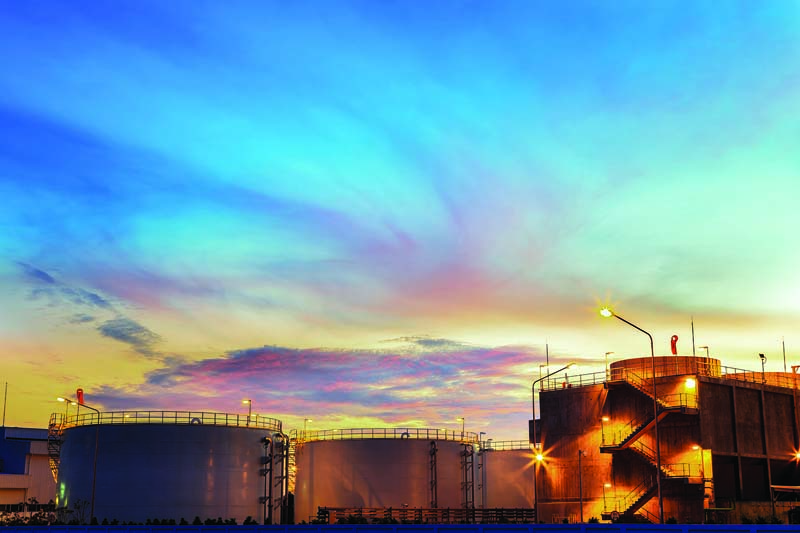
THE CODE ENVIRONMENT:HAZARDOUS AREA CLASSIFICATION
The single biggest technical departure from conventional post-frame and metal building work is hazardous area classification, and it’s worth builders taking the time to understand the basics even if the engineering itself is typically handled by a licensed electrical engineer or the operator’s own compliance staff.
Facilities that produce, process, or store flammable liquids and gases are classified under systems built around API RP 500, the American Petroleum Institute’s recommended practice for electrical installations at petroleum facilities, and its companion document, API RP 505, which uses the international Zone system rather than the Division system. NFPA 70 (the National Electrical Code), NFPA 30 (Flammable and Combustible Liquids Code), and NFPA 497 provide the broader framework that many jurisdictions layer on top of or alongside the API guidance.
In practice, a building — or more precisely, the space around and sometimes inside it — gets classified as Class I, Division 1 or Division 2, depending on whether flammable vapors are expected to be present continuously, intermittently, or only under abnormal conditions. That classification dictates everything from the type of electrical fixtures and conduit that can be installed to how the building is ventilated. For the builder, the practical takeaway is straightforward: don’t guess. Qualified specialists engineer hazardous area classification based on the specific process equipment and chemicals on site, and the building shell has to be designed around their determination — not the other way around.
Builders who want to be taken seriously as oil and gas contractors do well to get comfortable with the vocabulary — Division 1 versus Division 2, Class I versus Class II, Group C versus Group D — even if they aren’t the ones performing the classification. It signals to engineering firms and operators that a contractor understands the stakes involved.
MATERIALS AND ENVELOPE: BUILT TO SURVIVE THE SITE
Corrosion protection dominates the materials conversation on most oil and gas projects. Production sites can expose a building envelope to hydrogen sulfide, high-salinity produced water, chemical injection fluids, and — depending on region — everything from Gulf Coast humidity to high-desert temperature swings. Standard galvanized steel, adequate for most agricultural and light commercial buildings, often isn’t enough. Heavier gauge steel, upgraded coating systems such as Galvalume or specialized paint systems, and, in the harshest chemical environments, non-metallic wall and liner panels have all become standard specification items.
That last category — chemical-resistant plastic and composite wall systems — has carved out a meaningful role in oil and gas construction specifically because it sidesteps corrosion concerns altogether in high-exposure interior applications like containment areas and chemical storage rooms. Builders sourcing these systems increasingly look to manufacturers who already serve the broader post-frame and metal building trade and have extended their product lines to meet petrochemical-grade requirements.
Door and access hardware is another area where oilfield specification diverges from standard construction. Compressor and equipment buildings often need oversized openings capable of accommodating large stationary equipment during installation or major maintenance, which has driven demand for heavy-duty hydraulic and bi-fold door systems engineered specifically for post-frame and steel building applications. This niche overlaps directly with equipment doors already familiar to builders serving large agricultural and equestrian structures.
REMOTE SITES, REAL LOGISTICS
Ask any contractor who has built on an active lease, and they’ll tell you the jobsite itself is often the biggest variable. Well pads and gathering sites are frequently miles from paved roads, utilities, or easy equipment access, and pad construction, site grading, and access road conditions are typically outside the builder’s control and subject to change without much notice. Materials have to be palletized and staged for delivery by truck onto surfaces that may not tolerate standard construction equipment, and crews often work within safety protocols set by the operator — site-specific safety orientations, personal protective equipment requirements, and permit-to-work systems that a builder used to residential or agricultural jobsites may not have encountered before.
This is also where the pre-engineered and panelized nature of post-frame and metal building systems earns its keep. Because the bulk of fabrication happens off-site, on-site labor and dwell time are compressed, which matters enormously when every day on an active production lease carries both a cost and a safety exposure that the operator is tracking closely. Builders who can demonstrate a track record of clean safety performance and schedule reliability on remote sites tend to find themselves back on the bid list for the next pad.
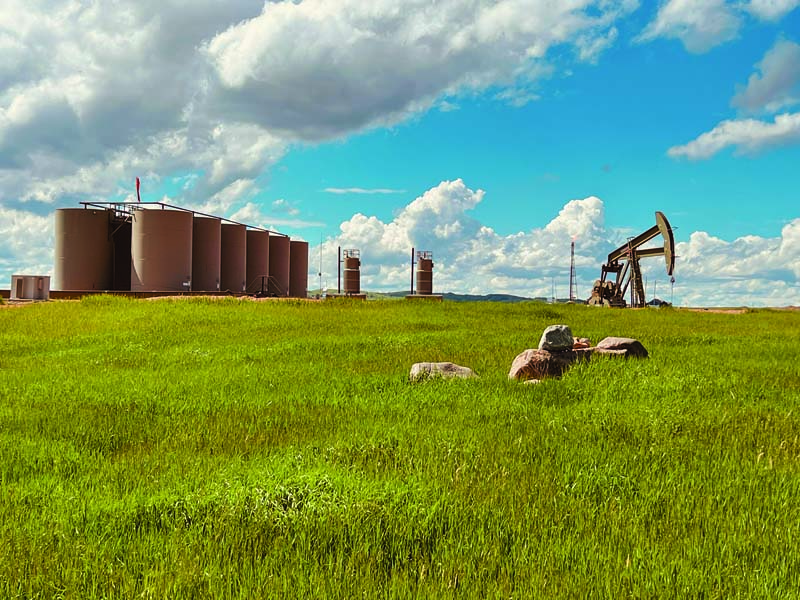
REGIONAL BUILDOUT: WHERE THE INFRASTRUCTURE IS GOING UP
Demand for oil and gas infrastructure buildings is not evenly distributed, and builders considering the market do well to understand where activity is concentrated and what each region tends to require.
Appalachian Basin — Marcellus and Utica Shale
Pennsylvania, Ohio, and West Virginia have seen more than fifteen years of sustained natural gas development, and the midstream gathering and compressor infrastructure needed to move that gas to market continues to expand alongside it. This region overlaps directly with the existing readership base of Rural Builder and Frame Building News, giving established post-frame contractors in the area a natural on-ramp into energy sector work without having to relocate their operations. Winters here bring snow load and freeze-thaw considerations that are already second nature to post-frame builders in the region, which is an advantage over out-of-region competitors.
Permian Basin — West Texas and Southeastern New Mexico
The Permian remains the largest single concentration of active drilling and completions activity in the country, and the pace of new wellhead, gathering, and processing infrastructure reflects it. Builders working this region contend with extreme summer heat, blowing dust, and long distances between fabrication yards and remote pad sites, all of which put a premium on panelized systems that minimize on-site labor hours and crews accustomed to desert working conditions.
Bakken — Western North Dakota and Eastern Montana
Bakken infrastructure work is defined by its own extremes: brutal winter cold, limited local labor pools, and some of the most remote pad access in the Lower 48. Buildings here often carry heavier insulation packages and cold-weather-rated equipment enclosures than their southern counterparts, and logistics planning around winter road restrictions is as much a part of the job as the construction itself.
Gulf Coast and Permian-to-Coast Corridors
Downstream and export-related construction along the Texas and Louisiana Gulf Coast brings a different set of drivers — hurricane wind load requirements, high humidity, and proximity to large-scale petrochemical and LNG facilities that often require the most stringent hazardous area classification work in the industry. Builders here frequently work alongside larger EPC (engineering, procurement, and construction) firms rather than serving as prime contractor, which changes the nature of the client relationship compared to a smaller upstream or midstream project.
MODULAR AND RELOCATABLE DESIGN: BUILDING FOR A DEFINED PRODUCTION LIFE
Unlike a commercial building designed for decades of fixed use, many oil and gas structures are built with a known — and sometimes short — service life tied to a specific lease or production phase. That reality has pushed a meaningful share of the market toward bolted, modular construction that can be disassembled, trucked, and re-erected on a new pad rather than demolished when a well reaches the end of its economic life or a gathering system gets rerouted.
Designing for relocation changes the engineering approach in ways that aren’t always obvious to a builder used to permanent construction. Connections are specified as bolted rather than welded wherever structurally feasible. Foundation systems favor pier or skid-mounted designs over full concrete slabs, both to speed initial construction and to simplify eventual removal. Panel systems are selected and installed with an eye toward disassembly rather than only toward initial weathertightness. None of this is more complicated than standard post-frame construction — it simply requires planning the building’s eventual disassembly at the same time as its initial design. This mindset shift pays off for both the builder’s reputation and the operator’s long-term asset flexibility.
TOTAL COST OF OWNERSHIP: WHY OPERATORS SPEND MORE UP FRONT
Builders accustomed to competing primarily on upfront price will find oil and gas procurement decisions weighted differently. Operators evaluate buildings against a total cost of ownership model that accounts for downtime risk, maintenance access, and asset life — not just the bid number. A compressor building that requires the compressor to be taken offline for repairs because of a poorly planned door or access panel costs the operator far more in lost throughput than the incremental cost of specifying a better door system up front would have. Similarly, a coating system that fails at year twelve of a projected thirty-year service life creates a maintenance and liability cost that dwarfs the original savings from choosing a cheaper paint system.
This total cost of ownership mindset is a useful one for builders to adopt in their own proposals. Bids that walk an operator through lifecycle considerations — corrosion protection strategy, maintenance access planning, relocation flexibility — tend to be received more favorably by procurement and engineering staff than bids that compete purely on square-foot pricing, even when the latter is lower.
SAFETY CULTURE AND WORKFORCE CONSIDERATIONS
Safety performance carries outsized weight in oil and gas contractor selection compared to most other construction sectors, and operators routinely vet contractors through formal safety prequalification programs before allowing them on an active site. Builders new to the sector should expect site-specific safety orientations, personal protective equipment requirements beyond standard jobsite practice, and permit-to-work systems governing hot work, confined space entry, and other activities that would be routine on a typical post-frame jobsite but require documented authorization on an active production lease.
Crew training is part of the cost of entry. A framing crew skilled at agricultural and commercial post-frame work generally adapts well to the physical construction tasks involved in oil and gas buildings. Still, they’ll need orientation to the safety culture and documentation expectations of the sites they’re working on. Contractors who invest in that training up front, and who can show a clean safety record when bidding subsequent work, tend to build the kind of trust with operators and EPC firms that turns a single project into a repeat relationship.
WHERE THE OPPORTUNITY SITS FORPOST-FRAME CONTRACTORS
For an established post-frame or metal building contractor, the entry point into this market is rarely a full compressor station on day one. It’s more often a storage building, a crew facility, or a smaller wellhead enclosure built for a regional operator or midstream company — projects that use largely the same skill set a builder already has, just layered with a new set of specification requirements and a new client relationship to develop. Contractors who deliver well on those smaller jobs, and who invest the time to understand the code environment described above, frequently find themselves invited to bid larger and more technical work as the relationship matures.
It’s also a market where relationships with component and material suppliers matter as much as the relationship with the client. Sourcing corrosion-rated fasteners, chemical-resistant wall systems, and heavy-duty door hardware from manufacturers who understand oilfield specifications — rather than adapting standard agricultural building components after the fact — tends to separate contractors who build one oil and gas project from those who build a steady pipeline of them.
THE SUPPLY CHAIN BEHIND THE BUILD: COIL, COATINGS, AND COMPONENTS
Every metal-clad oil and gas building starts as flat-rolled steel long before it becomes a wall or roof panel, and that puts steel service centers and rollforming equipment suppliers squarely in the supply chain — even though few of them market themselves as oil and gas specialists the way a compressor-building manufacturer might.
It’s worth builders understanding that the steel, coatings, and fasteners specified on an oil and gas project usually trace back through this same rollforming and coil-distribution supply chain that already serves their agricultural and commercial work — which means an existing supplier relationship can often flex to meet a new project type without starting from zero. Builders sourcing coating systems for high-corrosion applications should also ask their panel supplier directly what paint system and warranty terms apply, since coating chemistry — not just gauge — often determines how a panel performs against hydrogen sulfide exposure or coastal humidity over a multi-decade service life.
COATING SYSTEMS: THE DETAIL THAT DETERMINES SERVICE LIFE
If corrosion protection is the headline material concern on an oil and gas project, coating chemistry is where that concern actually gets resolved. Standard G-90 galvanized steel, adequate for most agricultural applications, is frequently upgraded to Galvalume or a heavier zinc coating class for oilfield work, and painted systems layered on top of that substrate carry their own hierarchy of performance. Polyester and modified-polyester paint systems represent the economy end of the spectrum; fluoropolymer coatings such as PVDF-based systems sit at the premium end, prized for chalk and fade resistance in coastal and high-UV environments common to Gulf Coast and Permian Basin operations.
Warranty language deserves particular attention. A film-integrity warranty covering chalking and fading is not the same thing as a corrosion warranty, and an operator specifying a 30- or 40-year building envelope needs to know which one applies to a specific coating system in a specific chemical environment. Builders unfamiliar with these distinctions do well to loop in their coil or panel supplier’s technical staff early in the estimating process rather than after a coating failure becomes a warranty dispute.
Quick Reference: Questions to Ask Before Bidding an Oil & Gas Building
Has the hazardous area classification been completed, and by whom? A builder should never assume a standard building envelope meets Class I requirements without engineering documentation.
What is the corrosion exposure at this specific site — H2S, produced water salinity, coastal humidity — and does the coating and material spec reflect it?
What equipment needs to move in and out of the building over its service life, and does the door and opening spec accommodate future maintenance, not just initial installation?
What are the site access, staging, and safety orientation requirements, and how will they affect the construction schedule?
Is the structure intended to be permanent, or does the operator want a bolted, relocatable design for a lease with a defined production life?
LOOKING AHEAD
Domestic oil and gas production shows no near-term sign of retreating from the pace that has driven infrastructure buildout across the Appalachian, Permian, Bakken, and Gulf Coast regions over the past decade, and the compressor stations, wellhead enclosures, control buildings, and storage structures that support that production will need to keep pace with it. For post-frame and metal building contractors already comfortable with panelized, clear-span construction, the fundamentals of that work translate directly. What separates a contractor who builds one oil and gas project from one who builds a steady pipeline of them comes down to the details covered in this article: understanding hazardous area classification well enough to have an informed conversation with an engineer, specifying corrosion protection and coatings that match the actual site chemistry, planning for the safety culture and documentation an operator will expect, and building supplier relationships that can flex from an agricultural building order to an energy sector specification without missing a beat.
It’s a demanding niche. It’s also one where the builders willing to do the homework tend to find themselves with a durable, repeat-business relationship — which, in an industry where the next job is never guaranteed, is worth the extra rulebook.
Sources & Resources
American Petroleum Institute (API) — api.org — Publisher of API RP 500 and API RP 505, the recommended practices governing electrical area classification at petroleum facilities. API’s standards program is the starting point for understanding hazardous location requirements referenced throughout this article.
National Fire Protection Association (NFPA) — nfpa.org — Publisher of NFPA 70 (National Electrical Code), NFPA 30 (Flammable and Combustible Liquids Code), and NFPA 497, which together form the broader hazardous-location framework many jurisdictions apply alongside API guidance.
National Frame Building Association (NFBA) — nfba.org — The post-frame industry’s national trade association, and a source of ongoing education for builders expanding into specialized commercial and industrial applications, including oil and gas infrastructure.
Oil & Gas Journal — ogj.com — A long-running trade publication covering upstream, midstream, and downstream operations, including infrastructure and facilities construction trends relevant to builders serving the sector.
Pipeline & Gas Journal — pgjonline.com — Trade coverage focused on pipeline, gathering, and midstream infrastructure, including compressor station and facility construction.
Hart Energy — hartenergy.com — Energy industry research and news covering upstream and midstream development activity across major U.S. shale plays, useful for builders tracking where infrastructure investment is concentrated.
U.S. Energy Information Administration (EIA) — eia.gov — Federal data on drilling activity, production volumes, and infrastructure buildout by region, useful for identifying where midstream and upstream construction demand is trending.