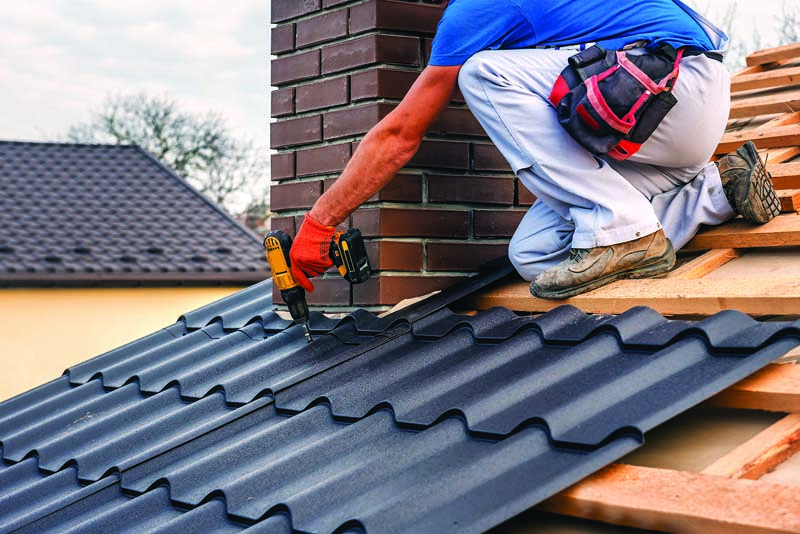
Originally Published as: One major tip for prolonging the life of metal panel: BEWARE OF IMPACT TOOLS!
DECEMBER 2016 FLASHBACK
Some stories age better than others, and this one has aged stubbornly. When we first ran it, the Metal Construction Association had already spent years warning installers to keep impact drivers off metal panels. Fastener makers printed the same caution throughout their catalogs and handed out countertop cards to distributors. Pretty much everyone who read those warnings agreed. The trouble was that the people reading them weren’t the ones holding the screw guns.
Walk onto a job site today, and you’ll see how far the message traveled. Impact drivers are still cheap, still powerful, and still sitting in every truck, and crews still grab them for roof and wall panels because they’re fast. The damage still hides under the washer for a few seasons before it shows up as rust stains and callbacks.

We’re running it again, and you can hand it to your crew and team members.
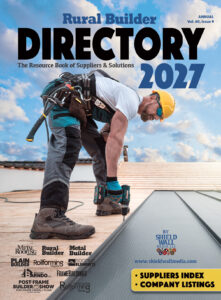
No other tools strike fear in the hearts of metal panel and fastener manufacturers alike than impact drivers and impact drills; yet, no other screw-driving tools equally delight installers. And therein lays a monumental problem. Impact drivers and drills are just too powerful for the panel that the small-but-mighty screw is designed to hold and protect, and yet they are so appealingly handy, inexpensive and powerful.
The issue of over-driving screws with impact tools is nothing new. In 2013, it was becoming such a problem that the Metal Construction Association (MCA) released a technical paper warning installers against the use of them for the installation of metal panel. Rural Builder published the information soon after, and the MCA continued its drumbeat against the practice. Still, the problem persists. Why?
Peter Graves, vice president of engineering and technical services at Sealtite Building Fasteners, says it’s easy to figure out: the information just isn’t getting to the right people. The technical papers and magazine articles are being read by people sitting at desks; “it doesn’t make it to the installers who are actually in the field using the screw guns,” Graves said. “They have not been instructed how to install a screw [into metal panel] properly, so they just drive them into the panel, into the substrate, and then hit it a couple of more times ‘because if tight’s good, tighter must be better’.”
David Webster, manager of marketing at Leland Industries, said too many builders are focused on how fast they can get a job done and not enough on how a particular tool might be negatively impacting the final result. “From what I have observed, the builder is looking at speed: get onto and off the job, get your money and move on. I don’t believe the average builder gives the tools much thought.”
And it’s easy to understand why: The damage inflicted most likely won’t be visible for months or years to come. A good builder can turn rogue without even knowing it.
What damage does it cause?
The damage is to the highly developed paints and coatings that panel and fastener manufacturers have been developing for decades to help metal roofs and sidings stay affixed and looking great, and that consumers crave in increasing numbers. If torqued too tightly, the paints and coatings are compromised, creating dimples and cracks where water collects and allows rust to develop and weaken fasteners.
“Driving relatively small diameter fasteners with a hammering and turning action of an impact driver can put undue stress on the fastener (a twisting motion),” Webster said. In the case of post frame, he noted, “driving into a hard piece of lumber or knot may fracture (or crack) the screw without the installer knowing what has occurred.”
That hammering can cause additional damage to the wood substrate. “Driving the screw into the wood with an impact driver may break up the fibers of the wood…and may damage the integrity of the wood substrate.”
What has already been broken or compromised is now subject to moisture—the mortal enemy of metal. “What corrodes the steel is moisture,” Graves explained. “The coatings are applied to prevent the moisture from reaching the screw. Impact drivers run at 2800 revolutions per minute and once they start to feel pressure, they start impacting in a rotational fashion at 3200 impacts per minute. That creates little microscopic cracks in the coating that you can’t see with the naked eye. It cracks the coating and the plating below and allows the moisture to infiltrate to the steel and start the deterioration process. Then rust starts eating up from underneath, surrounds it, the powder coating starts to swell and eventually you’ve got a rusted-off screw…”
Later on, a windstorm comes along, pops the screw and the installer wonders why the screw failed. Or, the panel rusts prematurely on the customer’s beautiful house.
“Red rust on a white panel is not what the owner wants to see and it does not help the contractor’s reputation,” said Webster.
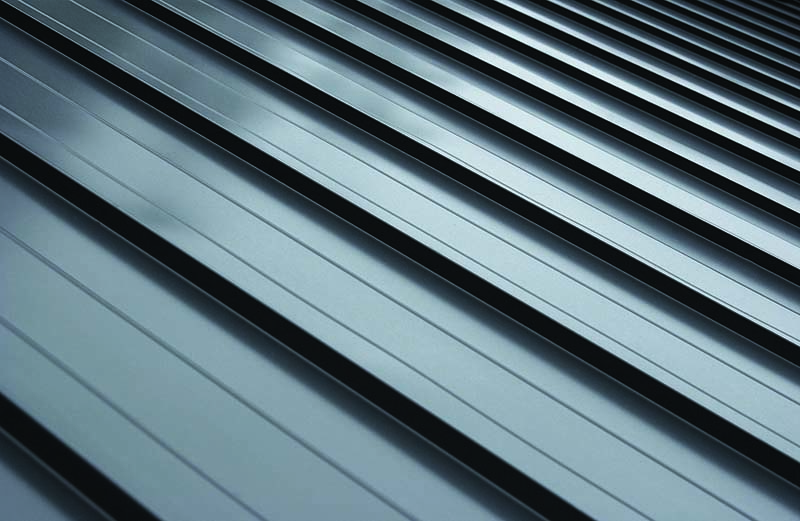
The right tools for the right projects
Impact tools are not likely to go away, and they shouldn’t have to. You just have to learn to use them when and where you need them, and leave them alone when you need far less torque. Metal panel is one of those places.
The consequences may not be immediately visible, yet Webster said the money saved now by getting on and off the job site and on to the next one fast can be wiped out in an instant. “Maybe down the line there’s headaches for the contractor with a reputation to uphold. Possible damaged panels, broken screws, paint or powder coating scratched or marred during installation,” he said, resulting in the dreaded callback. Inexperienced crews with marginal training may not understand the value of performing the work in a manner that will please the customer and the contractor, so training is a must. “Once the young installer discovers impact drivers, it may be too late for proper instruction to change his habits,” said Webster.
Both Graves and Webster favor specialty screw guns with depth setting nosepieces or torque adjustable nosepieces that prevent overdriving and scratching.
There is nothing currently on the market that fills this gap in the line of impact tools. In fact, that would be a bit counterproductive since impact tools are intentionally made for high-torque impact.
There is a screw supplier now claiming to have a screw that cannot be damaged by the use of impact tools, but Webster is skeptical. “I don’t believe it is possible to back up that claim,” he said.
So, with no less-than-impactful impact tool currently in existence, metal and fastener companies try to protect their own reputations by advocating for the less powerful screw gun, and lots of notices that go unnoticed.
Screw suppliers routinely warn against using impact drivers for metal, and some may void warranties if a damage claim arises. “Sending representatives to inspect problem jobs is expensive and time consuming and the industry that we all depend on should not be subjected to a black eye because of the actions of the installer or a less-than-reputable contractor,” Webster noted.
Sealtite also provides ample notice, warning against the use of impact tools for metal installation. “We do have that sort of verbiage all throughout our catalog for proper installation: “the use of impact drivers are not recommended for powder-coated or any wet-painted fastener.” I know we have that printed at least 20 times in our catalog, big articles warning don’t use impact drivers, colored diagrams showing a better way to go, and counter-top cutouts. We distribute those. It’s not just us, it’s industry wide [fastener companies are] out there saying the same thing, but I don’t think it gets to the installers. Until the contractors forbid the use of impact drivers on their job site I don’t know that the problem will go away.”