Even though the transition in wood preservatives is nearly complete — wood treated with CCA (chromated copper arsenate) will not be produced for many of its common uses after December 31 — questions remain for specific applications, especially in post-frame construction.
Some questions are subject to interpretation. The wording of American Wood-Preservers’ Association standards is being scrutinized as never before, since the price of wood treated with the new generation preservatives is noticeably higher than comparably protected CCA-treated wood.
Nonetheless, it’s unlikely the future will be as chaotic as some critics fear.
The movement away from CCA is real and worldwide. When CCA manufacturers decided last February to revise their pesticide labels and eliminate certain non-industrial uses of CCA-treated wood, it was a reasonable response to an evolving market.
Manufacturers disagree with many of the unscientific assertions appearing in media reports and political speeches, but the effect has been an increasing demand for CCA alternatives, particularly in playground equipment, park structures, and applications where children play. The major producers of playground equipment had already changed their specifications, as had a number of parks departments.
Rather than waiting for outside forces to control their destinies, the manufacturers chose to initiate a deliberate transition to wood protected by copper-based preservatives. Many uses will remain for CCA-treated wood, but distinguishing acceptable from unacceptable uses has generated confusion and frustration.
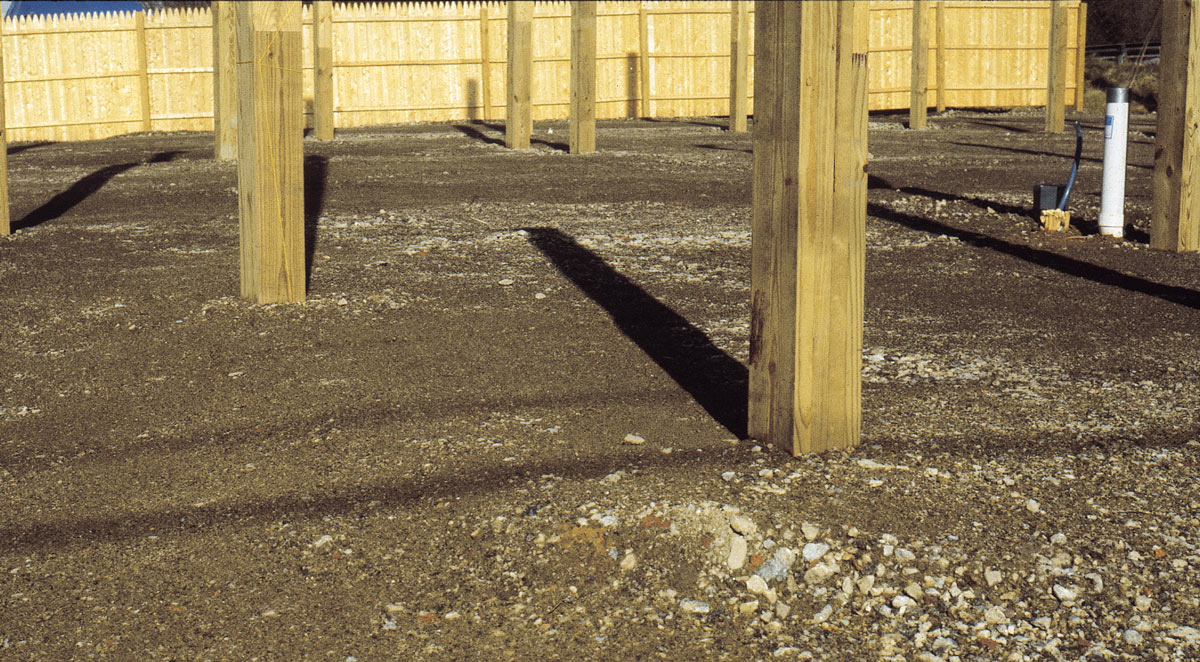

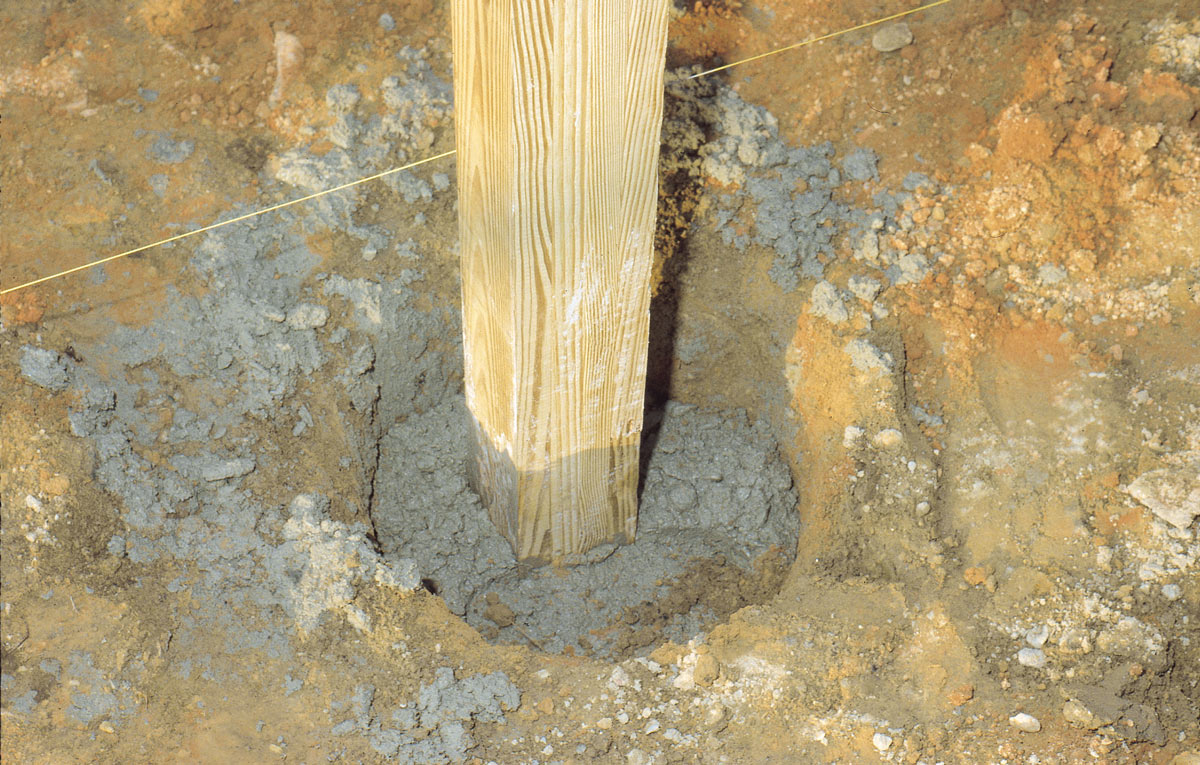
The overriding consideration was the ultimate use. The market showed little concern over CCA-treated wood installed by professionals where there would be minimal exposure to the general public. Therefore, there was no need to alter CCA labels for wood products sold to contractors or fabricators for industrial-type applications.
The label change was intended to remove CCA-treated wood from home centers and the do-it-yourself market, and, thereby, from applications to which the public is routinely exposed.
So how could a change in the CCA label be worded to separate the primarily residential applications from the primarily industrial applications?
The 2001 AWPA standards were chosen to distinguish treated products. The treating standards of the AWPA were an imperfect solution, but they were seen as the best option short of a seemingly endless description of all uses of treated wood. AWPA standards are well-established and widely recognized.
However, they were written principally to ensure effective preservation, not to define every treated commodity. Some products are clearly covered by a standard, while other uses could fall under more than one standard. This has long been the situation, but the versatility and economy of CCA-treated wood minimized the significance of most gray areas.
Just because CCA-treated wood is allowable does not mean it will be available. A good deal of the current uncertainty will probably become a moot point. Lumber dealers will have to decide if they want to carry inventories of both CCA-treated wood and new generation treated wood for the debated applications. Treaters will have to decide if they have the chemical tanks, pressure cylinders, and storage capacity to produce and market two treatments. Both groups, plus builders, will have to decide if a slightly lower cost for CCA-treated wood is worth the added risk of possible legal action.
The combination of these decisions will limit options for many buyers. Even if a treater, dealer, and builder feel comfortable with CCA-treated wood for a particular use, it may not be worthwhile for them to produce, stock, and install CCA material.
Our interpretations are not unanimously shared. I work for Arch Wood Protection. In combination with a sister company, we produce CCA and copper azole, a leading alternative to CCA. We have carefully considered the uses of treated wood and have determined what we feel complies with our revised CCA label. We think our opinions make sense, but they are not necessarily held by our competitors. Neither AWPA nor EPA has announced positions.
Nevertheless, we offer our judgments on continuing CCA acceptability for the following applications:
5x5s and larger
Permissible if the timbers are used structurally and treated according to AWPA C24 (sawn timber used to support residential and commercial structures) with a minimum retention of 0.60 pcf.
4x4s, 4x6s
If they are used as structural members in agricultural settings at 0.60 pcf retention, CCA-treated wood is permissible when treated in accordance with C16 (wood used on farms).
Building poles
Permissible under AWPA C16 (wood used on farms) or AWPA C23 (round poles and posts used in building construction).
Plywood
Permissible at all retentions per AWPA C9 (plywood).
Glue-laminated timbers
Permissible under AWPA C28 (structural glued laminated members and laminations before gluing) both for columns treated after lamination and for veneers treated prior to lamination.
Nail-laminated timbers
Permissible if the wood components are treated in accordance with AWPA C22 (permanent wood foundation).
Skirtboards
Permissible if treated to AWPA C22 (permanent wood foundation). This applies only to ground-level boards which are structural. Higher, non-structural boards cannot be CCA-treated.
Roof trusses
CCA-treated 2-inch lumber is not permissible, use copper azole-treated wood.
Fence posts (round, half-round, quarter-round)
Permissible under AWPA C16 (wood used on farms) for agricultural use only.
Corral rails
Not permissible, use copper azole-treated lumber.
Stall walls
Lumber not permissible, use plywood or copper azole-treated lumber.
As mentioned, acceptability does not ensure availability. Some of the AWPA standards mentioned require retention levels, kiln-drying, and other measures to reduce the financial advantage of CCA-treated wood and discourage production. RB
Huck DeVenzio is manager of marketing communications for Arch Wood Protection, a leading manufacturer of wood preservatives and related technology.