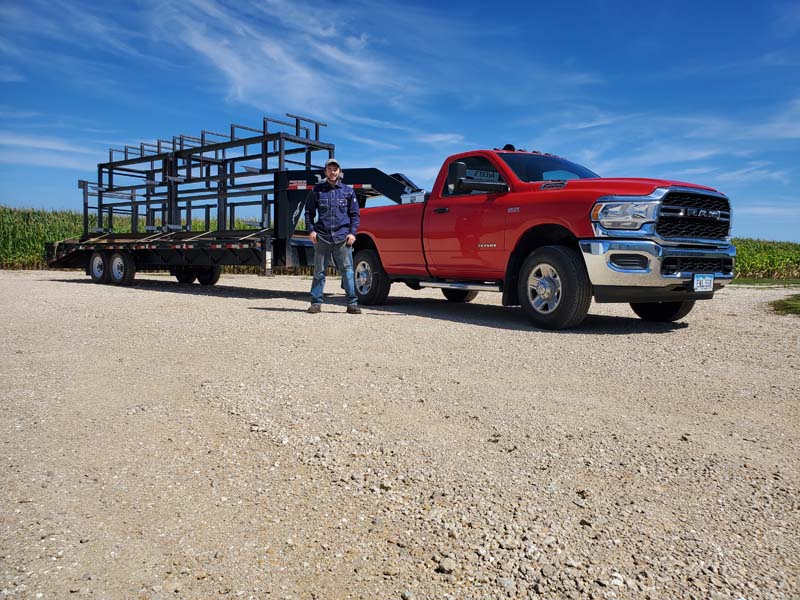
Originally Published as: From School Straight to Business Owner: Age Doesn’t Have to Hold You Back
Avery Tauke knew about hard work from the time he was a kid working on his dad’s and grandparents’ farms in Earlville, Iowa. The work agreed with him. In fact, he thought he might follow in his father’s footsteps when he grew up. Even when he began a career in the trades, he thought he might work on the farm part-time. But that didn’t work out; his dad quit farming in 2020.
Actually, his dad was the person who initially introduced him to his future career. On the farm there were a lot of things to mend or build, and Tauke experienced concrete work, roofing, carpentry, and everything from plumbing to welding.

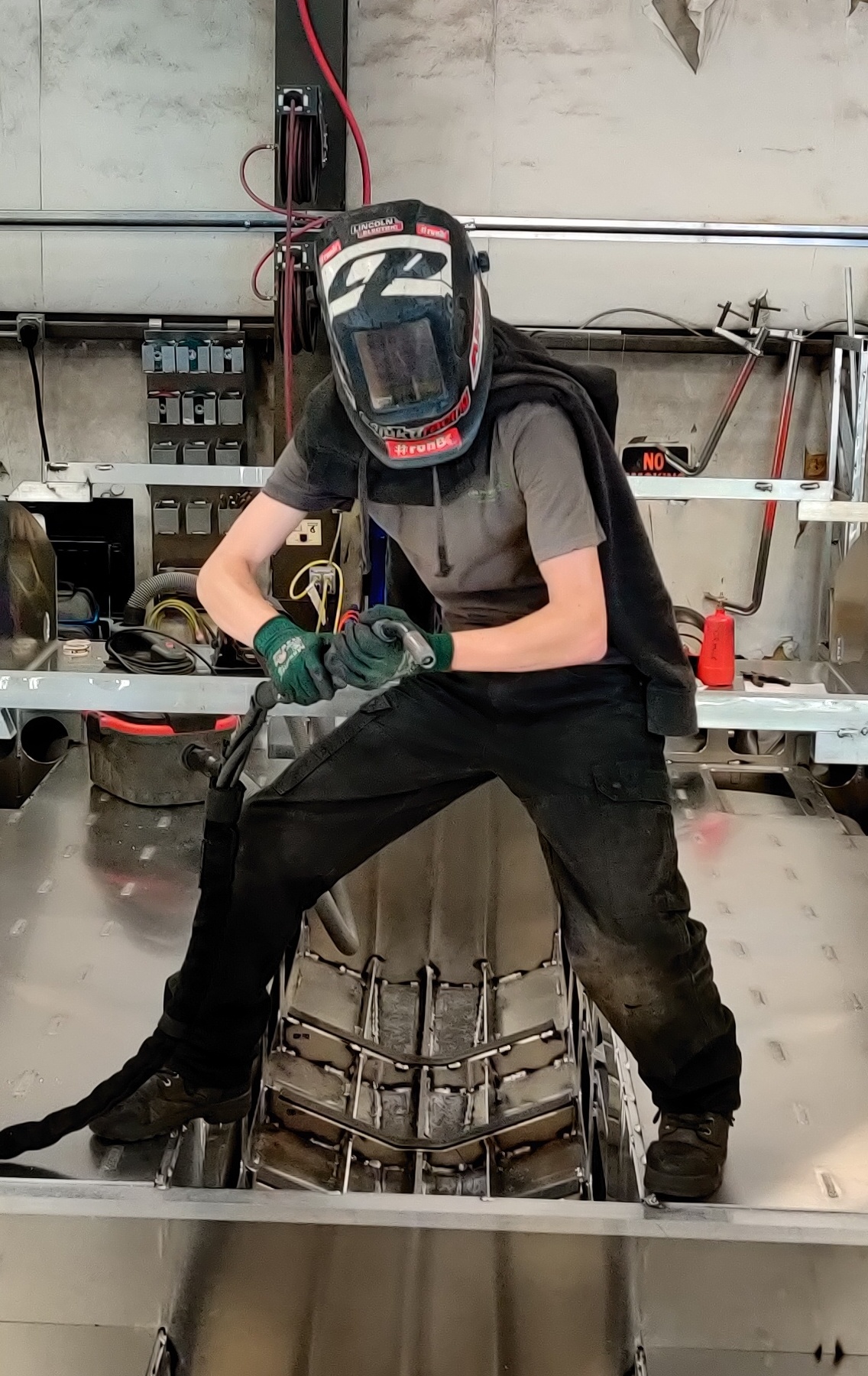
“I particularly liked welding because you could make a lot of different things – and the tools were the coolest, too,” Tauke said.
He began working with welding at school and creating a lot of items for fun. Eventually he found that he had nowhere to go with his creations anymore. Then he began making and selling skid loader attachments and other pieces of equipment. With the profits, he bought better tools which got him more excited about welding. At this time he began hearing rumors that welders are well-paid, and he began to think he would get some training in welding, get a welding job, and eventually start his own shop.

Formal Education
He started classes at Kirkwood Community College in Cedar Rapids and continued working at the granite countertop installation job at Imperial Stone that he’d had in high school. He learned how to handle customers at this job, and he made good money.
Tauke’s great-uncle advised him that he needed to apply for scholarships because, he said, sometimes people get scholarships just because no one else applied. So apply he did. He was awarded several scholarships including awards from the American Welding Society and the FFA organization.
“Applying for the Work Ethic Scholarship was different, really unique,” Tauke said. “Applying for this scholarship was kind of cool. You had to make a video and answer questions and all of it tied into the S.W. E.A.T. (Skill and Work Ethic Aren’t Taboo) pledge you were required to take, which represents everything the Foundation stands for.”
He said, “My scholarship allowed me to focus on my studies without worrying about paying for tuition and room and board. My first semester I worked during the week and it was hard to focus on my studies. I had class from 7 a.m. to noon, then work from 12:30 to 5:00 p.m. In the evening I did class assignments. However, once I didn’t work that job I could spend more time on my studies.
To replace my job, I sold custom signs and bale spears for tractors, and on the weekends I fulfilled those orders. I was making about the same money, so it worked out well. I was already a part-time business owner.”
Preparing for Full-Time Ownership
Tauke graduated from the welding program a few weeks early, and the Imperial Stone company he had worked for previously wanted him to come and work for them full time. He did, and it enabled him to save money toward his future business. He sometimes thought about quitting and getting a job welding for someone else, but he was making more money where he was, and he was getting welding experience part time on the weekends so he kept at it.
“I wondered how long I should keep working at my full-time job, but the more research I did online, the more I read that experienced people advised that you should stay longer than you think you need to while saving money,” Tauke said.
Generally entrepreneurs recommended saving enough to cover the bills for six months while the business ramps up. Tauke believes that was good advice.
Tauke said, “I think the transition from part-time to full-time business was helped by the fact that I’d been doing it part-time for quite a while. I didn’t suddenly quit just hoping this venture was going to work; it already was. You could see year-over-year improvement in the company books. When I went full-time I already had a big job lined up that would keep me busy for a month and a half,” he added.
Running Your Own Company
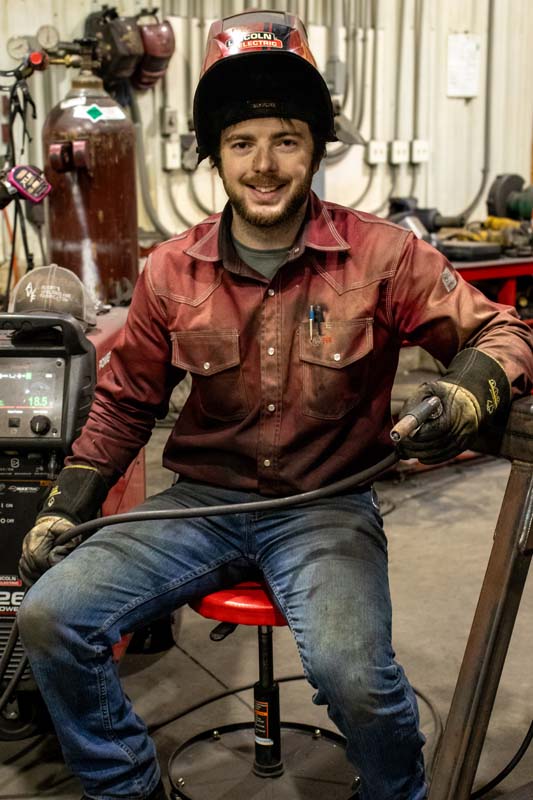
While it may be unusual for someone new to a trade to start their own business without ever having worked in the industry, it made sense for Tauke; he’ already had the training, he’d been welding for years, many of those years as a part-time business, and he had all of the tools. He has been running his business full time for a year now, and it’s going well.
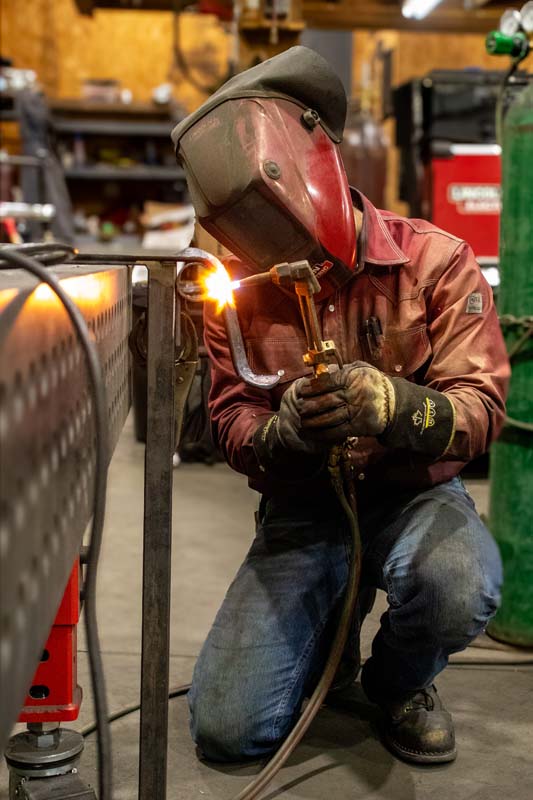
Tauke’s brother works for him part-time. They do some industrial welding, but the majority of their work is custom handrails.
It’s nice to work largely by yourself, according to Tauke, because he doesn’t have to worry about making payroll or having a lot of overhead, but on the other hand it means he has to do everything himself. He plans to bring his brother — or someone else — in full time in the next couple of years.
One thing that Tauke learned early on in his years installing countertops is that when you run into challenges and it’s getting late and you want to go home, you can’t just walk away. You need to think out of the box and if there is any way at all that you can complete the job you do. This lesson helped prepare him for business ownership because when something goes wrong, there is no one to hand it off to, and if he has to make two trips somewhere that is going to add to the cost of the job.
Tauke said, “You are not always on your own with a problem. Sometimes a general contractor or other subcontractor on a job may be able to help you out or give you an idea of how to resolve it. Often the guys on the jobsite will do what they can to help you out because everybody has had some kind of challenge at one time or other. There is often a sense of camaraderie.”
While challenges on the job may not sound like fun, they actually make the work more interesting. “It’s really rewarding when you solve those problems; you get a real sense of pride in your work,” Tauke said.
Advice for Newcomers to the Trades
“Find something that you like to do,” Tauke said. “You are going to work your whole life; you might as well find something that you enjoy doing.”
Once you are on the job, watch how you act. “If you don’t want to be treated like a kid, then don’t act like one,” Tauke said. Listen to those around you. Find someone who knows what they are doing and goes about their work professionally, and emulate them.
If somebody criticizes your work, listen to them and try to improve. In time, as people see that you are trying and you are improving, you will become part of the crew, and if you are pulling your own weight, your age won’t make any difference,” Tauke said.
As a result of a collaboration with mikeroweWORKS Foundation (www.mikeroweworks.org), Rural Builder is featuring profiles of Work Ethic Scholarship recipients in each of its issues. Over 2,600 scholarships have been awarded to trade-school students who value hard work and taking personal responsibility. Rural Builder applauds these students and wants to acknowledge their choice to apply their talents to skilled trades. Thank you, mikeroweWORKS Foundation, for your continuing efforts to close the skills gap and “reconnect the average American with the value of a skilled workforce.”