Originally Published as: Top 11 Marketing Mistakes Builders Keep Making Online (And How To Fix Them)
James Charles is the co-owner and COO of E-Impact Marketing, an internet marketing company based in Lancaster, PA that specializes in serving small- to medium-sized businesses. A former Pennsylvania-based roofer, he transitioned into web design and digital marketing in 2019 and has since helped trades-focused companies grow through effective online strategies.
Even great builders can struggle to translate their craftsmanship into a strong online presence. Yet in a world where your customers start their search online, your digital footprint is critical to your company’s visibility. To help you show up with confidence, here are some of the most common online missteps builders make and how to fix them.
1) Undefined Products & Services
Honestly, you’d be surprised by how few companies have their products and services clearly defined on their site. Many businesses make the mistake of trying to do everything for everyone, which usually ends up with them not doing much for anyone.
It’s not enough to just get people to your site. You want it to be clear the second someone lands on your site, what it is you do, where you do it, and how anyone interested can get a hold of you. To do that, you want to have a really clear idea of what your core product and service offerings are and then have a clear category and subcategory page structure that lays those out.
A good example is a post-frame company. The “post-frame” category includes hay barns, garages, utility buildings, residential barndominiums, or sheds. If all of that gets lumped under a single “Post-Frame” page, potential customers (and search engines) have a less-clear understanding of what you actually build.
2) Lack of Localization
One of the most important things you can do for your website and your online visibility is to ensure that the area you serve is defined and clear on your website. Too many companies have their address or service area in the footer, but no information about where they work in their header or near the top of the page.
Most builders serve a specific geographic area, so whether that’s part of a state, a set of countries, or a few cities, it’s important to narrow the focus of the website to exactly where you serve to target the most relevant customers. Local SEO is essential for service-based businesses because it helps you show up in the areas you actually serve. Make sure your service and location pages are clear, your business information is consistent across the web, and your Google Business Profile is fully updated.
3) Poor Photo Quality
People truly do buy with their eyes. So, photo quality is essential to your business. Having a lot of stock photography or having old or poor-quality photos doesn’t instill a lot of confidence in your work.
Use clear photos of completed projects, plus a few in-progress shots to show your team at work. Start with smartphone images, then hire a photographer once you have projects worth showcasing, especially those you want to attract more of.
Once people are on your website, having high-quality photos will convince them that you are the business that they want.
4) Unclear Calls to Action (CTAs)
Calls to Action (CTAs) should make it unmistakably clear what you want visitors to do. Use a bold primary button; if most of your sales happen by phone, that might be “Call Us” or “Call Now.” Then include a secondary CTA, like “Contact Us,” that directs users to a form.
But be sure to really think through what action you want people to take and make once they’re on your website, and look at the way your site is set up; is it currently a no-brainer for them to take that?
I recommend that your single, primary CTA live at the top of your site in the header so that it’s visible and easily accessible on every page.
5) Underutilized “About Us” Pages
The “About Us” page on your website might not be on your radar; you might not even have one, but in my experience, “About Us” pages are very important to a business and its brand.
Your “About Us” page is your chance to put a face to your business. You don’t need to feature every employee, but you should include the owner, any office staff who interact with customers, and, ideally, your builders as well.
Not only does this humanize your company, but, particularly for builders, it lets people know who they’re trusting to build on their property.
6) No Reviews or Review Presence
You should be highlighting the reviews you get. Most often, they’re on Google. It’s not difficult to integrate your Google or your Facebook reviews into your website and have them display there, or you can put a link for people to go read all your reviews.
Third-party reviews are the best because people and search engines want to know that it’s people reviewing you positively in a space that you don’t control.
The best way to get more reviews for your company is to ask for them and to make leaving a review as easy as possible for anyone who can. The more friction you take out of the process for your customers, the better.
Incentivize your crews to ask for reviews. When they’re motivated, service improves, and reviews increase in both quality and quantity. Keep your team invested wherever you can.
7) Undefined Brand
You can think about your brand as a closet where people store all of their experiences or “touchpoints” with your company and advertising. If you have a clear brand, you’ve given people a clear, mental place to put all the different things that they’ve seen or heard about your brand.
One of the biggest mistakes companies make is inconsistent branding. For SEO, your business name, address, phone number, and website URL must appear exactly the same everywhere online. If one listing says “Bob and Sons Construction, LLC,” another says “Bob and Sons Construction,” and another reads “Bobs & Sons Construction,” search engines and customers won’t know they refer to the same company. The same applies to outdated addresses, phone numbers, or URLs. If anything has changed, update it everywhere your brand appears.
Beyond the basics, strong branding also communicates what your company stands for. If we return to the closet idea, then you have to understand what kind of closet your brand is. People don’t store their cleaning supplies in filing cabinets, and usually don’t store their important papers in wardrobes. As a brand, you should indicate who you are and what you stand for. Are you high-end? Modern and cutting-edge? Defining and shaping that perception is what elevates basic branding into something meaningful and memorable.
8) Lack of Clear Pricing
Lack of clear pricing is a critical mistake for builders. Pricing is complex, and it can be hard to simplify or list if you’re doing custom structures.
You likely already have a streamlined sales and quoting process, so consider bringing pieces of it onto your website. Even ballpark pricing helps filter out tire kickers and gives serious customers a clearer path to plan. Search engines also favor transparent, structured pricing, so the more clarity you can offer, the better.
You don’t need to have super-detailed price sheets for every add-on, but including base model pricing, standard packages, or specific building sizes can be helpful. Don’t just add pricing information as a PDF or an image; list it on your site in a way that search engines can read and understand it.
9) Not Using Website or Marketing Analytics Tools
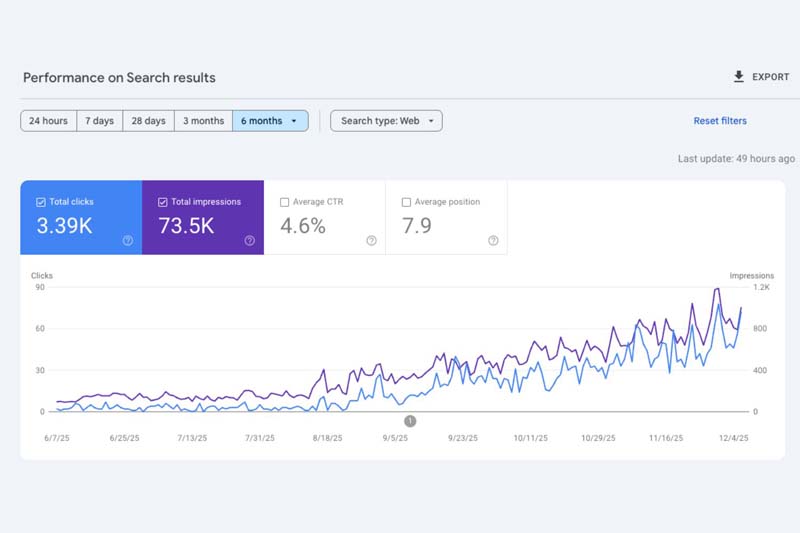
One of the most important goals for myself and my team is that the work we do provides measurable results. It’s impossible to know if any changes you are making online are working if you don’t have some kind of tracking or analytics tool set up.
The most important metrics you want to keep track of are:
- Website traffic – how many people are visiting your site.
- Traffic sources – which channels (organic search, paid ads, social, etc.) are driving those visits.
- Conversions – your primary actions, such as form submissions.
- Interaction tracking – important engagement events like 3D configurator usage or clicks on major “Click to Call” buttons.
Start by identifying the main actions you want people to take on your website and how you’ll know when those actions happen. With that in place, you can work backward to understand what’s working now and what opportunities exist to improve or grow.
10) Outdated Socials and Blogs
Truthfully, a blog shouldn’t be your top priority when building your online presence. Blogs can be valuable in the right situations, but simply copy-pasting generic AI-generated articles because “you’re supposed to have a blog” won’t do you any favors.
Social media is valuable when you share in-progress work, finished photos, or even pricing details. Consistent posting lets you integrate a live feed into your website, helping you reach people on social platforms while adding fresh content and social proof to your site.
11) Broken Links and Technical Errors
Of course, there’s no amount of review integration, redefining of brand, or brand new design work you can do that will increase your business’s online presence if your site simply doesn’t work.
At a very basic level, you need your site to load quickly and be found by search engines.
You should also keep an eye on broken links. You need to make sure that all the essential pages on your site are up and running and are working as designed. There are tools that you can use to crawl your site to help find and avoid issues like these.
First Steps for Your Business:
These mistakes can feel overwhelming, so start simple. Get your website live with a clear call to action. Then make sure it explains what you do, where you work, and how to contact you. From there, focus on attracting the right traffic, showcasing credibility, and giving visitors enough information to feel confident choosing you. Keep measuring results and adjusting as you grow.
All of these fixes are things you can address yourself. As you grow, you might need to outsource your online work so that you can stay focused on building and operating your core business.
Having a strong online presence is more important than ever, especially as younger, internet-first generations begin searching for construction and home services. If people can’t find you online, you risk becoming invisible. A solid website won’t replace word of mouth, but it will amplify it and help you reach customers who may have never found you otherwise.
Start with the fundamentals, build steadily, and treat your online presence the same way you approach your projects: with clarity and craftsmanship!