
“I make more than others who graduated from a 4-year college!”
Tyler Lee liked school. Track, baseball, football, basketball…he was involved in nearly every sport available in Milbank, South Dakota. He had lots of friends and great teachers, he earned good grades, and he really liked math, yet he knew he didn’t want to sign up for four more years of school. He wanted to get started on something.
Initially he thought he would follow in his father’s footsteps and do SCADA programming at the local cheese plant, controlling the robots that keep the plant productive. This type of programming can entail some schooling, anywhere from six months to four years, but often companies will take someone with little formal training and teach them on the job.
However, Tyler visited an uncle in Arizona and he brought him a furnace and air conditioner in a trailer all the way from South Dakota and installed them including doing the ductwork. He got the systems up and running as a thank-you to his uncle for his stay. During the process, Tyler found that he really liked the work.
Tyler started thinking about HVAC as a career. He realized that everyone needs these services, and providing them is a way to help people. Plus, it’s work that will always be needed
Getting Started
Tyler researched this pathway and discovered he needed to be EPA certified. He found a one-year program at Southeast Tech where he majored in mechanical systems.
The daily program entails learning the fundamentals of heating and cooling with lecture for about an hour, then working hands-on in the lab, troubleshooting air conditioning and furnaces. Tyler had already completed the basic requirements in math, English, and computer skills. In the afternoon he went on service calls.
While attending tech school, Tyler began working with Central Heating and Air in Sioux Falls. The first few months, he worked with experienced HVAC professionals learning how to install furnaces, air conditioners, and ductwork.
“The best part of the learning experience in the beginning,” Tyler said, “was setting a foundation, getting all the fundamentals and then putting them to work in real-life situations.”
Eventually Tyler began going on calls with Luke Volden, the service manager, trying to soak up every bit of knowledge he could.
Tuition
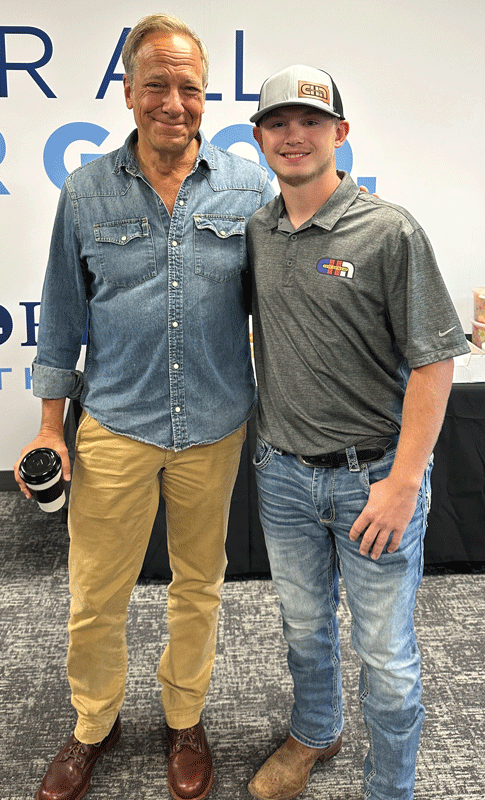
Tyler’s mom found the mikeroweWORKS Foundation Work Ethic Scholarship online and told him about it. She advised him that he needed to apply. Tyler followed her advice, filling out the application, creating a video about himself, and answering essay questions, including: “What would you add to the S.W.E.A.T. Pledge?” (The Skill and Work Ethic Aren’t Taboo Pledge is taken by every scholarship winner.) Tyler’s response was to tell people to ask themselves what they think is the best use of a day.

“Everyone has the same 24 hours in each day; how do you want to spend it?” Tyler said.
The $8,000 that Tyler won paid his entire tuition so he could learn worry-free. To put this in perspective, the average cost of four years of college for tuition alone at an in-state university is approximately $46,000, according to an annual survey of colleges conducted by CollegeBoard.
The Job
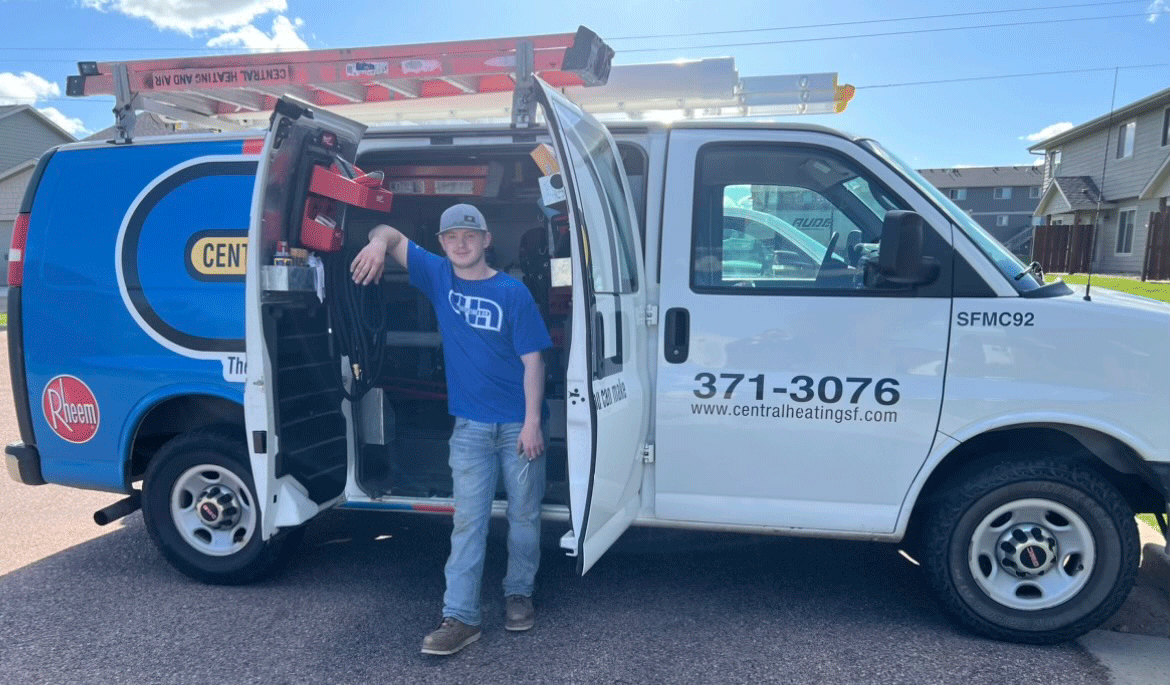
Tyler finished his tech school program in spring of 2024, and he has now worked at Central Heating and Air for two years. A typical day includes 5-7 pre-scheduled stops for troubleshooting and replacements of heating or air conditioning units. He has graduated from working and learning from more experienced workers to taking his own service calls in his own work van. He works residential, commercial, and industrial jobs and he loves it.
“My favorite part of the job is problem solving. For example, when the rooftop cooling unit of a church was not working and tech support couldn’t help, I figured out what the problem was. I got the part and got the A/C up and running,” Tyler said.
It made his day because he knew that otherwise, 300-400 people would have been suffering in the stiflingly hot church.
Job Requirements
Tyler believes there are three main qualities that are crucial to success in his line of work.
- Ambition. A person has to be a self-starter and have a determination to resolve the problem.
- Work Ethic. Caring about the job you do and getting the job done so you can move on to help the next customer is paramount.
- Critical Thinking. Problem solving is a big part of the job. A person needs to be able to think about the different reasons a system may not be working and how to resolve the problem.
If you join the HVAC industry, always be ready and willing to learn from anyone, and pick the brains of those with more experience. You can never know everything, especially because things change. For example, refrigerants are undergoing alterations now to make them more environmentally friendly and less flammable. The more you know the better off you are.
Are you looking for an opportunity?
If you are looking for an opportunity but you don’t have much money or experience, there are so many opportunities in the trades! Tyler said his company is looking for workers and so are others in the area.
“Both the work and pay are satisfying,” Tyler said. “One year after graduating from one year of college, I am making more money than others who went to college for four years.” RB
As a result of a collaboration with mikeroweWORKS Foundation (www.mikeroweworks.org), Rural Builder is featuring profiles of Work Ethic Scholarship recipients in each of its issues. Over 2,600 scholarships have been awarded to trade-school students who value hard work and taking personal responsibility. Rural Builder applauds these students and wants to acknowledge their choice to apply their talents to skilled trades. Thank you, mikeroweWORKS Foundation, for your continuing efforts to close the skills gap and “reconnect the average American with the value of a skilled workforce.”