Originally Published as: Features of Robotic Milking Barns: How Technology Is Transforming Dairy Work Without Replacing the Worker
Jacob Prater is a soil scientist and associate professor in Wisconsin. His passion is natural resource management along with the wise and effective use of those resources to improve human life.
Technology has been a boon to many different industries and, in most cases, comes with its own initial challenges. Sometimes technology replaces certain types of labor, but in an economy that serves people, there is always a place for human work. The number and types of laborers in an industry may change over time, but the need for them never disappears.

Animal husbandry — and dairying in particular — has seen significant technological innovation in the past couple of decades. With labor in short supply and good workers hard to find, some dairies have turned to robotics. As of 2023, it was estimated that between 6 and 8 percent of Wisconsin’s dairies were using some form of robotic technology (mostly automated milking systems, or AMS), with adoption continuing to grow.
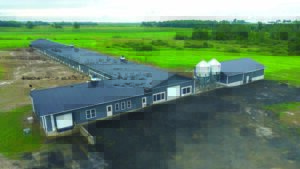
I remember seeing a robotic dairy for the first time when I toured one in Plover, Wisconsin, back in 2018 (I think). Currently, there are two robotic milking barns in the county where I live. The first, built in 2013, was recently purchased by the second, constructed in 2016. In speaking to the new owner of both robotic dairies, he was quite pleased with how they function and with the reduction in labor demands in what is traditionally a highly labor-intensive industry.
Even so, he noted that labor is still needed—especially a few skilled workers who can maintain the robotic systems and remain on call around the clock. My take: these systems don’t really replace laborers so much as they boost their efficiency and capability. You need fewer workers, but they require different skills—much like when a framer who once used only a hammer gets his first nail gun. That said, some estimates suggest that a milking robot can save more than $30,000 in manual labor costs each year.
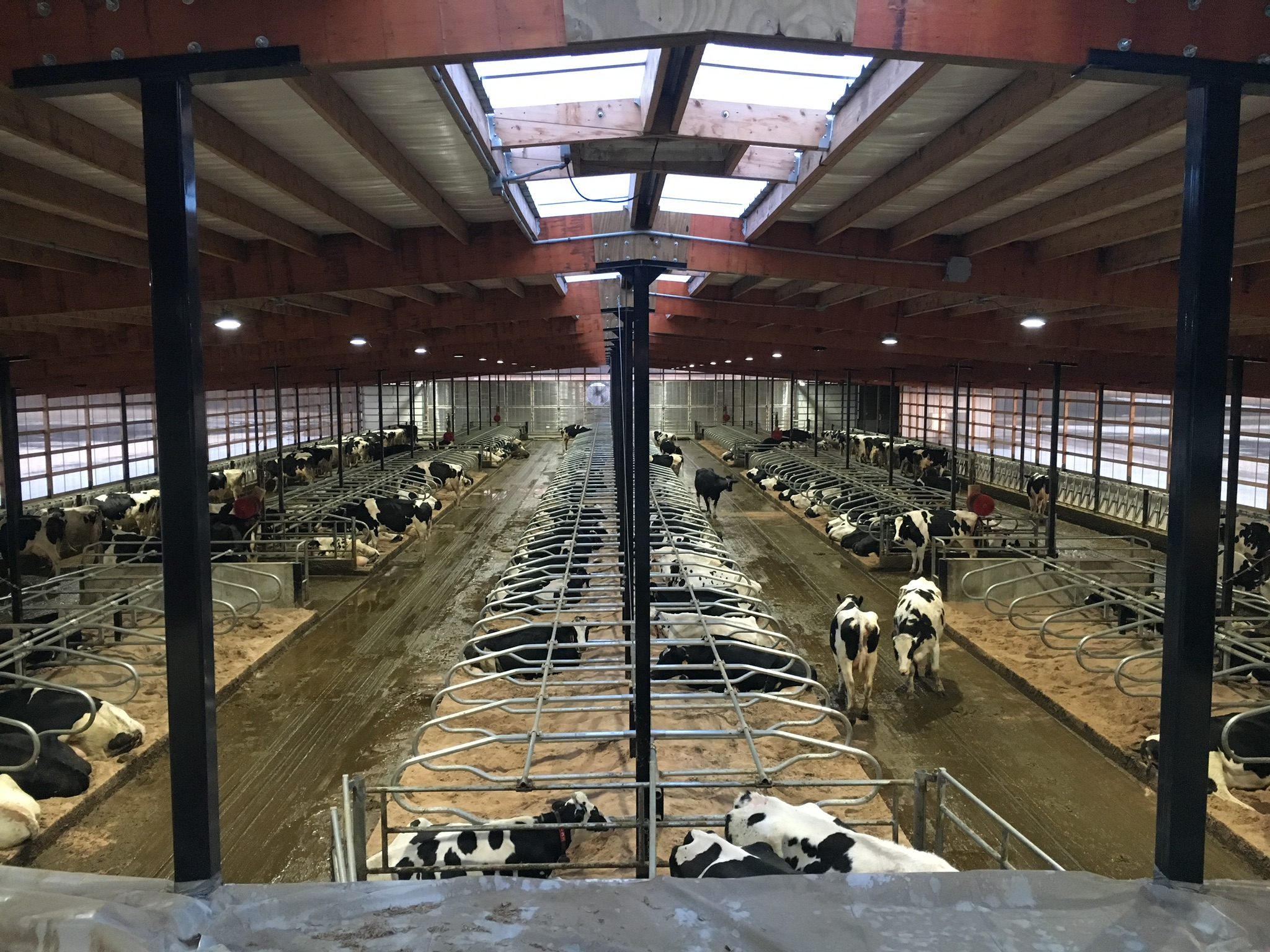
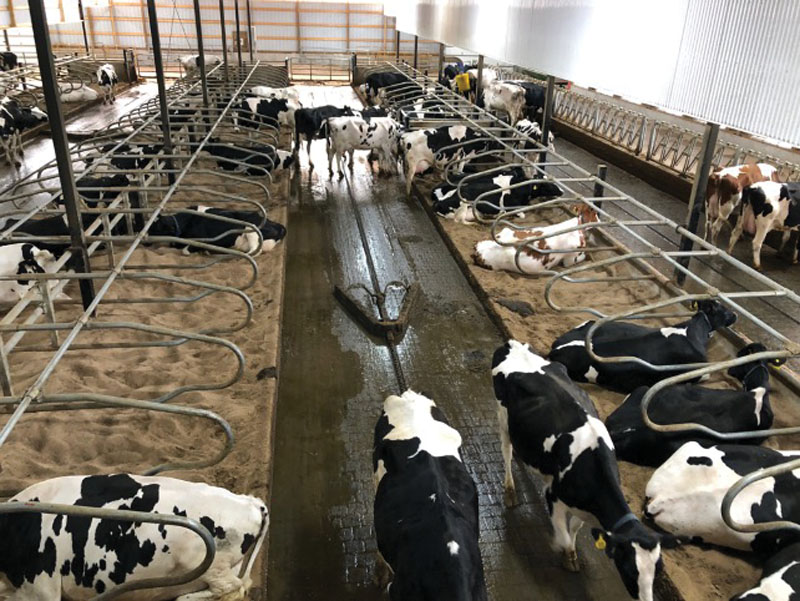
The two robotic milking barns I mentioned are set up slightly differently but share the same major features. The smaller barn uses end-to-end ventilation, while the larger is cross-ventilated. Both use active (fans) and passive (side curtains) ventilation systems, as well as robotic feeding, manure removal, and milking.
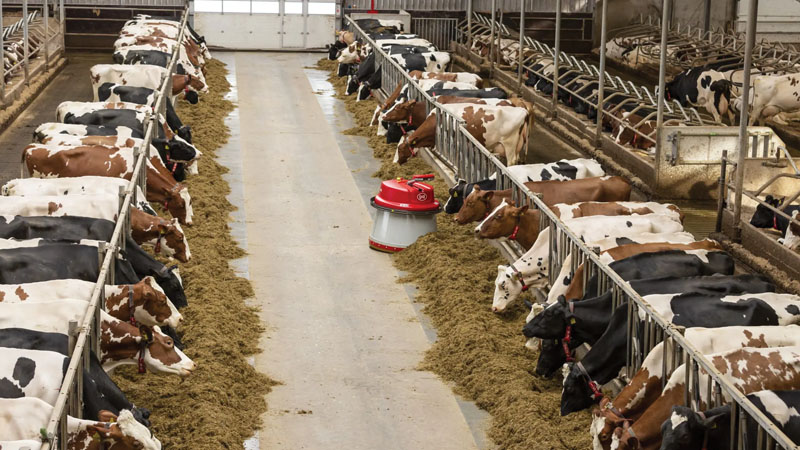
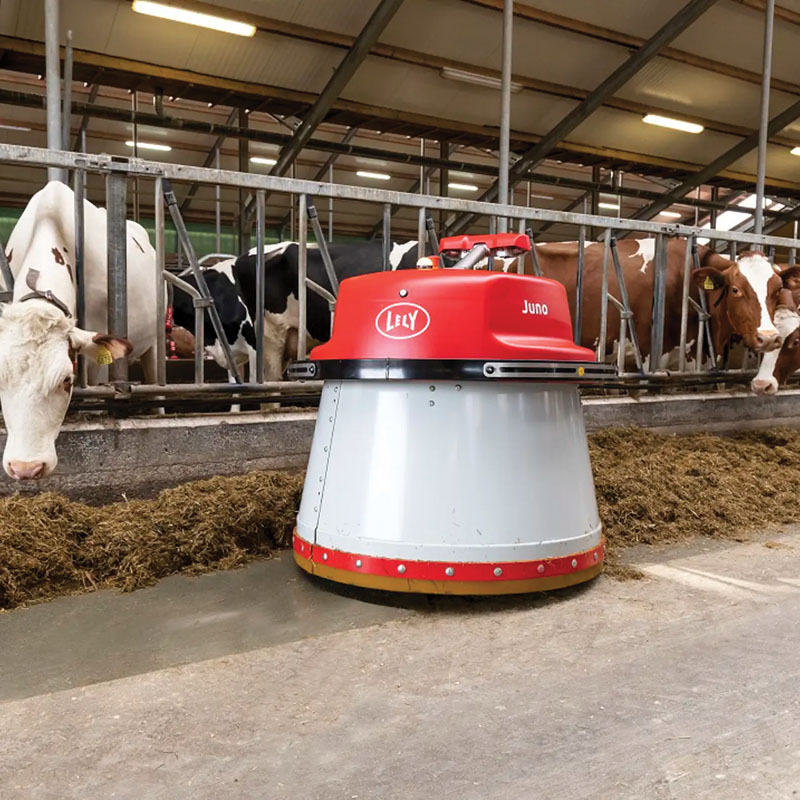
Feed is moved into the bunks by a robot that pushes it within reach of the cattle, reducing waste and keeping the area clean. Manure is removed using a chain with scrapers attached, which slowly move waste into a flushing system that carries it out of the barn. Milking, of course, is handled by a robot as well.
The major features of these barns include automated milking systems, automated feeding, automated manure removal, and automated climate control. While some of these systems have been around longer than others, the automated milking and feeding systems are relatively new technology.
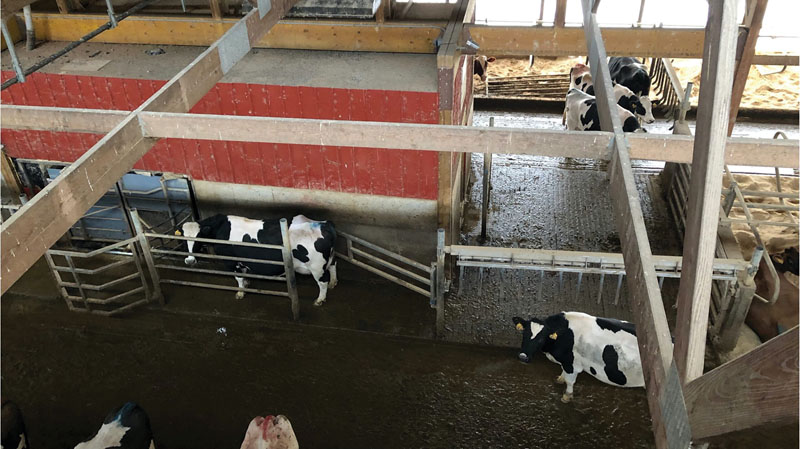
There are two main approaches to AMS. One uses several machines and runs cows through in batches at designated milking times. The other allows cows to come through individually whenever they choose to be milked. The second approach may sound unusual, but it works—and studies show it can increase both milk production and quality.
A robotic milking barn, then, is mostly autonomous. Cows move at their own pace, are milked and fed automatically, and have manure removed and the barn climate controlled—all robotically. To make this possible, the building design differs from traditional milking barns, with a few key design considerations.
First, capacity is based on the number of cows each AMS can serve. While this varies by manufacturer, research from The Dairyland Initiative at UW–Madison suggests designing for about 55 cows per robot—lower than the theoretical maximum of 63 and the industry average of 60—to maintain good performance. They also recommend at least two robots per barn for redundancy.
In addition, The Dairyland Initiative suggests providing at least 24 inches of feed bunk space per cow, along with frequent feed push-ups. This feed movement can be handled by a robot, provided there’s a smooth concrete surface along the feed bunks. Feed push-up areas can be central or to the side (the ones I observed were on the outside edge). Keeping feed pushed up and available at all times reduces waste and ensures cows always have access.
It’s critical to have the right number of robots for your herd, and equally important that cows are willing to visit the robots voluntarily. This requires wider alleys—one to three feet wider than normal—and open space in front of the milking stations (at least 15 feet of clear alley is recommended by one major manufacturer). This area should have good traction, such as grooved concrete, but shouldn’t be more comfortable than the rest of the barn—you don’t want cows lounging there.
The design should minimize gates and obstacles while still allowing handlers to separate animals that need care. Common layouts include L-shaped or “tollbooth” styles. (See diagram 1.) A good location for a foot bath is right after the cow exits the robotic milker.
Chain-and-scraper manure removal works well but can be a tripping hazard, so traction is important. Again, grooved concrete is a good choice. Slatted floors with trenches can also be used to flush manure away with water.
New construction is far more suitable for robotic systems than retrofitting old barns. One of the robotic dairies in my county built its robotic barn new but also retrofitted some older barns. When retrofitting, it’s important that cows can easily access the milking area—the goal is to encourage voluntary milking. The dairy operator emphasized following the manufacturer’s plans and research-based layouts rather than trying to reinvent the wheel.
While the upfront cost of a robotic milking barn is high (over $200,000 per milking robot), the operator I spoke with wouldn’t go back to a traditional setup. In fact, he recently acquired a second robotic operation. According to The Dairyland Initiative, in a well-designed facility, “we can expect 2.8 milkings per cow per day with less than 5% of the group needing to be fetched, and a target of over 85 lb (39 kg) of milk per cow per day for the average mature Holstein cow.”
To put that in simpler terms: traditional dairies usually milk twice a day, while voluntary robotic systems average between 2.5 and 3 milkings daily, resulting in roughly 4 more pounds of milk per cow per day—all with much less manual labor.
With an estimated payback period of 4–7 years and a lifespan of 10 years or more, robotic milking systems are likely to become even more common, especially as labor shortages continue in rural areas.