Originally Published as: Coming: More Beef, More Buildings
JANUARY 1971 FLASHBACK
In 1971, the U.S. economy was mired in stagflation. In August, President Richard Nixon launched the Nixon Shock—freezing wages and prices, adding import tariffs, and ending the dollar’s link to gold—sending ripple effects through agriculture and the beef industry.
Beef demand surged then, topping 90 pounds per person. Today, Americans consume about 55–60 pounds per person, still among the highest in the world.

Cattle handling, however, has seen one of the industry’s biggest transformations. In 1971, facilities often created stress and injury. That changed with Temple Grandin, whose designs—curved chutes, solid sides, and better footing—reduced stress and improved outcomes.
Modern operations now standardize low-stress, humane handling—an enduring shift from the practices of the early 1970s.
Look ahead to 1980. From 230 to 235 million beef-eaters in the United States roughly 15% more than in 1970.
Fastest growth among 20-44 year-old group … the main labor force, big meat consumers. Consumer incomes up sharply. Real growth in gross national product up around 50%.
That’s the picture emerging from long-range outlook specialists’ economic crystal ball. It has big significance for beef producers… and for farm builders the job of producing over 29 billion lbs. of beef and veal per year by 1980-up from 22¼ billion in 1970.
With rising incomes supporting the mounting appetite for this widely-preferred product, economists say consumers will eat an average of around 130 lbs. of beef and veal a year in a decade fro now- vs. 116 lbs. in 1970.
Tie it in with the population growth, and you wind up with a beef and veal increase of nearly one-third.
Some analysts think this projection may even be conservative. Says Undersecretary of Agriculture Phil Campbell: “The 1980 market could very well be even larger than these figures would indicate.”
More Money, More Meat
He cites Food Stamp, child feeding and other food aid programs, plus a new approach to welfare assistance as growth factors. “As low income Americans get more dollars, their demands for meat, poultry and dairy products will grow,” Campbell predicts.
But let’s just stick with the premise that beef production will rise by about one-third in this decade. A year ago we had 91 .1 million head of beef cattle and a total cattle inventory of 112.3 million. By 1980 we’ll apparently need roughly 113 million beef cattle and 128 million total.
As dairy herds decline further all of the increase will be in beef cattle. The net gain in the 1970s is expected to be as great as the 16 million head ·rise of the 1960s when beef consumption per person rose 2.8 lbs. per year.
Some of the increase in beef demand will be provided for by producers outside the U.S.
Consumers, growers, hamburger chains and processors will clamor for more imports, while beef producers will argue for import restraint. We’re assuming that present legislation, which ties beef import increases to domestic production increases, will still be in effect by 1980.
Cow herds obviously will need to grow considerably to provide calves for expanding beef demand. Projections of the beef cow herd center on about 47 million head 9 years from now-a one-fourth increase for the decade.
That level will be exceeded if the growth rate averages near the 4% rise of the past year.
As in the 1960s, grain-fed beef will provide all the growth in beef production. It’s expected to rise by around 50%, considerably more than offsetting the decline in beef from cattle which get little or no grain-feeding.
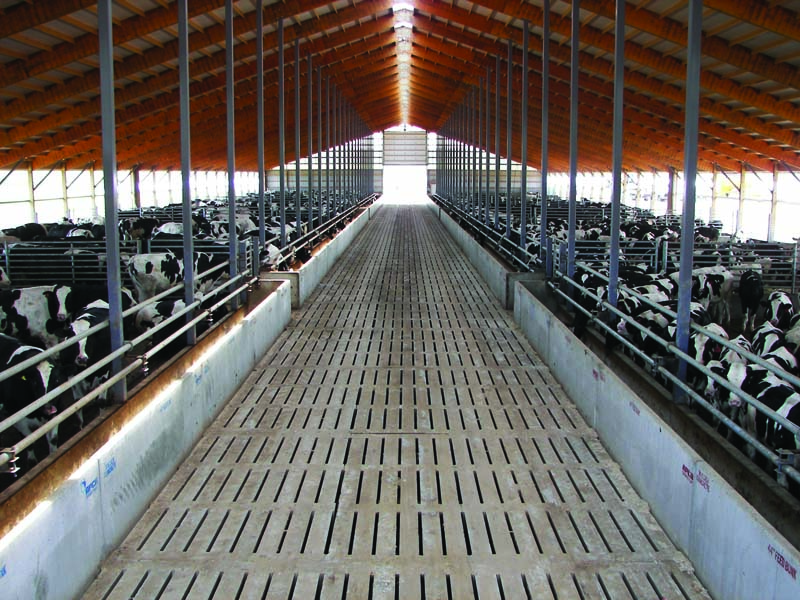
It’s the feedlot section of the business which obviously will hold most of the attention for farm builders.
You ‘re sure to see the major chunk of the cattle-feeding growth come from the big commercial feedlots … those with one-time capacities of 1,000, 10,000, 50,000 and even more. Less than 1% of U.S. feedlots already produce over half the nation’s fed beef, and less than three dozen lots produce 10%!
Tough Competition
A continuation of this trend to bigger but fewer feedlots will mean even more emphasis on facilities that handle more cattle with reduced manpower, but it may also mean intensified competition among farm builders. You will have to really be on your toes to get your share of the business.
Your sales won’t depend just on being able to provide buildings and equipment for the best price, but on helping customers meet their goals.
“There will be improvements in technical efficiency during the 1970s” points out Ohio State Agricultural Economist Thomas Stout. “These will reflect an urgency for faster and larger weight gain. What the 70s wants is more quantity and less waste without desirable quality already attained.
“The 70s will reward higher calving rates, heavier weaning. bigger cattle, better feed conversion, less carcass fat and similar technical improvements. An animal scientist* recently. estimated nearly a billion dollar savings in the beef industry by attentive application of knowledge already at hand.”
(*We suggest you write Dr. E.J. Warwick, Assistant Director Animal Husbandry Research Division, ARS US Department of Agriculture, Washington DC 20250, for a free copy of his October, 1969, talk on “Beef for Tomorrow.”)
A growing part of your business with cattlemen will almost certainly include waste management systems. Federal, state and local laws are sure to insist on more effective control against air, water and land pollution, particularly by the big feedlots.
Many areas, as you know, already have anti-pollution laws, some with stiff penalties against violators.
Where’s the Action?
Where cattle expansion takes place certainly will be important to farm builders. As has developed over the past decade, all areas of the country probably will share in the beef herd expansion.
The largest absolute increases in recent years were in the South and in the West North Central States. Percentage-wise, the increases have been greatest in the Atlantic, South Atlantic and North Central States.
“The increases in the beef breeding herd during this decade will occur primarily in the areas that can expand forage supplies most easily,” predicts Don Paarlberg, USDA’s Director of Agricultural Economics. “The greatest possibilities we see appear to be the North Central and South Central States, and in the Southeast.
“Increases in the Lake States (as a result of declines in dairy cows) as well as substantial increases in fringe states such as Tennessee and Kentucky, will provide increased supplies of feeder cattle for Corn Belt cattle feeders. Expansion in feedlots in the South Central States will continue to curtail shipments of feeders out of that area.”
More important to most farm builders than the location of the breeding herd is where the cattle feeding will take place.
In the late 1950s and early 1960s, feedlot capacity in the West expanded. In the late 1960s, we saw a fantastic expansion in the Southwest. (especially Texas and Oklahoma) and in Kansas and Nebraska.
Fed cattle marketings in Texas and Oklahoma jumped from 354,000 in 1955 to 3.2 million head in 1969 and still higher last year. Their share of fed marketings (from 22 major feeding states) rose from 3% to over 14%. Marketings from Kansas and Nebraska rose from 1.8 million to around 5 million head.
The growth in the Southern and Central Plains has been largely at the expense of the Eastern Corn Belt and in recent years also at the expense of the West. Last year Texas and Oklahoma marketed more fed cattle than Illinois, Indiana and Ohio.
Livestock economists around the country believe that, although cattle feeding will expand considerably in this decade, we won’t likely see feedlot capacity grow as rapidly as in the past several years .
Furthermore, they don’t expect one region to expand at the expense of others as has been the case in the Southern and Central Plains in recent years.
No Water, No Cattle
A real problem developing could considerably curtail the rapid feeding expansion in Texas. It’s the growing concern that water supplies in the High Plains will become limited.
New irrigated land for growing feed grains, however, is being rapidly developed elsewhere in Texas, New Mexico, Kansas and Nebraska. Although Colorado utilizes substantially more feed than it produces, one new feedlot (Montfort’s) recently opened with a 100,000 capacity.
Thus, unless water supplies should severely limit feed grain production over a wider area than now seems likely, or pollution or waste disposal becomes unmanageable, it appears that feeding will continue to grow in the Southern and Central Plains.
Further expansion in cattle feeding is expected in the Midwest particularly the Western Corn Belt. But the Corn Belt as a whole may continue to grow more slowly than the Plains as the Eastern Corn Belt continues to urbanize and provide better off farm employment opportunities.
Cattle feeding in the West, having already caught up with its market and available feed_ supplies will likely grow more in line with the growth in demand and future feed supplies.
There have been several drawbacks to a sizeable expansion in Southeast cattle feeding. It’s a deficit feed grain area, and· it’s cheaper to ship feeders out than feed grain in. High humidity, hot weather can be limiting factors.
“I believe we will see a considerable expansion in cattle raising in the Southeast during this decade,” says Paarlberg. “With improved roughage, farmers there might take their calves up to the yearling stage. But there is some question as to whether this area will become an important large scale feeding area.”