Originally Published as: Renting, Leasing, or Purchasing Construction Equipment: Determining Which One Is Right for Your Business
For builders, the choice between renting, leasing, and purchasing construction equipment can significantly impact both project profitability and operational efficiency. Each option offers its own advantages and limitations, and the best choice often depends on the company’s size, project frequency, capital availability, and long-term plans.
A number of pros and cons affecting each option, as well as practical factors, need to be considered to make informed decisions that support business goals.
Renting Equipment
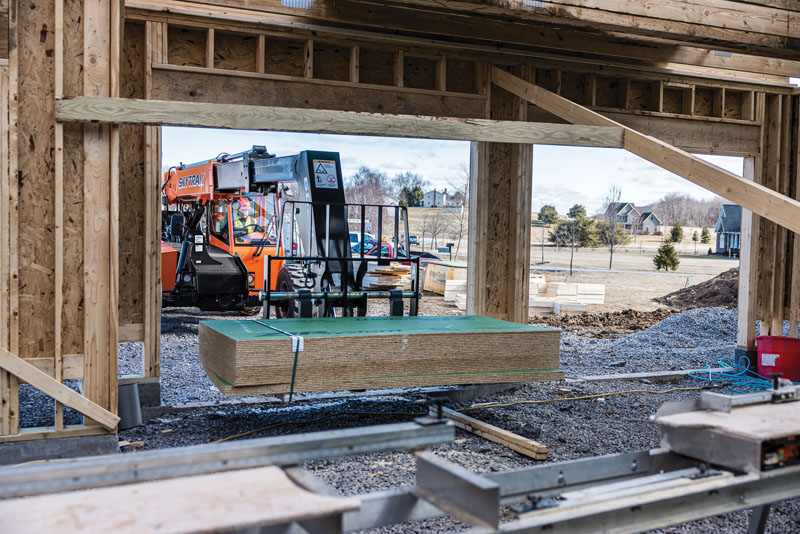
Renting involves paying to use a piece of equipment for a short-term period — anywhere from a day to several months. Rural rental centers and national chains offer a wide variety of machines from mini excavators to skid steers.
Pros of Renting
- Low Upfront Costs: No large capital investment is required; only pay for the time you use it.
- Flexibility: This is ideal for one-off projects or short-term equipment needs.
- No Maintenance Responsibility: The rental company handles repairs and servicing.
- Access to Newer Models: Rentals often include newer equipment with the latest features.
- Reduced Storage Needs: Renting eliminates the need for long-term storage or winterization in off-seasons.
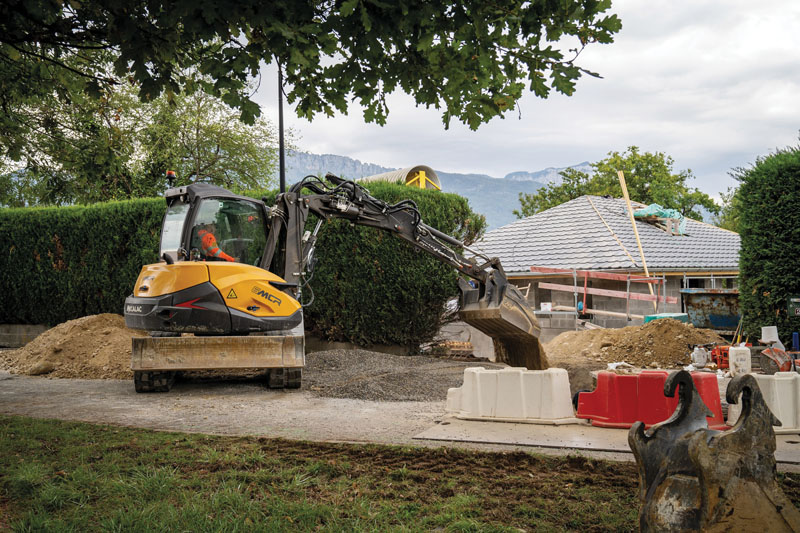
Renting a multipurpose machine allows flexibility at a reasonable cost. “For a new builder just getting their footing, renting something like a crawler-skid excavator that can perform the jobs of multiple pieces of equipment would make a lot of sense,” said Peter Bigwood, general manager of Mecalac North America. “A crawler skid excavator allows them to harness the speed and agility of a compact track loader, the maneuverability and digging capabilities of a mini excavator and the reach of a telehandler all in a single machine. So, instead of renting a whole fleet of equipment, they could rent one machine that excels at many different things.”
Cons of Renting
- Higher Long-Term Costs: Daily or weekly rental fees can add up quickly over repeated uses.
- Limited Availability: Equipment might be booked during peak construction seasons.
- Transport and Scheduling Hassles: You’re dependent on the rental company’s delivery schedule.
- No Equity or Tax Benefit: You gain no ownership or long-term financial value from the equipment.
Financing is a broad term that encompasses both leasing and outright purchase. There’s a huge demand for construction equipment financing. Given the nature of the construction industry’s need for expensive equipment, which involves a large financial commitment, that’s not surprising. According to the “2025 Survey of Equipment Finance Activity” released by the Equipment Leasing & Finance Association (ELFA) in August, construction is one of the top five most-financed equipment types, with the other four being transportation, agriculture, IT and related technology services, and material handling.
Ultimately, businesses have to focus on profitability. “How much profit you make depends on keeping your equipment costs affordable and predictable,” said Matt Coldsmith, Senior Director, Global Customer Financial Solutions at JLG Industries. “There is no better way to preserve your cash, manage your cash flow and budget, and align your investment in equipment than to deploy an effective financing strategy. This not only helps reduce the short-term pains of starting a new customer contract; it also helps reduce costs throughout the lifecycle of the asset.
“For equipment-intensive businesses, controlling the financial impact of acquiring and maintaining the gear that’s essential to nearly everything you do is a constant challenge,” said Coldsmith. “On one hand, your equipment is a primary productivity and profit driver. On the other, it can be a major cause of cash flow and budget headaches. And, that’s when equipment needs go as planned — which isn’t exactly all of the time, right? Things rise to another level of difficulty entirely when there’s an unforeseen breakdown, or a job opportunity that demands equipment you don’t currently have available in your fleet. Fortunately, equipment financing is an effective way to restore balance.”
Leasing Equipment
Leasing is a medium- to long-term agreement (typically 12 to 60 months) in which you make regular payments to use a machine. At the end of the lease, you may have the option to purchase the equipment at a reduced price.
Pros of Leasing
- Lower Monthly Payments: Leasing is more affordable than financing a purchase outright.
- Access to Modern Equipment: Leases often include newer or specialized equipment you might not be able to afford to buy.
- Tax Deductions: Lease payments may be tax deductible as a business expense.
- Predictable Budgeting: Fixed monthly payments help manage cash flow.
- Optional Ownership: Some lease agreements offer a buyout clause at the end of the term.
Cons of Leasing
- No Ownership During Lease: You can’t build equity unless you purchase it later.
- Early Termination Penalties: Getting out of a lease early can be costly.
- Usage Restrictions: Leases may come with usage limits or maintenance clauses.
- Total Cost Over Time: If you lease the same equipment for a long time, the total cost could exceed a purchase.
Purchasing Equipment
Buying equipment outright — either with cash or through financing — means full ownership and responsibility. For essential machines used frequently, purchasing can be a long-term investment.
Pros of Purchasing
- Full Ownership: Once paid off, the equipment is an asset with resale value.
- No Usage Limits: You control how, when, and how much the equipment is used.
- Custom Modifications Allowed: You can modify equipment to suit your specific needs.
- Tax Depreciation: Purchased equipment can be depreciated over time to reduce taxable income.
- Available Anytime: Purchasing eliminates scheduling conflicts and reliance on outside availability.
Cons of Purchasing
- High Initial Investment: Buying machinery ties up a large amount of capital or incurs debt.
- Ongoing Maintenance and Repairs: You’re fully responsible for upkeep and unexpected breakdowns.
- Depreciation: Equipment loses value over time, especially with hard use or model changes.
- Storage and Insurance: Ownership comes with additional overhead costs.
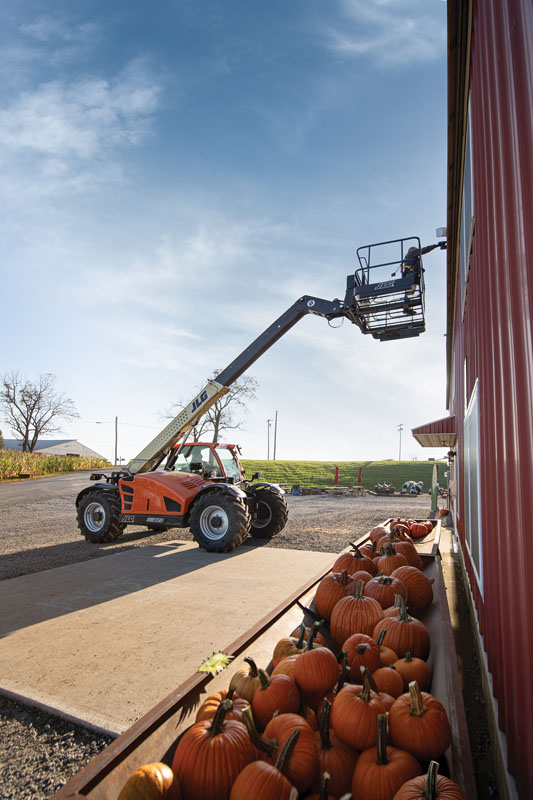
Buying expensive equipment is a big decision that needs to be carefully considered. “Financing equipment purchases can potentially be more challenging than financing other types of purchases,” said Coldsmith. “That’s why you should work with a lending partner like JLG Financial that not only knows about the financing market but also about the industry you work in, as well as understands the types of equipment you need to get the work done and can design a financing program that specifically meets your needs. With the help of a trusted lender, you can use your equipment purchase to drive more profit, help you manage your fleet more efficiently and to grow your business — even in the most uncertain of market conditions.”
When you’re ready to make the leap into ownership, leveraging the flexibility of a multipurpose machine is, again, a great idea to help maximize value. “Purchasing a machine that performs multiple tasks well is a smart investment for builders looking to bolster their fleet,” said Bigwood. “The basic purchase price may be a bit higher, but the boosted productivity will drastically increase the return on investment while operating and maintenance costs will be reduced. If a well-established builder wants to maximize their equipment’s potential, a crawler skid excavator can help them get the most work out of a single machine.”
John Klemp, an equipment consultant for Wisconsin-based equipment dealer Riesterer & Schnell said that when it comes time for a builder to decide when to stop renting and to lease or purchase a piece of equipment instead, “It really comes down to the hours and how much they’re using it. Everything comes down to cost per hour. If you’ve got a 40-hour work week, how many hours do you put on that machine each week? If you’re putting on 10 hours a week, you’re probably using it every day.” At that point, you might want to consider buying. It also comes down to accessibility. If you’re missing out on jobs because the rental machine you need isn’t available, that’s also when you might want to start looking at a purchase.
On the surface, buying used rather than new seems less risky because of the lower initial investment and the fact that someone else has already absorbed the initial depreciation. But the long-term cost of a used machine can be much higher. “It’s no secret that labor rates are going up across the country and that includes construction equipment repair,” said Klemp. Buying a machine under warranty can save your business. Having a key piece of equipment out of service unexpectedly can cause a devastating expense, not only because of the cost of labor and parts, but also from lost time on the job.
According to Klemp, a good dealer will offer a service loaner when necessary. They know time is money for the builder and that being down for more than a short time can be financially detrimental. Dealers want to build a long-term relationship with their customers, and that means building trust based on reliable advice and service.
Conclusion
There is no one-size-fits-all solution for construction equipment acquisition. Builders must weigh project demands, financial resources, equipment availability, and long-term plans. Renting provides agility, leasing offers structure and modernity, and purchasing builds value over time.
By understanding the advantages and trade-offs of each option and aligning your strategy with your business model and workload, you can make smart choices that keep your operation efficient, profitable, and prepared for growth.
This information provided is for general informational purposes only and does not constitute business or tax advice. Please consult your business and tax advisors for guidance specific to your financial situation.