Originally Published as: Engineered Wood Components for Stronger Structures: Past, Present, and Future
Resources
Steve Wozney, Starwood Rafters,
Ed Atwell, Richland Laminated Columns,
Noah Oberholtzer, Hixwood,
Cory Padgett, Graber Post Buildings,
Engineered wood products have become a cornerstone of rural construction, reshaping the way builders design and assemble barns, machine sheds, pole barns, and even barndominiums. While these materials are familiar today, they represent the outcome of nearly a century of innovation which strove to overcome the limits of solid-sawn lumber. Understanding where they came from, how they perform in real-world environments, and where the market is headed can help contractors, engineers, and owners make informed decisions.
A Brief History
Early 1900s: Rural barns were raised with heavy, solid timbers cut from local sawmills. The structures were durable but depended on large, high-quality logs that became harder to source.
1930s–40s: Plywood panels entered the scene, giving farmers a stable sheathing material for doors, walls, and interior linings.
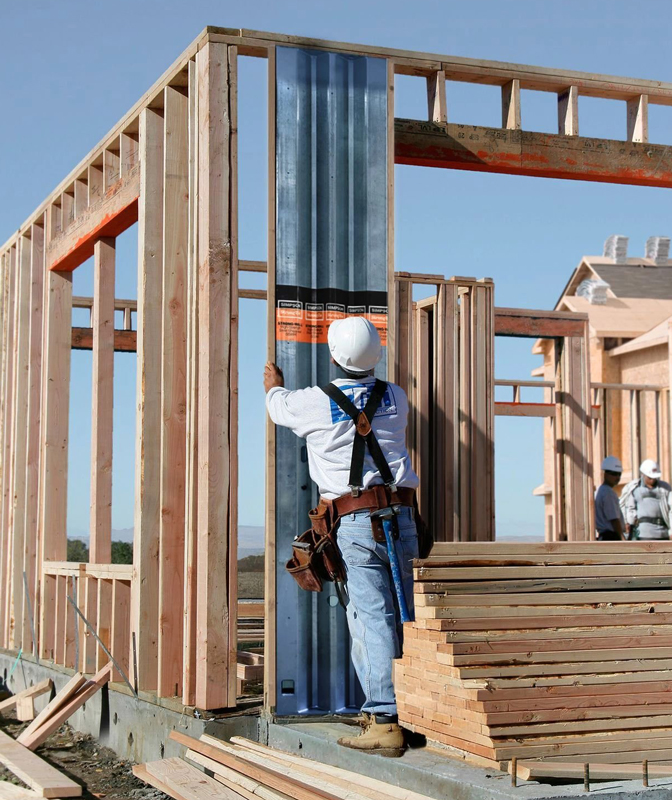
1950s–60s: Post-frame construction and the rise of laminated posts allowed builders to assemble large, affordable sheds with smaller boards nailed or glued together. This was the beginning of the pole barn era.
1960s–70s: Glulam beams and prefabricated trusses gained traction, offering long clear spans ideal for machine storage and livestock housing.
1980s–90s: Laminated Veneer Lumber (LVL), Parallel Strand Lumber (PSL), and I-joists spread into residential construction and barndominiums, providing new ways to carry loads over large openings.
2000s–Present: Engineered posts, LVL beams, OSB sheathing, and trusses are now the standard in most rural projects.
Engineered Wood in Rural Construction Today
Engineered wood is used everywhere in rural construction. Ag buildings and machine sheds often have some or all of the following: laminated posts, prefabricated roof trusses, and OSB or plywood roof decks, wall sheathing, or floor systems.
Barns often have treated laminated posts or glulam columns, and possibly pre-engineered and wood-engineered trusses, and they may have glulam headers over wide doors, and OSB/plywood sheathing in certain livestock facilities.
Pole barns are built on posts set in the ground with wood trusses, possibly made with engineered wood such as plywood, OSB or Laminate Veneer Lumber (LVL), carrying roof loads. These remain the workhorses of rural construction.
Barndominiums combine residential comforts with rural durability. LVLs, PSLs, I-joists, and floor trusses are often used for living spaces, paired with laminated posts or glulam beams in the shop/garage portions.
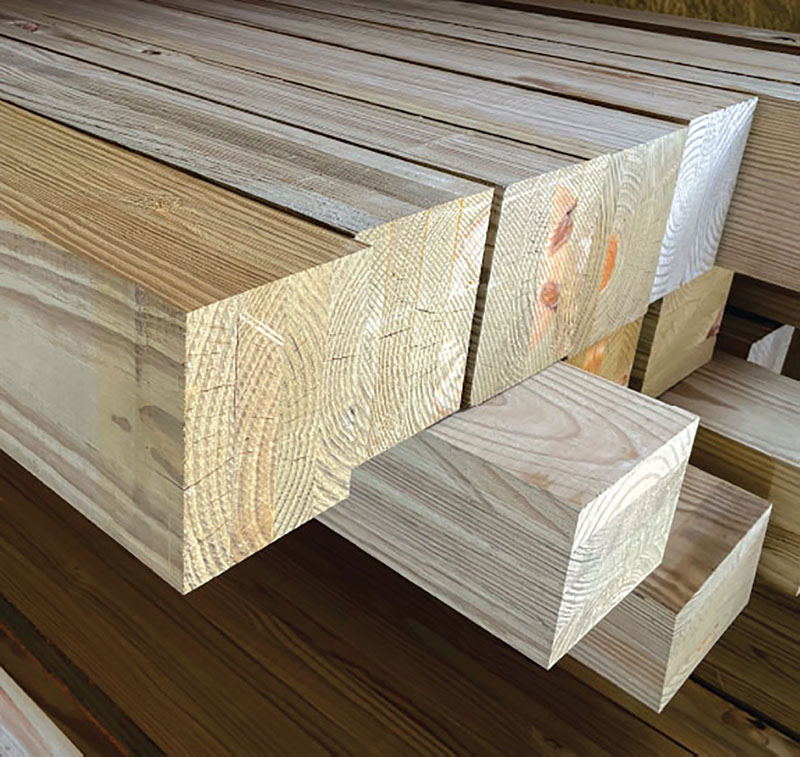
Composition and Benefits of Engineered Components Glulam, or glued laminated lumber, is made by bonding layers of kiln-dried dimensional lumber together with strong, waterproof adhesives. The process begins with stress-graded boards that are planed smooth and sorted so the strongest laminations are placed on the outside faces where tension and compression are greatest. Adhesives are applied, then the boards are stacked with grains running parallel. Straight beams are pressed flat, while curved members are bent over forms before pressing. Once the adhesive cures under pressure, the beam is trimmed, planed, and cut to its final dimensions. Finger joints allow laminations to be spliced into beams more than 100 feet long.
Quality control is critical, with samples tested for bond strength, delamination resistance, and dimensional accuracy. Certified glulams must meet standards, ensuring predictable performance under heavy loads.
The end result is a structural member that is stronger, straighter, and more stable than solid-sawn timber, with long spans and curved profiles possible. Glulams have proven durability.
For rural construction, this means wide, open spaces in barns, machine sheds, and barndominiums can be built efficiently and reliably, using a product that turns smaller boards into one high-performance beam.
Laminated Veneer (LVL) is made by peeling thin veneers from logs, much like making plywood, but instead of cross laminating the layers, all veneers are laid with the grain running in the same direction. The veneers are dried, graded, and coated with a waterproof adhesive. They are then stacked in large billets, sometimes 4 feet wide and dozens of feet long, and pressed under heat and pressure to cure the adhesive.
The result is a dense, uniform material with very high strength along the grain. Because defects like knots are dispersed across many thin veneers, LVL provides consistent performance and is often stronger than solid sawn lumber of the same dimensions. It is cut into beams, headers, rim boards, and other framing components where predictable strength and long lengths are required. LVLs provide high strength for headers, girders, and ridge beams in open-concept barndos.
Parallel Strand Lumber (PSL) is manufactured from long veneer strands, typically about 8 feet in length, which are clipped from veneer sheets. These strands are dried, coated with adhesive, and then aligned parallel to each other in a large mat. The mat is placed in a press that applies heat and pressure, bonding the strands into a dense, solid billet.
Because the strands are long and oriented in the same direction, PSL has excellent load-carrying capacity and dimensional stability. It is commonly used for heavily loaded beams, columns, and headers where strength is critical, such as in wide-span agricultural buildings or barndominiums with open interior layouts. PSL members can be produced in very large sizes, making them a reliable substitute for steel beams or glulam in certain applications. This engineered wood is used to provide strength for girders, ridge beams, and headers to support a building’s open spans.
Laminated Strand Lumber (LSL) uses shorter strands than PSL, usually about 12 inches long, making it more like OSB in concept but with structural performance closer to LVL. These wood strands are dried, coated with adhesives, and oriented mainly parallel, though with less precision than PSL. The strands are formed into mats and then pressed into billets under high heat and pressure.
The resulting product is dense and strong, though not as high in strength as LVL or PSL. Its advantage lies in cost and efficient use of raw material, since smaller logs and lower-grade wood can be used. LSL is often cut into rim boards, sill plates, and studs, as well as beams in residential and light commercial applications. In rural, low-rise construction, it offers a reliable option where consistent performance is needed at a lower cost than other engineered lumber.
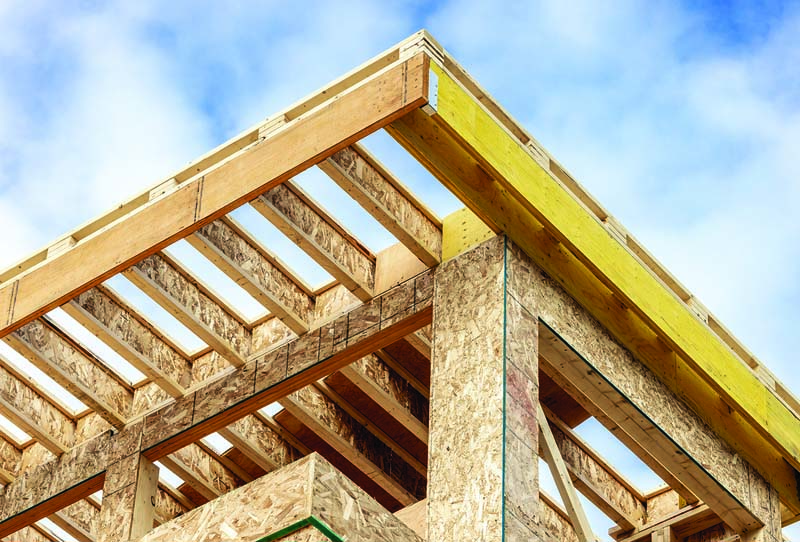
Oriented Strand Board (OSB) is made from small, thin wood strands that are dried, coated with waterproof resin, and laid in mats with alternating layers oriented perpendicular to one another. The mats are then pressed under heat and pressure to form dense, rigid panels. Because OSB uses fast-growing species and makes efficient use of smaller logs, it has become the most widely used sheathing material in modern construction. Its strength and stiffness make it suitable for roof decks, wall sheathing, and subfloors, and it is manufactured in large continuous mats, which means panels can be cut in a variety of sizes to meet jobsite needs. Both OSB and plywood panels are strong diaphragms for wind and seismic resistance, they’re economical and widely available.
Plywood is produced from thin sheets of veneer made by mounting a debarked log in a lathe and spinning it against a sharp knife, peeling off a long, continuous sheet. Veneer is then cut to size, dried, and glued together with grains alternating at right angles in each successive layer. This cross-lamination gives plywood its dimensional stability and resistance to splitting, as well as its characteristic strength in both directions. Plywood has been in use since the early 20th century and remains a go-to product for builders who value its proven durability, particularly in applications exposed to repeated moisture. In rural construction, both OSB and plywood are used for sheathing barns, machine sheds, and barndominiums, with OSB often chosen for cost efficiency and plywood for its resilience under harsher conditions. Compared to solid lumber, engineered wood offers consistent performance and design flexibility, as well as resource efficiency – all critical in today’s wide-span agricultural buildings.
Resource Efficiency
How are engineered wood products like OSB, LVL, LSL more resource efficient than solid sawn lumber? They can be made from fast-growing trees or smaller-diameter logs that aren’t suitable for large beams. Solid timbers require large, high-quality logs, which are harder to source sustainably.
Veneers, strands, and particles that would be considered mill waste in solid lumber production are turned into structural products; even lower-grade wood can be used.
Structural Efficiency
Engineered wood can increase structural efficiency as well. Knots, checks, and other natural defects are spread across many layers or strands, so they don’t concentrate weakness as in solid wood.
By placing stronger laminations on the outer faces (glulam, LVL) or aligning strands with the grain (PSL, OSB), manufacturers engineer predictable strength values that can exceed those of solid-sawn lumber.
Other Efficiencies
Products like LVL, PSL, and glulam can be made in lengths and depths that aren’t available in natural timbers, allowing wider clear spans in buildings.
Every piece is uniform in dimension and performance, reducing jobsite waste and making design more reliable.
Though the per-piece cost is higher, less material is often needed to achieve the same span or strength, balancing total project cost.
Engineered wood makes better use of raw fiber, delivers predictable and often superior strength, and enables designs that would require much larger or higher-grade solid timbers. That’s why it’s often called a resource-efficient and structurally efficient alternative to sawn lumber.
Climate Tips
Humid/Wet Conditions:
- OSB and plywood can swell if exposed, but exterior-rated panels and PRF-bonded glulam resist moisture well.
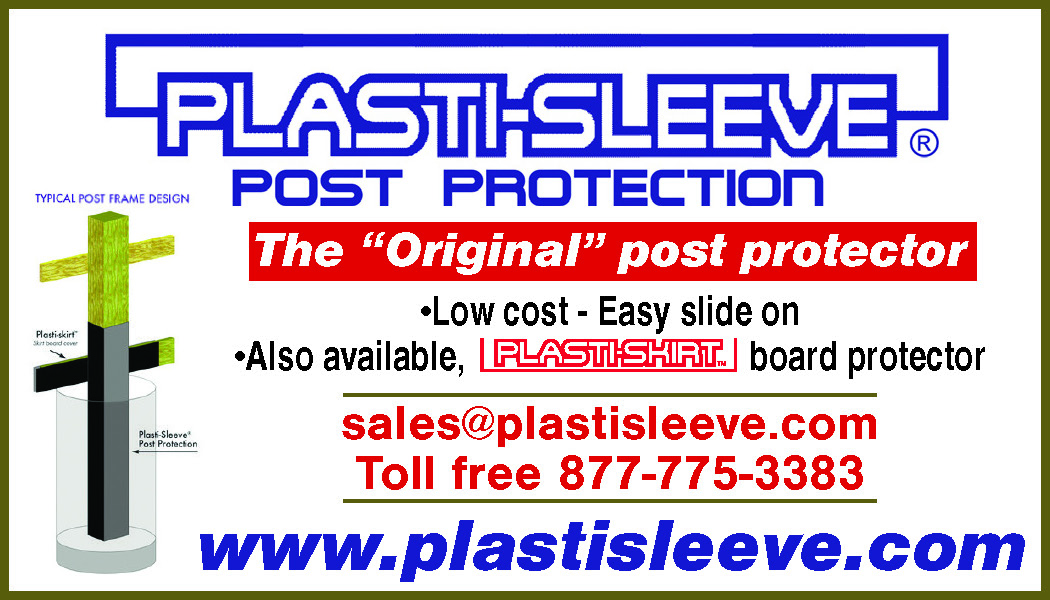
- Treated laminated posts and barrier sleeves extend life in soil contact.
Fire-Prone Areas:
- Mass timber including glulam and Cross-Laminated Timber (CLT) chars predictably, often outperforming unprotected steel.
- I-joists and trusses require gypsum or coatings for fire resistance.
- Fire-rated assemblies (ASTM E119, UL listings) allow one- to two-hour performance when detailed correctly.
High Winds & Storm Zones:
- Prefabricated, engineered wood trusses, LVLs, and OSB/plywood shear walls perform strongly when connections are engineered for uplift and shear.
- Meeting or exceeding ASCE 7 wind load requirements is essential.
- Proper anchorage of posts and trusses is critical to prevent uplift failures.
Supply Chain Pressures
Engineered wood is reliable but not immune to market shocks:
OSB is the most volatile; prices spike when mills shut down or storms hit production regions. LVL is less volatile but subject to veneer shortages and resin supply issues. Glulam is sensitive to shop capacity, custom fabrication schedules, and adhesive availability.
Many engineered wood products rely on petrochemical-derived resins (PRF, MUF, MDI). Supply disruptions in resin chemistry can ripple through to availability and pricing.
Builders increasingly specify alternatives. For example LVL can replace glulam, and plywood can replace OSB, so projects can move forward even when a single product is constrained.
Looking Ahead
Several trends are shaping the future of engineered wood in rural markets:
- Mass Timber Expansion: CLT and Dowel Laminated Timber (DLT) panels are likely to grow in barndominiums and agritourism structures, where exposed wood creates visual appeal.
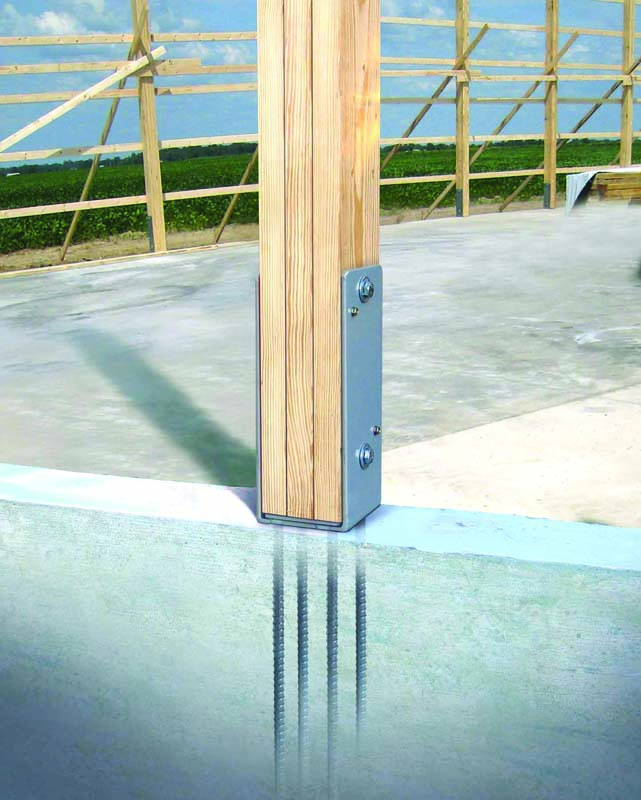
- Improved Post Systems: More and more posts with integrated barrier wraps, composite sleeves, or above-grade steel brackets will be used to address decay concerns.
- Sustainable Adhesives: Bio-based resins and low-VOC formulations will likely gain traction as builders and owners look for greener options.
- Hybrid Systems: Combining steel frames with engineered wood girts and sheathing may balance span efficiency with warmth and aesthetics.