Originally Published as: One Aha Moment after Another: ake the S.W.E.A.T. (Skill & Work Ethic Aren’t Taboo) Pledge
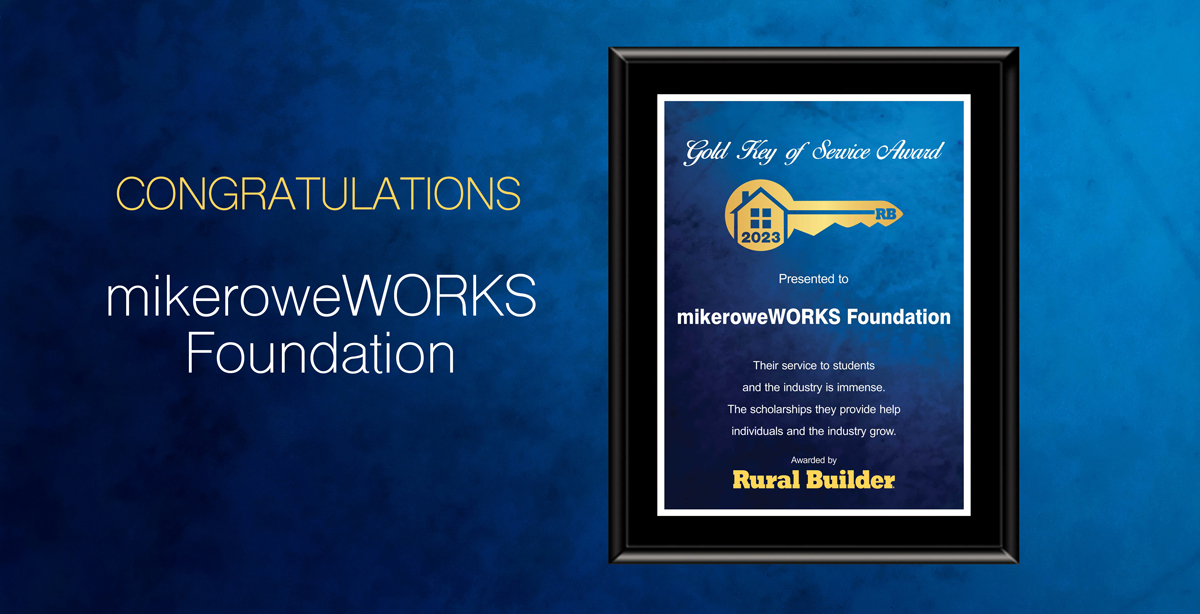
As a result of a collaboration with mikeroweWORKS Foundation (www.mikeroweworks.org), Rural Builder is featuring profiles of Work Ethic Scholarship recipients in each of its issues. Over 2,000 scholarships have been awarded to trade-school students who value hard work and taking personal responsibility. Rural Builder applauds these students and wants to acknowledge their choice to apply their talents to skilled trades. Thank you, mikeroweWORKS Foundation, for your continuing efforts to close the skills gap and “reconnect the average American with the value of a skilled workforce.”
Most kids have no idea what they want to do when they grow up. Ask them and you are likely to hear anything from: “I want to work at McDonald’s,” to “I’m going to be a superhero.” Quinn McCalla, however, knew just what he wanted to do when he was a kid: he wanted to build houses.
“I would get excited to see a new construction project,” McCalla said, “and as I got older I noticed the architecture everywhere I went.”
McCalla grew up in Minnesota near Alexandria. He enjoyed wrestling, track and field, and school; he liked to learn, a trait that has remained with him in his adult years.
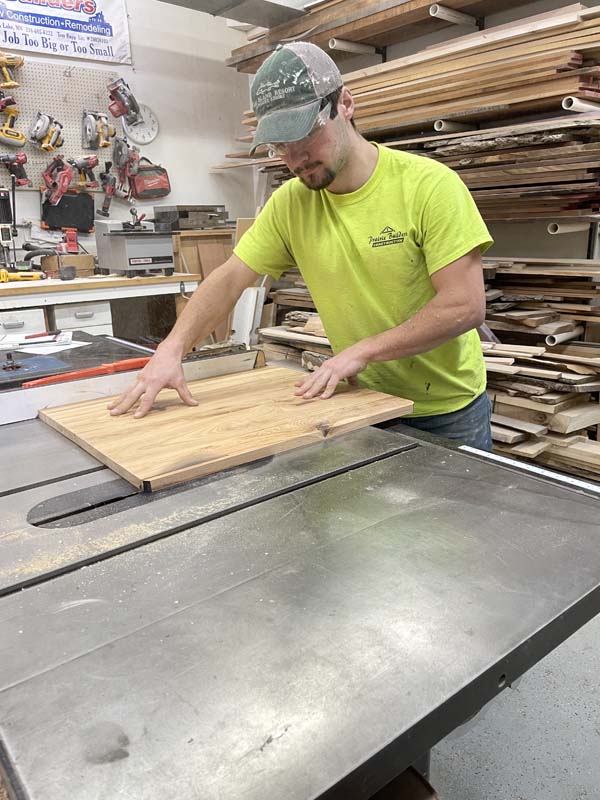
Wood shop was his favorite class. When others built a basic table, McCalla took it a step further with the permission and support of the shop teacher, Mr. Derby. He built a river tabletop using rocks and epoxy. When it turned out well, McCalla was even more excited about working in wood.
Getting Started
After graduation, McCalla signed up for a two-year program in construction at the local technical college. One problem, though, was that the school had no meal plan, so he needed some way to make some money while in school. Troy Rupp, one of his instructors, gave him a job working with his construction crew. This was a fantastic opportunity to learn hands-on, and McCalla took it gratefully.
When one of the wrestling parents mentioned the mikeroweWORKS Foundation Scholarship, and he had to answer questions about his education in order to apply, he realized just how much experience he had already gained in construction. He also recognized that the S.W.E.A.T. pledge (https://mikeroweworks.org/curriculum/) was filled with great advice for life.
“It was one ‘aha’ moment after another,” McCalla said.
The Working World
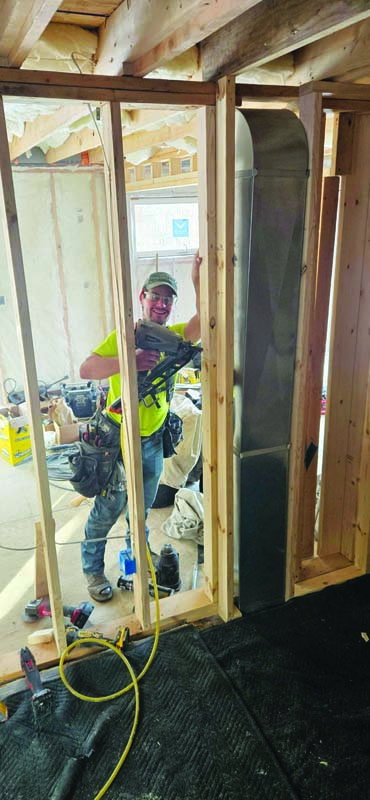
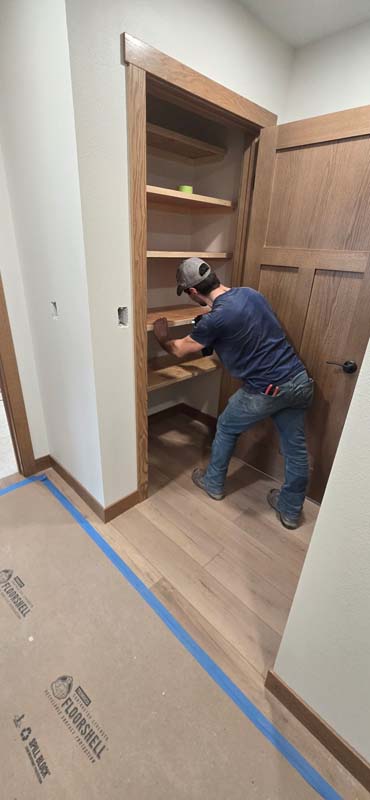
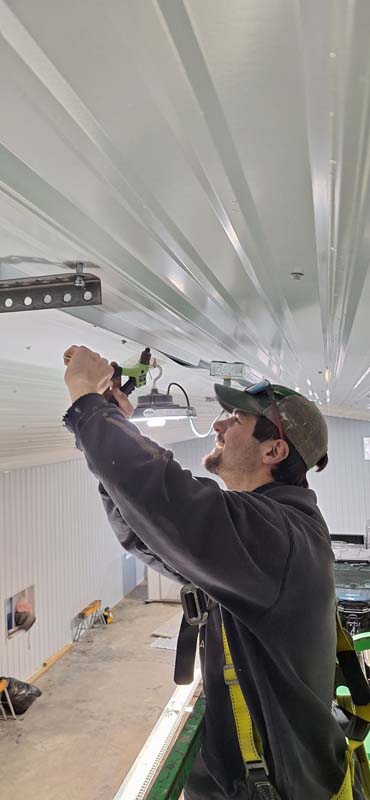
McCalla now works for Prairie Builders out of Elbow Lake, Minnesota. He loves it, especially the variety. He has done additions, remodels, new houses, rough framing, drywall, trim work, even some cement work. He counts himself lucky as some subcontractors focus on one thing, such as framing, but McCalla has done it all!
A typical day in the life begins at 7:30, but McCalla usually gets there early and does little things that need to be done such as fueling vehicles, loading tools, and hooking a tool trailer or trim cart to a vehicle. He may leave the work site as early as five or as late as seven. The crew is paid overtime after forty hours, but his boss allows workers to stay longer if they want to. It is great putting the things he learned at school to work on the job, and McCalla sometimes takes the opportunity to get more time in, and improve his skills.
“I like to do well in whatever I am doing,” McCalla said. “If my work is not perfect, I feel as though I let myself down, but others are supportive and advise that I need to give myself some learning time.”
Perfection right out of the gate is impossible, and McCalla is learning to ease up on the self-criticism so he can trust himself and face a brand-new task without feeling too intimidated.
Getting Others Excited About Construction
McCalla expects that we will see more and more young people signing up for education and jobs in the trades as the perception of blue collar work continues to change.
“Many people have been supportive of my choices,” McCalla said. “My parents and my high school shop teacher, Mr. Derby, were excited when I said I wanted a career in construction.”
He said that the best way to encourage high school kids to consider trade careers is to offer them opportunities to try things out. Shop classes, STEM classes, job exploration programs, and vocational centers are all great ways to expose young people to the many exciting opportunities in the trades.
Looking Forward to the Future
McCalla has worked for several different contractors over the last few years. Some were family friends who took him on for a summer or a specific project, and McCalla would like to pass the help he has received forward.
“At some point, I would love to have my own company, find kids who are excited at the prospect of learning, and give them some experience in the field to get them started.”