Have you ever known anyone who just couldn’t sit still? That was Joseph Rullo Jr. as a youngster. He was a good kid; he obeyed the rules, played baseball, and got As through most of his grade school and high school career. However, his ADHD just wouldn’t let him sit and concentrate, so he knew pretty early on that he did not want extended schooling or a career that would keep him sitting at a desk for the rest of his life.
Rullo liked being outside and working with his hands. His dad drives a truck, and his mom works for a pool chemistry company. Neither of them pushed him in any particular direction. Rullo started down the path toward joining the Marines, but his uncle, an electrician, told Rullo that he needed to think about what he really wanted to do. He began researching careers. He was looking for a job where he would be busy, well-paid, and he didn’t have to attend four years of college. Naturally trade positions caught his attention.
Rullo considered HVAC as a possibility and he consulted with his uncle who pointed out that a 6’3” guy would probably not enjoy this type of work, having to climb into crawl spaces and attics in the heat. Rullo thought maybe outdoor work such as electric work would be a better fit. He discovered that his grandpa had been a lineman, and he talked to other people he knew who had joined the union. They told him the IBEW Local Union 126 was a great organization, and so was the pay.

The First Step
Other students in his graduating class, with the exception of just a few, went on to college. Rullo went to work for a contractor where he got a taste of what electrical work was like. After a year, he signed up at Southeast Lineman Training Center (SLTC).
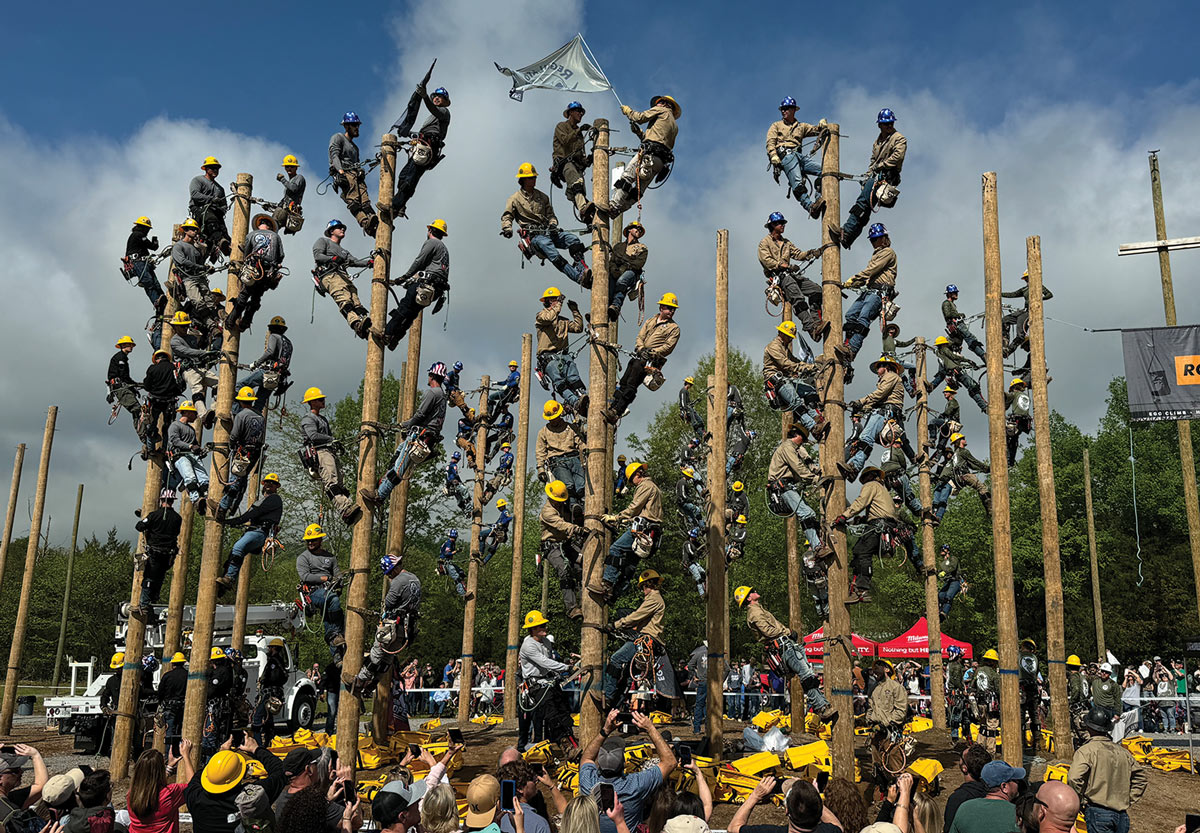
Rullo loved his training at SLTC. He said they taught everything from the basics to advanced electrical theory, and the instructors were all former journeyman linemen from across the country. There were three campuses and every week a different instructor would teach them a new subject. Rullo missed home, but he made some good friends, and he hit his stride; he was at the top of his 300-400 student class in every subject. He won an award for his work ethic and scholarship money to help pay his way; the mikeroweWORKS scholarship solidified for him that he was on the right path.
Toeing the Lines
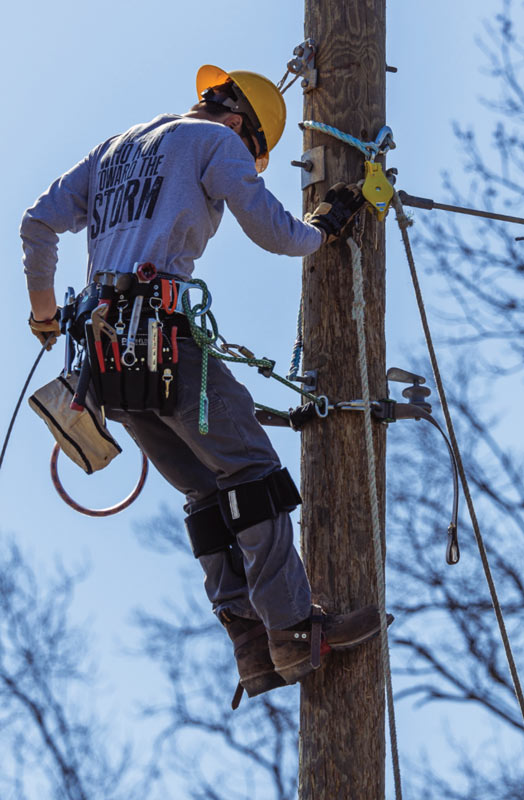
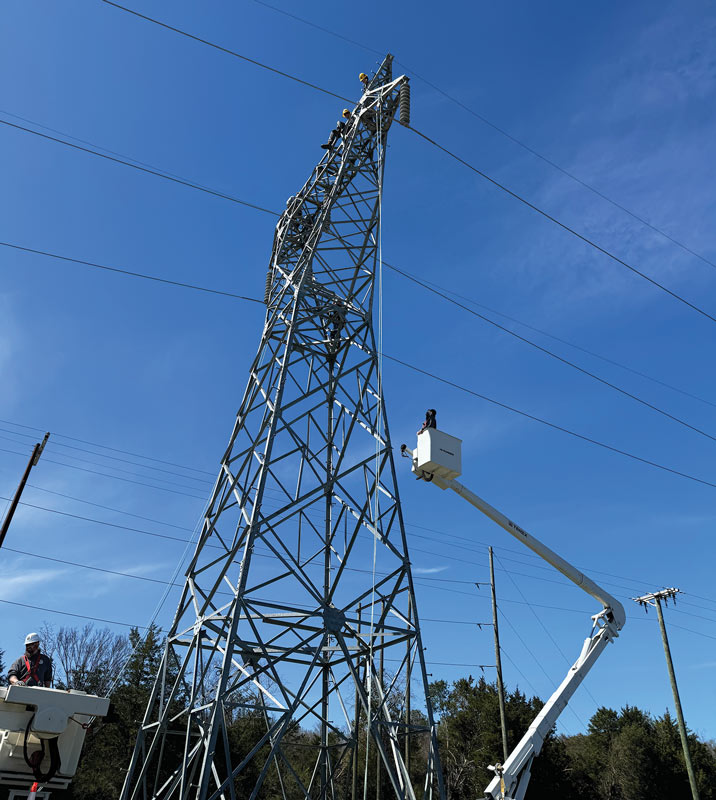
After he graduated from lineman training, he applied for, tested for, and was accepted into the Northeastern Apprenticeship Training program. He had “Bootcamp” the first couple of months for field practice, and now he is apprenticing under the supervision of a Journeyman Lineman. He has classes on the weekend, and every month he attends the Union meeting. This is all in preparation to advance to a Journeyman, for once an apprentice has successfully completed training along with 7,000 hours of apprenticeship work, they advance to the Journeyman level and become a member of the International Brotherhood of Electrical Workers (IBEW). Once a lineman has achieved the Journeyman level, often in 3 to 3 1/2 years, they may choose to discontinue formal training, however, they must be prepared to supervise and mentor apprentices in their turn. Mentoring is important Rullo said.
“This is serious work; if a lineman makes a bad decision, they could die,” Rullo said. “The journeymen I know have been very encouraging, but they will tell you when you mess up. They can be tough at times,” Rullo said. “It’s like dealing with a coach who wants to get the most out of you. You have to be able to take the criticism and learn from it,” he added.
As an apprentice, Rullo said that the Area Director of NEAT for Local 126 assigns him to the companies he apprentices at. Currently he is with Carr and Duff Contractors learning as much as he can. He is working on traffic signals, whether placing new wire or rewiring, adding speed or red-light cameras and signage. Learning wire splicing is Rullo’s favorite part of the work; he finds all the effort that goes in behind the scenes to make one signal light work fascinating.
Is Lineman Work For You?
First, Rullo stipulates, you must have no fear of heights. You must be willing to work in the elements, whether hot, humid, or freezing; extreme temperatures are part of the job. In the apprentice phase you may be required to help out in local, regional, or national disasters, and that means 16 hours on and 8 hours off work until the problem is under control, so it takes a lot of dedication to the job. However, once you reach the Journeyman level you are usually not required to participate in disaster work, though many do.
“You can’t get discouraged if it takes a while to get where you want to go,” Rullo said. “Keep a good attitude during your apprenticeship. You have to focus; don’t be talkative or off-task because the area director will probably hear about it, and you can be penalized or lose your apprenticeship.”
“On the plus side,” Rullo said, “this is a very rewarding line of work; it’s very fulfilling knowing that when times are tough, people will need your help. Electricity is essential for hospitals, nursing homes, at-home invalids, and more. Linemen put their lives on the line to help others, and the best part is knowing you have helped so many.” Rullo added, “The money is great too!”
He said that many, if not all of the linemen he knows, have families. “Once they are journeymen they don’t have to participate in storm duty and travel much, and whether they have established families, are starting families, or are just getting married,” Rullo said, “this career helps workers support their families. Meanwhile knowing that your skills are so needed, and the work is interesting… A lineman job can be the opportunity of a lifetime.”