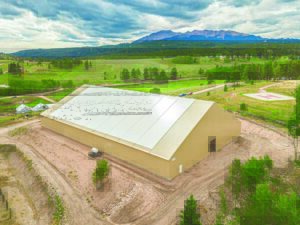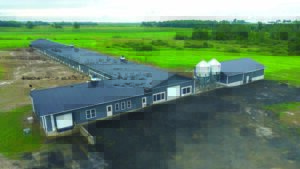
Horses are large, powerful animals, which can create the impression that they’re invincible, but they’re actually socially and emotionally sensitive, as well as susceptible to injury, disease, and other health issues. This means horse barns need special design elements to accommodate the horses’ needs. When working with a client to design a horse barn, builders should consider a number of factors in the plans.
“I have always said to my clients that horses are like 1,200-pound, two-year-old kids,” said Daniel Glick, co-founder and owner of B&D Builders, building experts for barns and equestrian facilities. “A two-year-old horse is curious, easily distracted, lacks impulse control, and is still learning boundaries and social cues. Like a human toddler, they explore the world with their mouth, feet, and by testing limits.”
Building Structure
A horse barn frame can be constructed with either interior columns and rafters or clear span trusses. With interior columns, stall walls are generally attached to the columns. With clear span trusses, stalls are freestanding but get their support from being attached to each other.

“Clear span trusses allow for more options in stall layout, present and future,” said Daniel Stoltzfus of J&E Grill Mfg. “On the other hand, with column structures throughout the floor, it is important to plan ahead for stall size and design of stall front that will be installed, as posts can dictate some of those decisions.”
If trusses are to be used, “the truss design is an important consideration in maintaining horse health. Promoting proper ventilation and limiting bird nesting help prevent disease and other illnesses. Proper truss design can take care of that,” said Steve Wozney, owner of Starwood Rafters. His company, for example, builds trusses with a hanger system to keep roof purlins flush with the top of the truss, so there are no open webs, which eliminates nesting areas for birds. Also, the raised bottom chord design improves ventilation in livestock facilities versus a conventional “web” truss.
The classic horse barn design features a center aisle with stalls facing inward toward the aisle. This allows efficient movement and workflow, while optimizing space and airflow. With this design, a minimum center aisle width of 12’ is recommended, with 14’ or more considered ideal to allow adequate room for horses to pass each other in the aisle and for easy access of vehicles, such as veterinary trucks and feed wagons.
Ceiling height should be at least 10’, with 12’ to 14’ preferred to allow maximum airflow, space for installing ceiling fans and lights, and enough overhead clearance to prevent mounted riders from hitting their heads.
Building Layout
Good horse barn design prioritizes the horses’ unique needs, which impacts every aspect of the layout. The most important area is the horse stall, since the horse spends so much of its time there.
While horses are housed in separate stalls for their health and safety because of the risk of bites and kicks from other horses, they’re social creatures and usually need to be able to see and interact with other horses. The recommended minimum stall size is 12’ x 12’ to allow adequate room for horses to move and prevent claustrophobia.
Stalls with wood partitions on the lower half provide the confinement needed. The partitions should be at least 7-1/2’ high to prevent the horse from getting a leg over the top and should extend all the way to the floor with no gap that could cause a horse to get a hoof trapped between the wall and floor. “While extremely intelligent, they don’t always register certain things in their surroundings that could pose a danger,” said Glick. “They’ll walk into sharp objects, get stuck in fences, or spook and run into things.”
The upper half of a stall can be open, grilled, or solid. An open stall allows more interaction between horses, while a grilled stall still allows airflow, but reduces possible aggressive interactions between horses. Grills will also cover the tops of the partitions and keep horses from chewing on them. “You can also incorporate a yoke opening within the top half of the stall, which allows horses to interact, but they can also be closed when needed,” said Molly Freund of Classic Equine Equipment.
“If the owners don’t want the horses to see each other, however, they could have a solid dividing wall kit option,” explained Kelsey Martin of Stallworks Equine Stall & Door Systems.
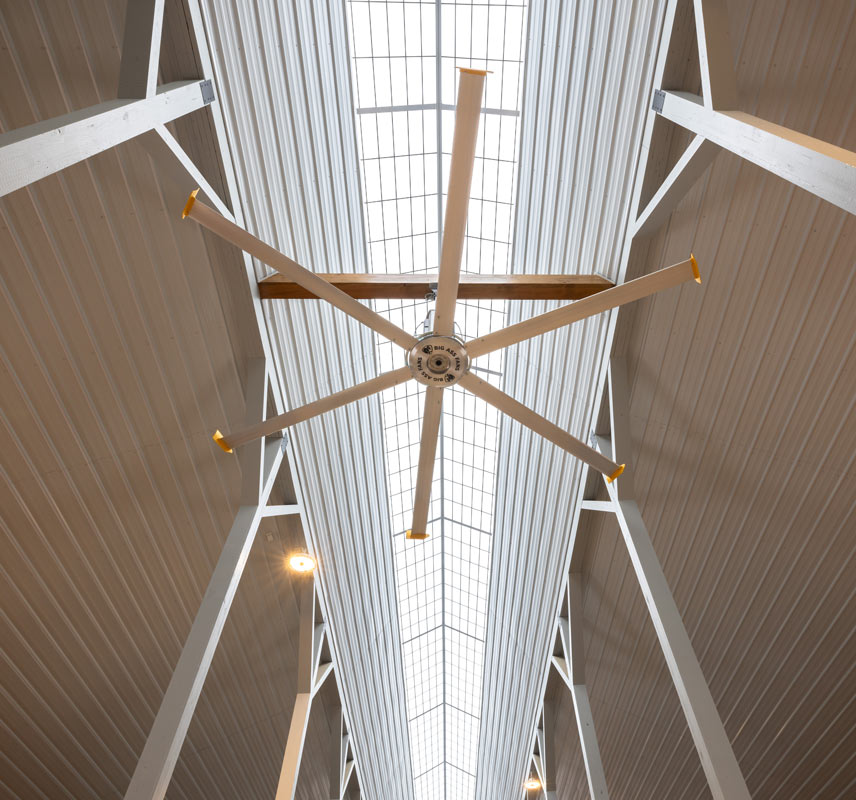
Good lighting and ventilation, such as these shown in the Fair Hill Training Center, are key to horse health and wellbeing. The thoroughbred training facility and vet facility are what B&D Builders consider a proving ground for horse barns. Photo courtesy of Jana Bannan PHOTOGRAPHY, KENNETT SQUARE, PENNSYLVANIA and B&D Builders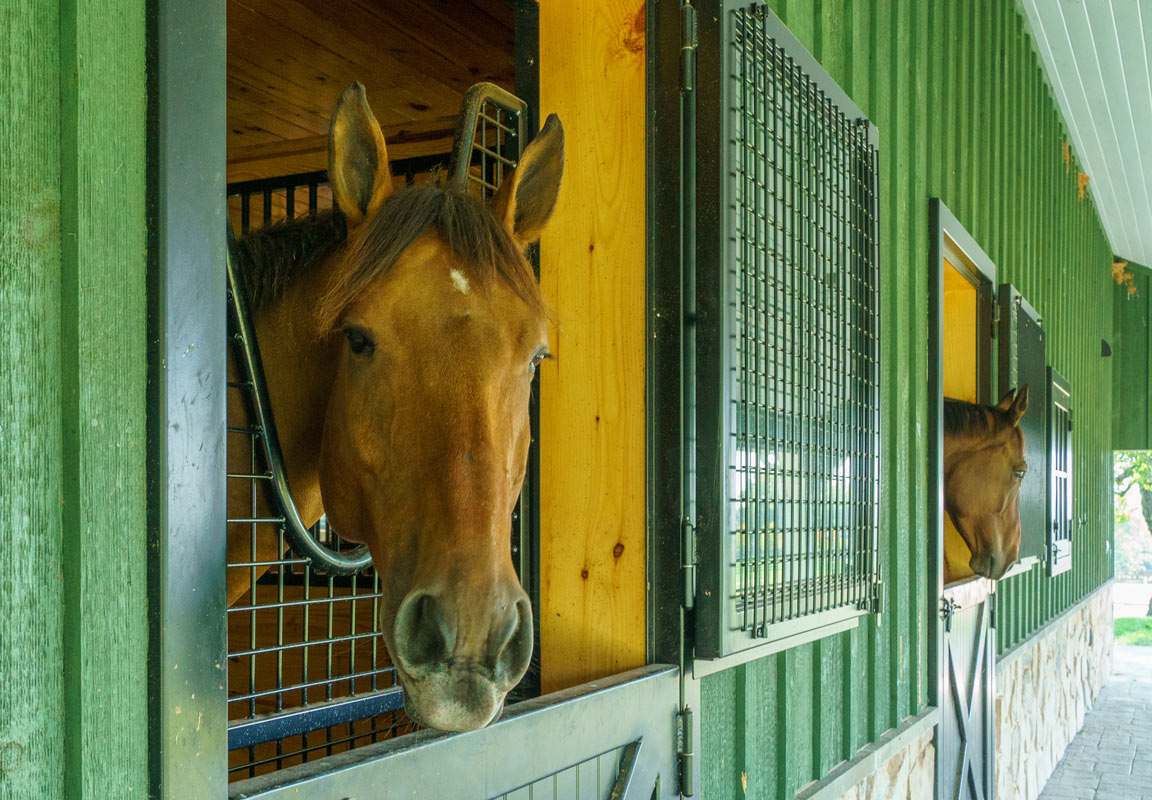
This open Dutch door window on the exterior of the building allows the horse fresh air and the opportunity to interact with other horses and feel less confined. Photo courtesy of J&E Grill Mfg.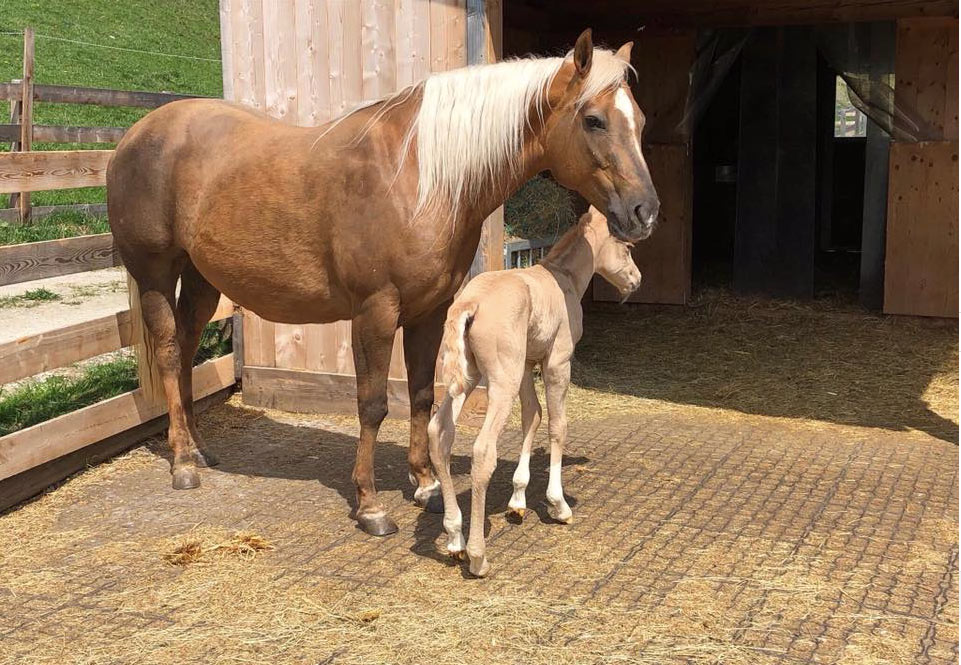
Adding HoofGrids or similar plastic footing control in high traffic areas such as paddocks, feed lots, etc. will help prevent horses from tearing up the turf and creating mud. Photo courtesy of J&E Grill Mfg.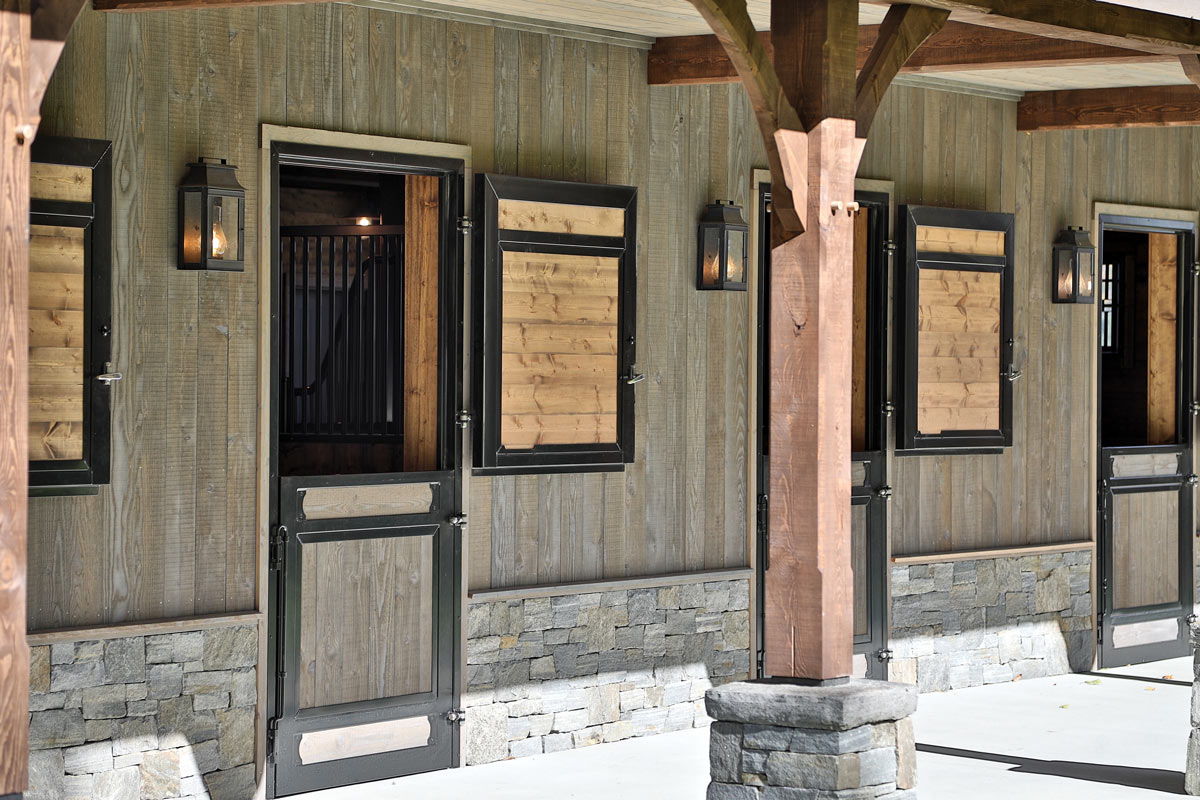
Exterior Dutch doors not only provide horses fresh air but also both horses and their human caretakers an alternate way to escape in case of a barn fire. Given a barn’s wood construction and the hay and other flammable materials they contain, the risk of a rapidly spreading fire is a real concern. Photo courtesy of Winterfell Farms and Classic Equine Equipment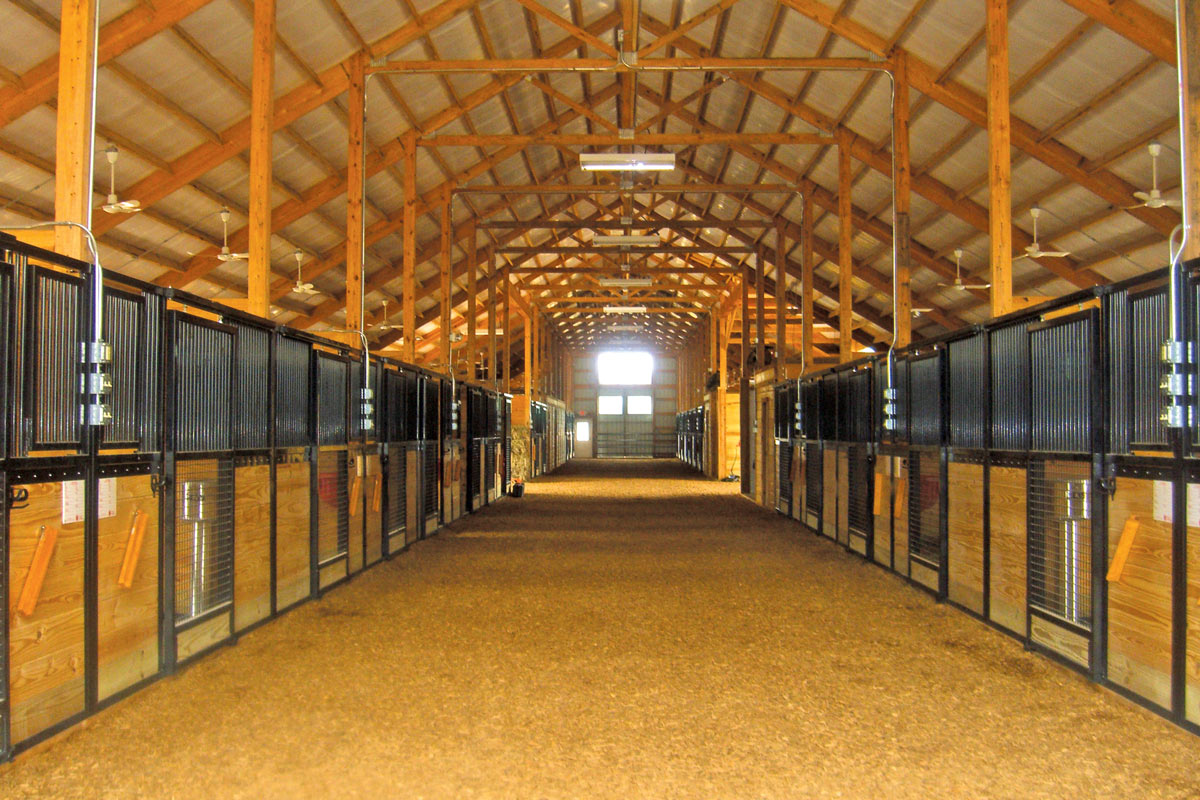
This is a rafter-style stall barn. It features 10’ sidewall clearance with plenty of center aisle clearance. This barn has an 18’ center aisle at the owner’s request. Photo courtesy of Stockade Buildings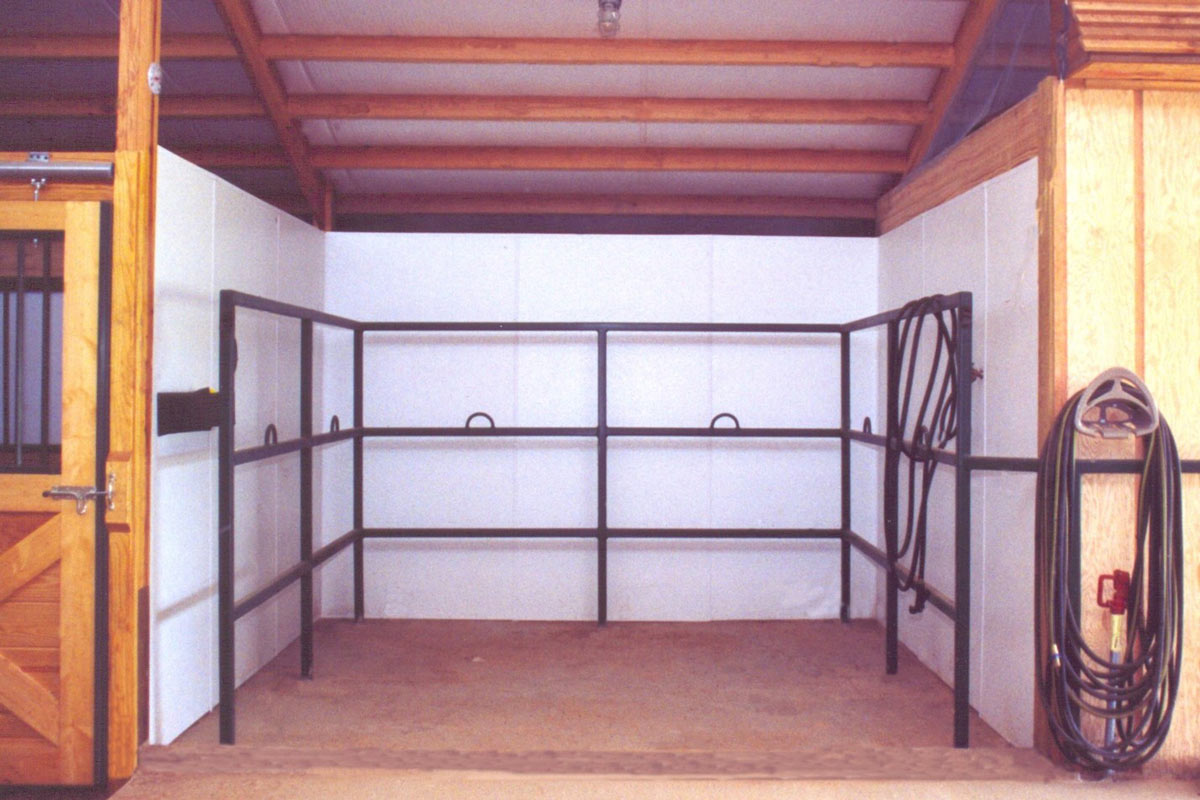
Typical wash bay. 12’ x 12’. Photo courtesy of Stockade Buildings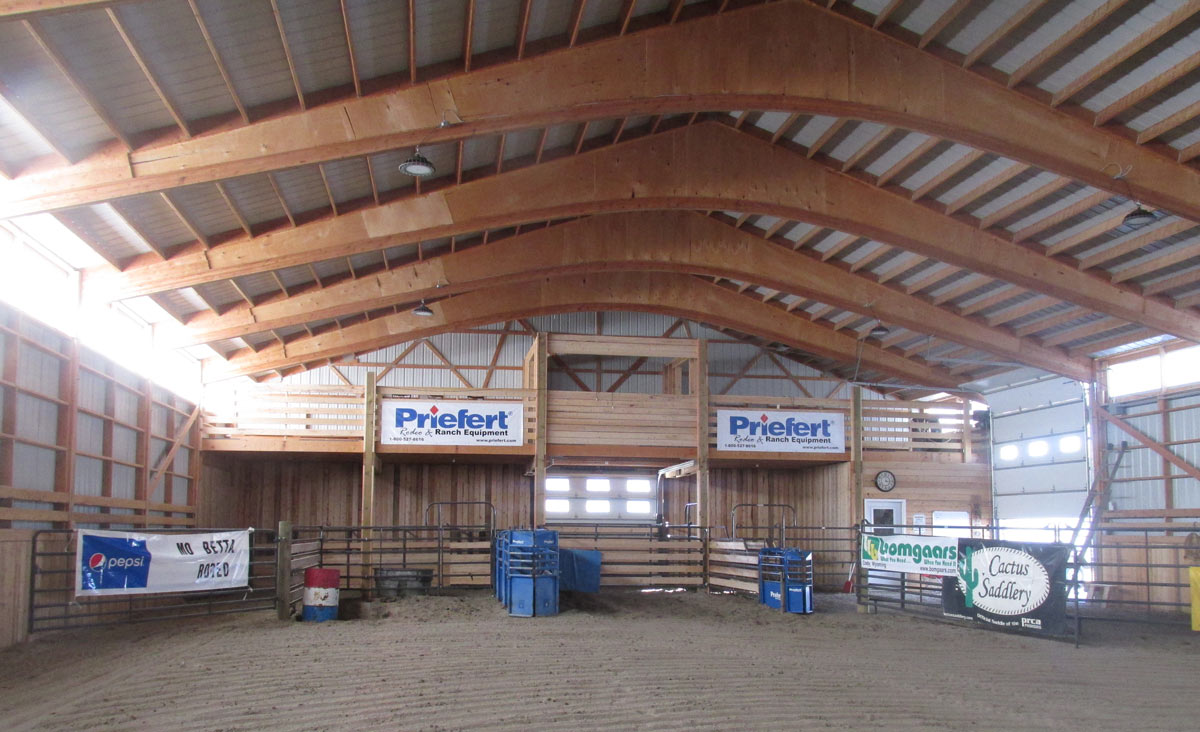
Promoting proper ventilation and limiting bird nesting help prevent disease and other illnesses. Starwood Rafters builds trusses with a hanger system to keep roof purlins flush with the top of the truss, so there are no open webs, which eliminates nesting areas for birds. Also, the raised bottom chord design improves ventilation in livestock facilities versus a conventional “web” truss. Photo courtesy of Starwood Rafters
“If you’re planning to raise foals, pregnant mares and mares with babies are more satisfied with a solid stall divider,” said Gary Lambright, president of Silvercraft LLC. “Mare mothers are protective of their young foals and typically don’t appreciate a horse in the neighboring stall watching over them. A solid stall divider is a better option in this case.”
Clients could have a mixture of open, grilled, or solid stalls to allow flexibility, matching the horses’ temperaments to the type of stall.
An important consideration in stall construction — throughout the entire barn — is preventing sharp edges and surfaces that can cause cuts, as horses are known for pushing and leaning against walls, partitions, doors, and other structures. All hardware, such as latches, should be smooth and free of rough welds. Powder coating prevents horses from ingesting flaking paint. Additionally, curiosity or even boredom can sometimes get the best of them. Horses use their lips like fingers — opening gates, untying ropes, and chewing on anything.
“Horse are accident-prone,” said Glick. “Their thin skin and long legs make them vulnerable meaning they can injure themselves on buckets, fences or event while lying down. Their massive size makes even small accidents potentially serious.”
Stall doors can be either sliding or swinging. “Hinged, swinging doors open into the aisleway, taking up extra space, while sliding doors easily slide open, providing a major space-saving advantage,” said Freund. Sliding doors can also be safer. A stable hand working between a swinging door and a stall wall can be injured if the horse pushes or leans against it. Also, a sliding door can provide more security, as a horse can open an unlatched swinging door by pushing against it, whereas a sliding door will stay in place.
Horses are intelligent animals and need stimulation from their environment and benefit from having a bale door or Dutch door in the back of the stall. “A bale door or Dutch door provides access to fresh air and also gives the horse some freedom to hang their head out and see what is going on around them,” said Lambright. “Typically, a horse that can see out and around is calmer, quieter, and less stressed.” If only a window is provided, a grill can be added in front of the window to prevent the horse from breaking the glass.
A Dutch door also creates a second passageway to the stall and can be a fire escape for both horses and people. Horse barns are vulnerable to fires because of their wood frames and walls as well as the hay, feed and straw bedding stored in the barn. If a fire breaks out, the center aisle may be filled with smoke and flames and prevent escape. Exterior stall doors solve that problem.
Ventilation
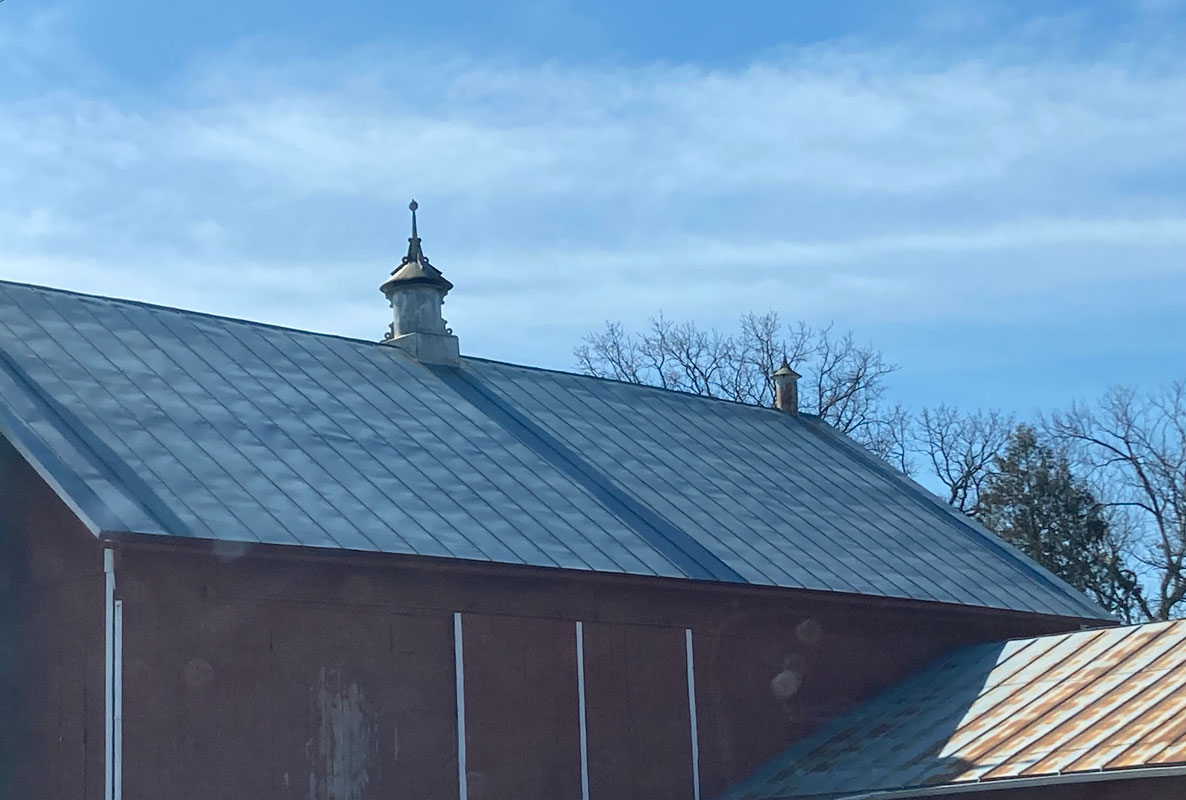
Ensuring adequate ventilation is one of the most important aspects of horse barn design. Horses are very susceptible to respiratory problems and need a steady flow of fresh air circulating to keep them healthy. Fresh air flow can be achieved by incorporating functioning cupolas, ridge vents, eave vents, exhaust fans, ceiling fans, and an adequate number of properly sized windows and doors.
Having high ceilings in a horse barn is an advantage because warm air rises, creating a vertical airflow, which moves stale, humid air, dust, ammonia, manure smells, bacteria, and viruses up and out through cupolas and other vents to keep air fresh.
Exhaust fans are designed to move hot air out of the barn, while ceiling fans circulate air within the building. Both should be specifically made for outdoor use and mounted high to maximize their effect and to keep them out of reach of the horses and mounted riders from bumping into them.
Lighting
Abundant, even lighting is crucial throughout all areas of a horse barn for both horses and humans. Barn workers need adequate lighting to do their jobs properly. In addition, horses are naturally skittish and can be spooked by flickering shadows caused by insufficient lighting.
Using natural versus artificial lighting as much as possible is ideal, and electric lights should be color balanced to mimic natural light. Clerestory or eave windows are narrow windows that run along the top of walls below the eaves. They’re designed to add additional natural lighting along the length of the building and are a very helpful design feature.
Flooring
For horse stall flooring, crushed stone covered with nonslip rubber mats is recommended. This allows the best combination of cleanup and drainage, while providing a softer, more cushioned surface than concrete for the horses’ health and comfort.
For the center aisle of the barn, concrete floors that slope slightly toward the center help aid washing and drainage. The concrete should be textured to help prevent horses’ hooves from slipping, especially when the concrete is wet. “Rubber pavers are also recommended for a safe, non-slip aisleway,” said Freund.
Utilities
Electricity and water access should be carefully planned for efficiency and safety. Placing outlets and spigots at close intervals will reduce the amount of time workers spend walking back and forth. Also, having enough electrical outlets to avoid using extension cords is highly recommended, as using extension cords in a horse barn presents a number of risks, such as being overloaded, tripped over, or chewed by horses or rodents. Electrical lines should be run through conduit to protect them from these hazards.
Electrically powered automatic waterers can be added to stalls. Although they reduce the labor needed to fill watering buckets manually, they have some disadvantages. For instance, they make it difficult to track the amount of water horses are drinking, which can be important for monitoring their health. Some waterers can be difficult to clean and lead to bacterial growth. Waterers can also flood a stall, become clogged, or stop working if electrical power is lost.
Other Rooms and Areas
Other specialized rooms and areas are common in horse barns. Their placement should be planned for efficiency and convenience. For example, in a large horse barn with long aisles, it may be best to place some rooms near the center of the building to reduce worker walking time.
Washing and Grooming Bay
Washing and grooming bays should have hot and cold water, cement floors sloped to the center to help them drain thoroughly, and a drain system. Like the concrete floors in the center aisles, they should be textured to prevent the horses from slipping. For emotionally reactive horses, including a window in the wash bay or positioning it near a door can help them not feel enclosed.
Laundry Room
Keeping horses clean is essential for their health, but all the washing and grooming will generate a significant amount of laundry. Having a laundry room in the horse barn eliminates the need to transport all the laundry back and forth from an offsite laundry.
Tack Room
A climate-controlled tack room will help keep expensive leather saddles and other equipment from becoming moldy.
Equipment Storage
It’s helpful to have a dedicated storage room for miscellaneous equipment such as tools, buckets, hoses, wheelbarrows, and other equipment. This will help keep these items out of the way, as well as organized and more easily accessible.
Feed Storage
It’s often recommended that hay not be stored in a loft above the stalls because falling dust from the hay can cause respiratory issues in the horses. A feed room on the ground floor is better but the room needs a concrete floor to keep hay dry to prevent spoilage. Grain should be stored in rodent-proof containers. The feed room door should be equipped with a latch so a loose horse can’t get into the room and gorge, which can be potentially catastrophic.
The storage room should be large enough to store a week’s worth of feed. The remaining feed should be stored in a different building to reduce the amount of flammable material in the barn in case of fire.
Bedding Storage
Straw bedding should be kept in separate area, ideally in a separate room, as straw can contain dust, mold, and other substances that could contaminate the hay.
Paddock
Fenced-in paddocks are commonly attached to horse barns to allow horses space to exercise but not enough to run and potentially cause an injury. Some are L-shaped to prevent running.
“These paddocks and your barn lot can be kept in excellent condition with regards to drainage by following these steps,” said Stoltzfus: 1. The grade should be sloped down a minimum 5% in the first 20 feet surrounding the barn and 1-2% the remainder of 100 feet on all sides. 2. Add HoofGrids or similar plastic footing control in all high-traffic areas such as paddocks, feed lots, etc. Proper installation is important for effective drainage. When installed correctly with a stone base beneath and filled with pea gravel, HoofGrids will provide a lifetime of sure footing that won’t inconvenience with erosion and mud.”
Waste Management
Horse barns will likely be subject to local regulations for manure storage and disposal. They’ll typically include preventing water contamination and controlling odor. This can include controlling drainage and rainwater runoff; storing manure a prescribed distance from streams, wells, ponds, wetlands, property lines and homes; ensuring that the storage area has an impervious base and that manure is covered, either with a structure or a tarp; and periodic removal of manure to prevent excessive buildup, insect infestations, and ground contamination.
Conclusion
Horses have unique requirements, so horse barns need careful planning to ensure all their needs are taken care of. Discussing these elements with potential clients may reveal areas that they haven’t considered and that need to be resolved before moving forward. This will help ensure the best possible outcome for both builder and client. RB