Originally Published as: Ventilation for Ag Buildings: Crop Storage and Animal Confinement
Ventilation is one of the most important environmental-control systems in agriculture, yet it’s also one of the most misunderstood. Builders know that poor air movement can spoil stored crops, stress livestock, and damage a structure faster than most clients expect. It’s also important to understand how fundamentally different the demands are between crop storage buildings and animal housing. In one, the building’s job is to protect a commodity that sits passively in bulk; in the other, it must support living organisms producing moisture, heat, and gases every minute of the day.
For professional builders, the key to designing the right ventilation system begins with understanding what you’re ventilating for. The goals, load characteristics, and consequences of getting it wrong are not the same. A system that performs beautifully for hay or grain can be a disaster for dairy calves or layers. Conversely, a system sized for livestock is typically excessive and even damaging for stored crops.
This article takes a detailed look at the differences, the expectations of each building type, the interaction with materials and heating systems, and the design considerations builders need to keep in mind when advising clients.
Two Building Types, Two Different Problems
Although they share the word “ventilation,” crop storage buildings and animal housing operate on two completely different environmental timelines.
In a crop building, temperature and humidity change slowly. The load is predictable: a crop gives off moisture gradually as it cures or sits in bulk, and the building’s job is to release that moisture before it condenses on cold framing or within the crop itself. The problem is slow-moving but persistent.
In an animal building, air quality can shift in minutes. Animals respire, adding moisture and CO₂. Their manure and bedding generate ammonia, hydrogen sulfide, and methane. Dust, dander, and hair accumulate in the air. The building must actively remove these contaminants continuously, and in many cases, at high volume.
These differences drive everything else: fan size, placement, air-inlet design, whether natural or mechanical ventilation is appropriate, and what materials should be specified to withstand the interior climate.
Ventilation Requirements in Crop Storage Buildings
Crop storage encompasses everything from hay sheds and grain bins to potato warehouses, seed storage, and multi-use commodity buildings. Each commodity has a different moisture content and tolerance for temperature swings, but they all share a common risk: stored crops off-gas moisture. If that moisture isn’t carried out of the building, it condenses either on the structure or on the crop.
Moisture Is the Primary Driver
Unlike animal housing, crop buildings don’t contain heat- and gas-producing living occupants. The builder’s challenge is nearly always moisture migration. Warm outside air entering a cool interior will condense on cold surfaces. Similarly, crops stored too wet will continue to release moisture that accumulates in the building.
This slow, steady moisture release is why most crop buildings rely on low-velocity, continuous air exchange rather than intermittent, high-volume exhaust.
Gentle, Even Air Movement
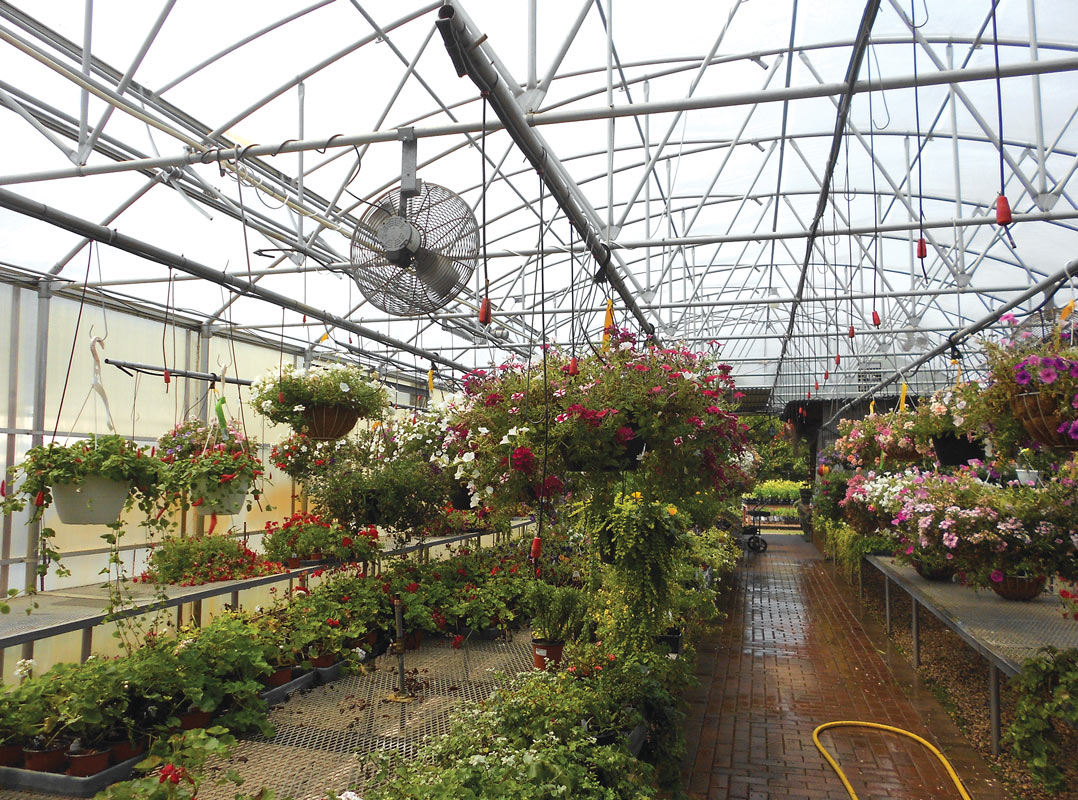
A typical ventilation strategy for crop storage uses a combination of ridge vents, eave vents, gable vents, and sometimes small mechanical fans. The objective is not to flush air rapidly but to provide smooth, even movement to equalize temperature and humidity throughout the structure.
Hay storage, for example, benefits from large, open volumes that allow warm, moist air from curing bales to rise naturally out of the ridge vent. Potato and onion storage, on the other hand, often requires air duct socks or perforated tubes to distribute air within the commodity pile to maintain uniform conditions and prevent localized spoilage.
Passive Systems Often Dominate
Many crop buildings operate successfully with a primarily passive approach. The stack effect—warm air rising and exiting at the ridge—pulls cooler, drier air from the eaves. Builders must ensure that these intake and exhaust points are sized correctly; a ridge vent that’s too narrow or eaves that are too restrictive can cause air stagnation.
When mechanical fans are added, they are usually supplemental rather than central to the system. Their purpose is to stabilize humidity and temperature during seasonal transitions rather than to manage continual heavy loads.
Avoiding Condensation Damage
Condensation on purlins and girts is a common builder concern. Drips can ruin hay, encourage mold, or create slick surfaces in commodity bins. Builders can mitigate condensation by specifying vapor retarders, insulated roof assemblies, or reflective barriers. Good ventilation should prevent condensation in the first place, but structural materials and insulation choices must support the system in case of excessive moisture.
Over-Ventilation Has Risks
In crop buildings, more air is not always better. Some commodities dry out excessively if airflow is too strong or too dry. The ventilation system must balance the crop’s needs with the local climate, which may require thermostats, humidistats, or automated controls for precision-crop applications.
Ventilation Requirements in Animal Housing
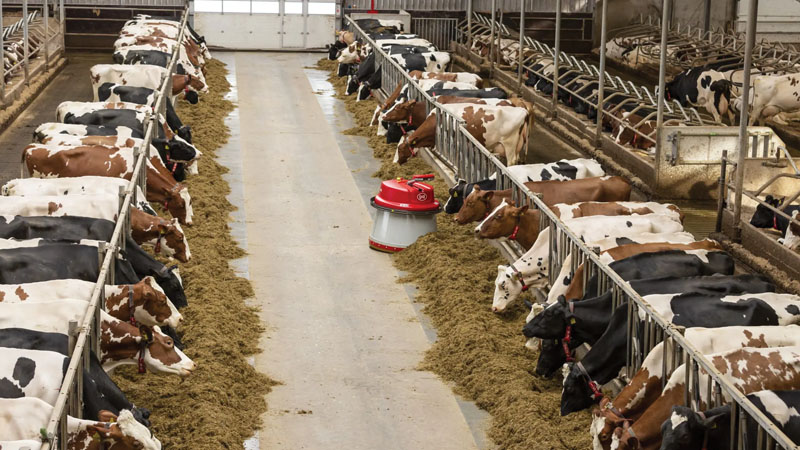
Livestock housing—whether for cattle, swine, poultry, equine, goats, or sheep—has a different set of demands. Here, the ventilation system protects the health of live animals and the workers who care for them. It also plays a major role in the building’s longevity, because humidity and gases in a livestock environment can be highly corrosive.
Rapid Removal of Moisture and Gases
Animals produce significant amounts of moisture simply by breathing. A single dairy cow exhales gallons of water per day. Manure generates ammonia and other gases continuously. Bedding materials, especially in poultry and swine operations, break down and contribute additional heat, moisture, and dust.
For this reason, high air-exchange rates are mandatory. Builders must design systems that actively pull contaminated air out of the building while maintaining a comfortable environment for the animals inside.
Ventilation Must Work Year-Round
One of the biggest challenges in livestock housing is wintertime ventilation. Animals still produce moisture and gases during cold weather, but bringing in enough fresh air without creating drafts is difficult. Builders often turn to:
- Variable-speed fans
- Minimum-ventilation controllers
- Controlled inlets and baffles
- Passive-pressure tubes for young stock
- Curtain sidewalls set to automated minimum openings
- These systems keep moisture, ammonia, and CO₂ at safe levels without chilling the animals.
Air Direction Matters as Much as Air Volume
Good ventilation in livestock buildings isn’t just about how much air moves—it’s about how it moves. Properly designed inlets draw air from known locations and direct it in predictable patterns across the ceiling or along the sidewalls before it drops into the occupied zone. This prevents drafts while ensuring consistent mixing.
If inlets are undersized, oversized, or obstructed, the system loses control. Animals may experience cold spots, moisture pockets, or areas of poor air quality even if the total cubic feet per minute (cfm) is correct.
Dust and Corrosive Elements
Livestock environments contain dust from feed, bedding, and animal movement. In poultry barns especially, dust accumulation is significant and can shorten the life of fans, motors, metal components, and heaters.
Ammonia and hydrogen sulfide attack metal fasteners, galvanized coatings, and untreated lumber. Builders often choose coated purlins, plastic-sheathed components, sealed-edge metal panels, or corrosion-resistant fasteners to withstand the environment created by the ventilation system’s continuous movement of contaminated air.
Mechanical Ventilation Is Standard
Unlike crop buildings, livestock barns rarely function well with passive ventilation alone. Natural ventilation plays a supporting role in curtain-sided dairy barns or open riding arenas, but poultry, swine, and enclosed cattle barns typically rely on mechanical systems. Tunnel ventilation, cross-ventilation, and positive-pressure systems offer control that natural ventilation cannot match.
Natural vs. Mechanical Ventilation
Natural ventilation suits many crop buildings and some open-sided animal structures, but its limitations become apparent in more controlled environments.
Natural ventilation performs best when:
- The building has a large volume
- The commodity load changes slowly
- A structure has a broad ridge opening
- The climate is predictable, not extreme
Mechanical ventilation becomes necessary when:
- Animals produce constant moisture and gases
- Air quality must stay within tight ranges
- The building is enclosed or insulated
- Seasonal temperature differences are large
- Fresh-air delivery must be precise
Professional builders should assess each project’s environmental loads before recommending one approach or a hybrid of both
What Builders Need to Know When Specifying Fans
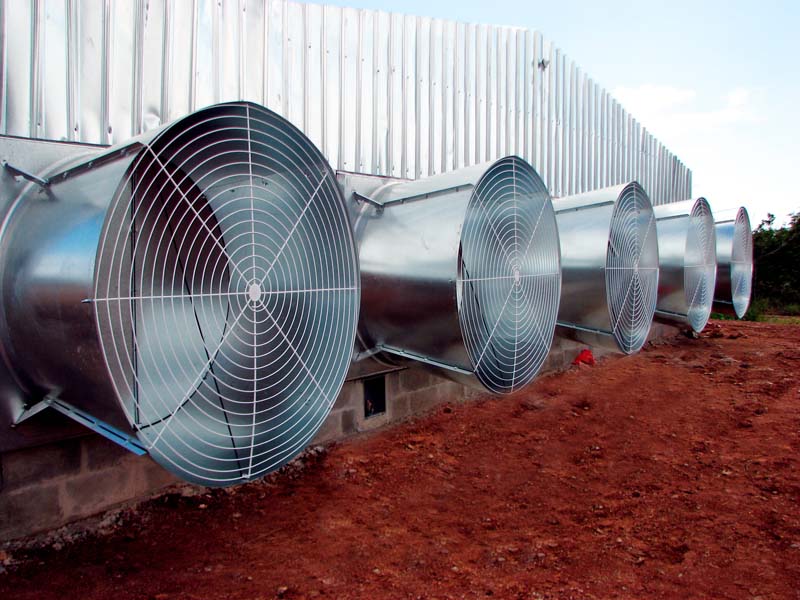
Fans are the workhorses of mechanical ventilation systems, but for agricultural buildings, performance on paper does not always translate to performance in the field. Builders and component specifiers must look beyond advertised airflow numbers and understand how fans behave once they are installed in real buildings with inlets, louvers, dust, moisture, and static pressure.
One of the most common mistakes in fan selection is relying solely on free-air cfm ratings. Agricultural fans rarely operate under free-air conditions. Shutters, bird screens, inlet restrictions, and ductwork all add resistance that reduces delivered airflow. For livestock housing in particular, fans should be evaluated at the static pressures they will actually experience, not at idealized lab conditions. Crop storage applications often operate at lower static pressures, but even there, screens and weather hoods can significantly affect performance.
Durability is another critical factor. Fans in animal housing are exposed to dust, humidity, ammonia, and other corrosive gases on a continuous basis. These conditions affect housings, fasteners, motors, bearings, and electrical components. Builders should pay close attention to materials, coatings, and motor protection ratings, especially in poultry and swine facilities where corrosion and dust loading are severe. In crop storage buildings, fans may operate seasonally, but they still face moisture, temperature swings, and debris that can reduce efficiency over time.
Energy efficiency matters most in buildings where fans run year-round or for long periods each day. Comparing fans based on airflow per watt provides a more accurate picture of long-term operating cost than horsepower alone. For livestock buildings, staging multiple smaller fans instead of relying on a single large unit allows builders to match airflow more closely to seasonal needs and reduce unnecessary energy use.
Control compatibility is equally important. Fans must work seamlessly with minimum-ventilation controllers, variable-speed drives, thermostats, humidistats, and gas sensors where used. In animal housing, fan performance is inseparable from inlet design and control strategy. A well-sized fan paired with poorly sized or poorly placed inlets will not deliver predictable airflow, regardless of total cfm capacity.
Installation details can also undermine performance if overlooked. Improper sealing around fan housings, obstructed exhaust paths, or insufficient clearance on the discharge side can all reduce effective airflow. Builders should plan fan locations early in the design process so airflow paths are clear, service access is available, and future maintenance does not require disassembly of surrounding components.
Finally, builders should be clear about what fans can and cannot solve. Fans remove contaminated air, but they do not correct fundamental building design problems. Inadequate inlet area, poor insulation, uncontrolled air leakage, or unrealistic stocking densities can overwhelm even well-designed fan systems. When ventilation loads are high, environments are tightly controlled, or systems rely heavily on automation, involving a ventilation specialist or engineer can help ensure fan selection aligns with the building’s actual demands.
Seasonal and Regional Considerations
Both crop and livestock ventilation systems must account for climate. A hay shed in humid Florida behaves differently than one in arid Montana. A swine nursery in Minnesota faces winter challenges a Texas cattle barn doesn’t encounter.
Builders must consider:
- Local humidity and temperature swings
- Prevailing winds
- The building’s orientation
- Whether heating systems will supplement ventilation
- The building’s expected year-round use
- Local pests, insects, snow, or rain that must be excluded from buildings
In livestock buildings, regional cold spells dictate minimum ventilation rates and fan staging. In crop buildings, rapid fall temperature drops or spring warm-up periods often require extra attention to avoid condensation events.
Material Choices and Their Interaction With Ventilation
Ventilation design doesn’t exist in isolation. The materials specified in the building influence how well the system works and how long it lasts.
In Crop Storage
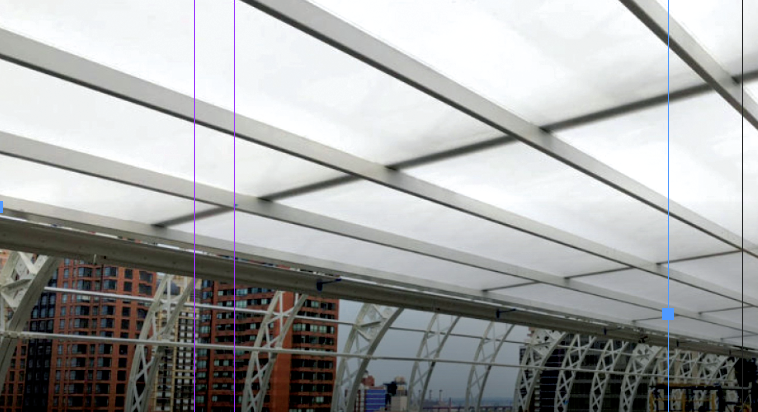
Vapor barriers, insulated roofs, and reflective membranes can help reduce condensation risk. Wood framing performs reliably, but metal components may sweat in certain conditions. Ridge vent design becomes critical: it must be open enough to release warm air yet built to prevent wind-driven rain or snow entry.
Commodity-specific requirements also shape material choice. Potato storage benefits from insulated partition walls and controlled-air plenums; hay sheds rely on large roof overhangs and generous openings to accommodate airflow.
In Animal Housing
The corrosive nature of livestock environments demands durable materials. Builders often specify:
- Hot-dipped galvanized or polymer-coated fasteners
- PVC-lined interior panels
- Plastic-coated lumber or galvanized steel posts
- Corrosion-resistant fan housings
- Insulated, gasketed inlets
Ventilation systems accelerate the movement of corrosive air, so materials must tolerate constant exposure. Other material choices may handle these conditions; check with manufacturers.
Questions Builders Should Ask Clients
Ventilation design starts with a conversation. Before designing any system, builders should ask clients:
- What commodity or species is being housed?
- What is the expected moisture load?
- How quickly does the load change?
- Will the client manually operate vents, or do they want automation?
- Are heating systems part of the plan?
- How often is the building accessed?
- Is the building multi-purpose?
The answers shape the air-exchange requirements, inlet sizing, fan placement, materials, and long-term maintenance expectations.
Turning Client Answers into a Ventilation Strategy
Once a builder has the client’s answers, their job is to turn that information into a workable ventilation plan. The process is straightforward if followed step by step. Start by identifying what is creating the load inside the building. In a crop structure, the load comes mostly from the moisture and heat released by the commodity and the way outside air interacts with the building shell. In an animal building, you should assume continuous production of moisture, heat, and gases from the animals, manure, and bedding. This first distinction—crop versus livestock—sets the framework for the entire design.
Next, determine how much air the building needs to move. For livestock projects, use standard cfm-per-animal guidelines from manufacturers, universities, or equipment suppliers to estimate minimum winter, mild-weather, and summer air-exchange rates. The numbers are different for calves, finish hogs, layers, broilers, or dairy cows, but the process is the same: multiply the recommended cfm by the number of animals and check it against the building volume to ensure you’re turning the air often enough. For crop storage, look at the commodity and how it will be stored—bulk piles, bins, bales, crates—and choose a steady, low-volume air-exchange rate that can remove moisture and equalize temperature without drying the product excessively.
After you know the airflow requirement, choose the basic ventilation approach. In a large, open post-frame hay or grain building in a windy region, natural ventilation through ridge and eave openings may be all you need. In an enclosed swine or poultry barn, or any livestock project that relies heavily on mechanical air control, you will want fans, controlled inlets, and staged automation. Hybrid systems also work well in moderate-load buildings, such as naturally ventilated dairy barns with circulation fans or potato storage that uses both passive vents and small exhaust fans.
With your chosen approach in place, lay out the airflow path. Think about where fresh air will enter, how it will move through the building, and where it will exit. In a crop building, you might rely on outside air entering through eaves or gable vents, rising through the interior, and leaving at the ridge. In an animal barn, decide where inlets will be placed, how they will throw air along the ceiling, and how your fans will draw that air out. Your goal is a clean, predictable path: fresh air in from known points, across the upper portions of the building, and out through exhaust fans or openings without leaving dead corners.
Once the path is clear, size and place the equipment to match it. With your target cfm calculated, select fans that can deliver that airflow and divide the total between enough units to allow staging throughout the seasons. Several smaller fans give you finer control than one large unit. Then size your inlets or ridge openings so they match the fans and maintain the right static pressure. Incoming air should have enough speed to travel along the ceiling before it drops into the occupied zone. For crop buildings, make sure your ridge opening and eave area are large enough for the footprint and height, adding mechanical fans only if the passive openings cannot keep up with the anticipated moisture load.
It’s time to integrate the ventilation design with the building’s other systems. In livestock projects, coordinate heaters, controllers, and inlet actuation so minimum-ventilation fans can run without chilling animals. Place heaters so the incoming air can mix and warm before dropping into the animal zone. In crop buildings, look at insulation, vapor barriers, and wall and roof assemblies to be sure the structure will not trap moisture or create chronic condensation.
When your systems are planned out on paper, choose materials that can withstand the environment your ventilation system will create. In a livestock building, the humid, high-ammonia atmosphere calls for corrosion-resistant fasteners, coated or galvanized components, durable fan housings, and interior surfaces that tolerate constant moisture and air movement. In crop storage, select materials that resist mold, manage seasonal moisture shifts, and allow easy cleaning without needing the same chemical resistance required in confinement barns.
Finally, evaluate your design against how the client will actually use the building. Walk through a typical day with them: how often doors open, how frequently animals or commodities move in and out, what seasonal changes they expect, and who will operate the controls. If the client is unlikely to adjust anything manually, rely more heavily on automatic systems that can maintain minimum ventilation on their own. If the client is more hands-on, you can simplify the equipment but be clear about what needs to be adjusted as seasons change.
By working through these steps in order—identifying the load, calculating airflow, choosing the approach, laying out the air path, sizing and placing equipment, integrating supporting systems, selecting appropriate materials, and matching the plan to real use—you can translate the client’s answers into a ventilation system that performs reliably and suits the building’s purpose.
When to Bring inan Engineer
Most agricultural ventilation systems can be designed by the builder, especially in naturally ventilated structures or post-frame buildings with simple ridge-and-eave airflow. However, there are certain projects where bringing in an engineer is not only wise but often required. Anytime the building shifts from open-air principles to enclosed, high-density, or mechanically dependent ventilation, the margin for acceptable error narrows. Mechanical ventilation systems for swine, poultry, and enclosed cattle barns operate within much tighter tolerances than hay sheds or curtain-sided dairy facilities. When the system must maintain precise airflow rates, static pressure levels, or year-round environmental stability, an engineer’s calculations ensure the building functions as intended.
Engineers are particularly valuable when the ventilation load is high or rapidly changing, when animals are densely housed, or when the system includes staged fans, minimum-ventilation controls, complex inlet packages, or tunnel ventilation. Deep-pit barns, mechanically heated calf facilities, and integrated manure-handling systems all rely on predictable pressure and airflow dynamics that are best validated through engineered design. Some lenders, insurers, and permitting authorities also require stamped mechanical drawings for confinement barns because of the life-safety implications related to gas buildup or mechanical failure.
While builders routinely design ventilation for simpler structures, enclosed livestock buildings and high-capacity mechanical systems benefit from engineering support to avoid issues such as drafts, cold stress, uneven temperatures, inadequate gas dilution, or equipment oversizing. In these cases, the engineer complements the builder’s practical experience, ensuring the final design aligns with the building’s purpose, the owner’s management style, and the environmental demands of the species being housed.
Why Getting Ventilation Right Matters
Poor ventilation has consequences that go far beyond comfort. In crop buildings, improper air movement can cause spoilage, mold, condensation drip, and structural rot. In livestock buildings, inadequate air exchange can harm animal health, reduce productivity, increase disease transmission, and corrode structural components.
Good ventilation protects the investment—whether that’s a commodity worth thousands or a herd worth hundreds of thousands.
For builders, understanding the unique needs of each building type sets the stage for long-term performance. Ventilation is not a one-size-fits-all component. It is a system shaped by biology, physics, and the realities of agricultural practice. The more a builder understands those differences, the more effectively they can guide clients toward durable, safe, and profitable structures.
CondenStop For Metal Roofing
- Condensation is a common issue in metal roof assemblies, both uninsulated and insulated. Anytime bare metal is exposed to certain atmospheric conditions, moisture can form and drip into the building. CondenStop is designed to manage this moisture at the panel level rather than relying on traditional underlayments.
- CondenStop is a factory-applied fleece membrane that is rollformed directly onto the underside of metal roof panels. When condensation forms, the material absorbs moisture, spreads it across its surface, and temporarily holds it until conditions allow it to dry. The goal is not to eliminate moisture generation, but to control where it goes and how it behaves.
- The product is commonly used in agricultural post-frame applications, including livestock confinement, equipment storage, lean-tos, and structures that may be insulated later. It can also be used in certain crop storage buildings to manage intermittent roof condensation caused by temperature swings, provided the building is adequately ventilated. It should not be relied on in place of mechanical aeration or drying systems in grain bins or other high-moisture crop storage.
- Ventilation remains critical. Ridge vents or ventilated ridge caps are necessary to allow air movement across the underside of the roof so absorbed moisture can evaporate. In some agricultural buildings, passive ventilation is sufficient. However, structures with high moisture loads may require mechanical ventilation.
- Livestock buildings and facilities storing hay typically generate significant moisture. Dairies, animal housing, indoor riding arenas, or buildings where water is regularly introduced may overwhelm passive airflow alone. In these cases, fans or other active ventilation systems help move air across the CondenStop surface, accelerating drying and expelling moisture from the building.
- CondenStop is one component of an overall moisture-management strategy. Builders need to evaluate building use, moisture generation, and ventilation design to determine whether passive airflow is adequate or if mechanical ventilation is necessary.
Resources
- Golden Rule Fasteners, www.goldenrulefastenersinc.com/
- Building Wins, https://www.facebook.com/search/top?q=building%20wins
- ST Fastening Systems, https://stfasteningsystems.com/
- CondenStop®, https://fastenersdirectllc.com/codenstop/
- Big Fan Man, https://bigfanman.com/