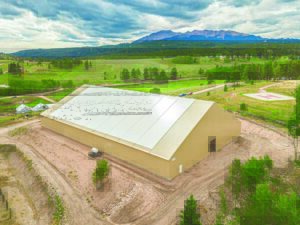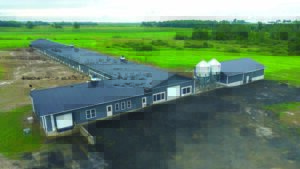

Home improvement contractors who sell specialty services, such as siding and roofing replacements, need to generate lots of leads to make a sale. The same is true with contractors who sell and install garages, sheds, and carports. They primarily market to homeowners, and without the leads, the sales dry up. In addition, they may also be a distributor or even a manufacturer of the product, making this supply chain nearly unique in construction.
In addition, these companies may also provide provide financing for the project in order to make the sale smoother. The result is a niche that operates like its own industry.
Characteristics of the Garage, Shed, and Carport Industry
In the 2025 CSI annual survey, 22 respondents identified their primary building type in the garage, shed, and carport category, and 70 said they were engaged in that area of construction.
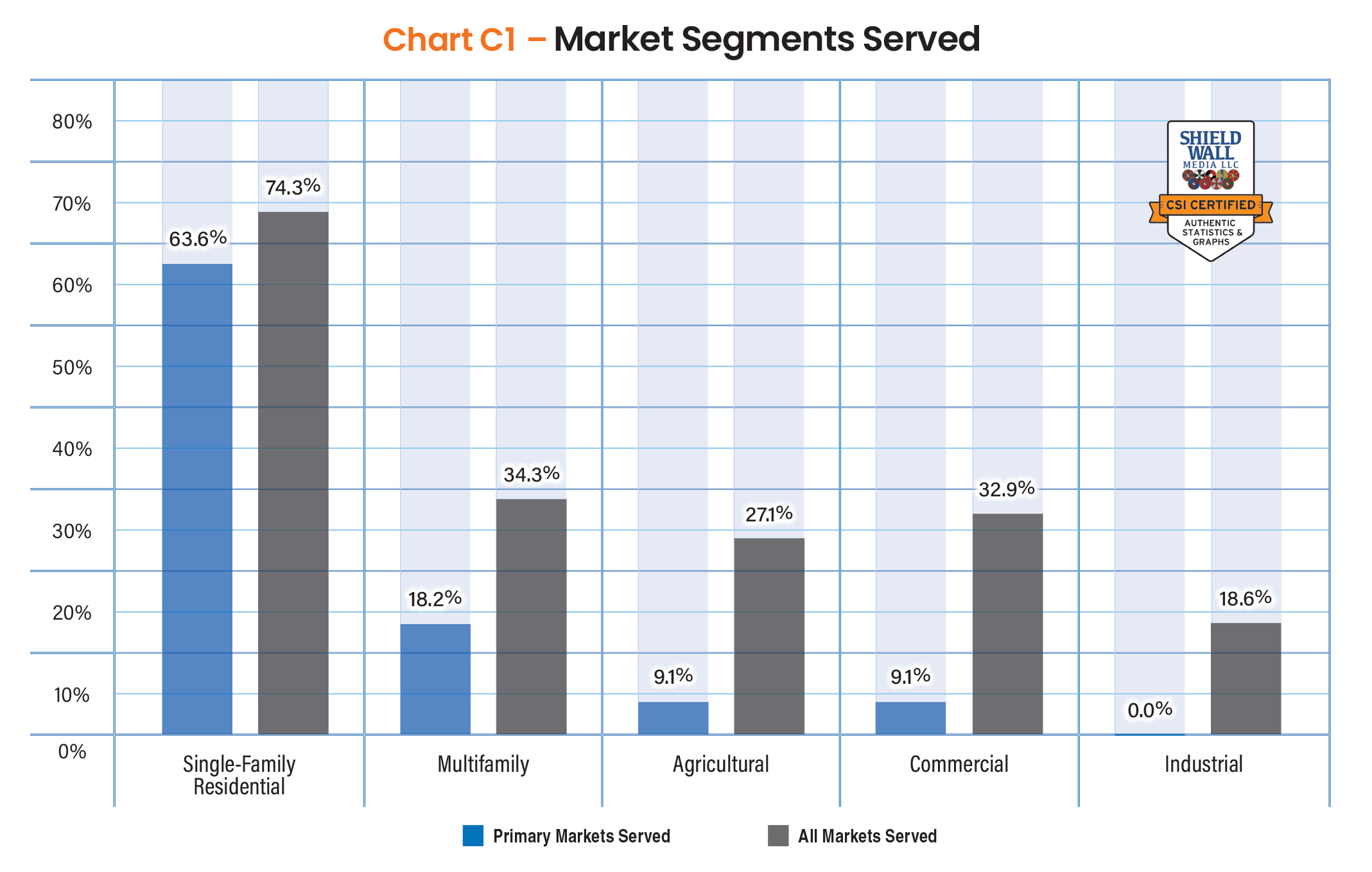
The large majority of them worked in the single-family residential market, although not exclusively. Of those who identified this building type as their primary business, 63.6% of them worked in single-family residential, and 74.3% of those engaged in the industry worked in single-family residential. These companies also worked in all the other market segments, although none of the companies whose primary business was garages, sheds, or carports did industrial work.
As with many of the areas of construction this report has delved into, the companies engaged in garage, shed, and carport construction tend to be heavily based in the Midwest (28.6%) and South (30.0%). Very few companies worked nationally, and we had no respondents from Canada.
We inferred at the top of this section that contractors tended to be the point people in garage, shed, and carport construction, and 51.4% of our survey takers engaged in this category identified as a builder or contractor. We also had 11.4% each of manufacturers and distributors. About a quarter were designers.
Judging what is new and what is a remodeling project in the garage, shed, and carport construction market can be a little tricky. Certainly, a replacement is a remodeling project, but a garage addition, while new, is according to the U.S. Census Bureau a remodeling project.
Of our survey takers engaged in garage, shed, and carport construction, 47.2% do more than 60% of their work in new construction, and 24.3% do less than 40% in new construction. There is a clear bent toward new construction, including the 14.3% who do more than 90% of their work as new.
Again among this sector of the industry, our survey takers this year tended to skew toward smaller projects. Over a third (67.1%) of companies engaged in garage, shed, and carport construction had average job sizes below $25,000, and 28.6% had jobs smaller than $5,000. As has been mentioned elsewhere, we had a number of survey takers identify as handymen, which would bend the numbers lower on average job size.
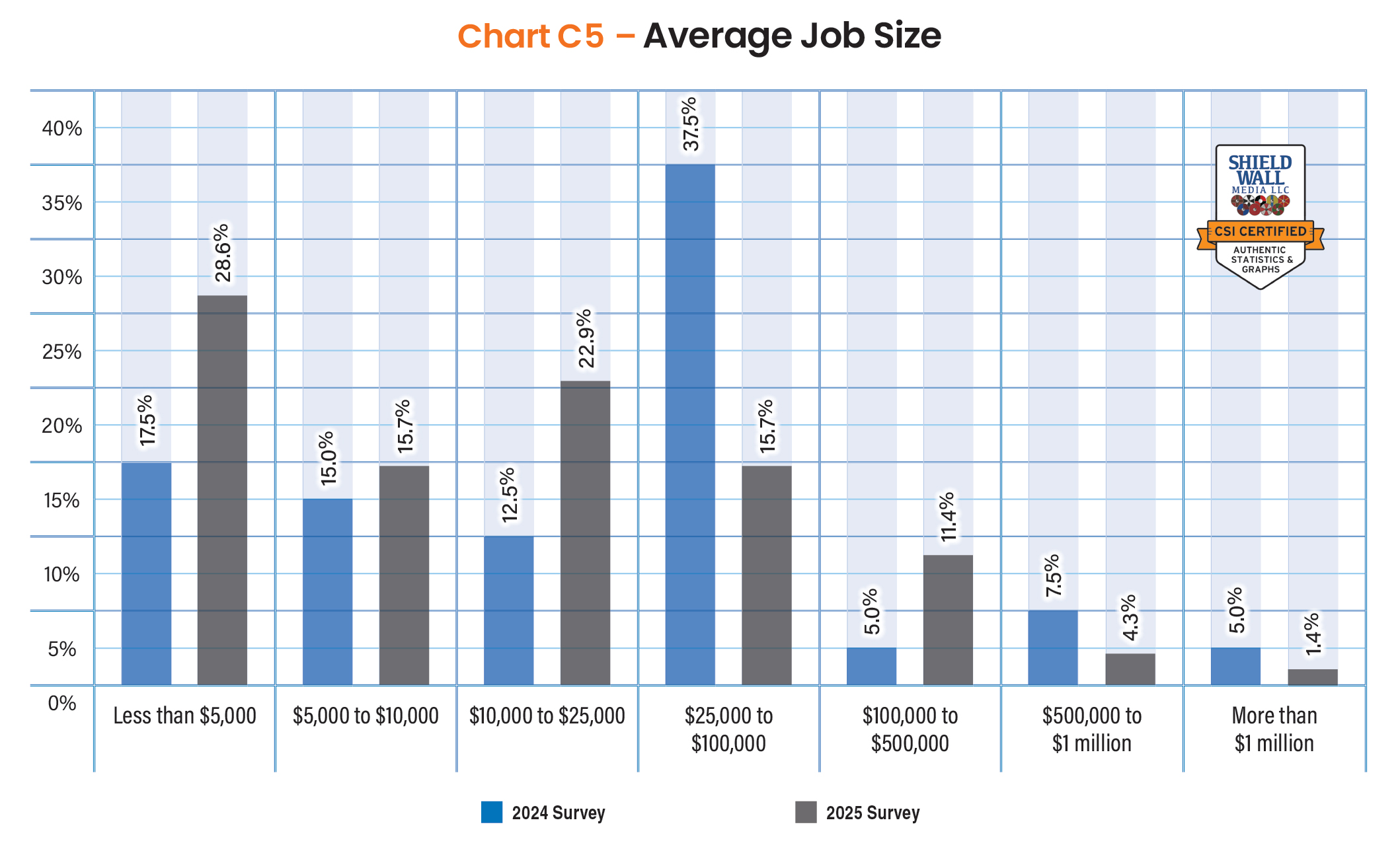
Companies that did have large average job sizes (over $100,000) were about the same as last year. Although engaged in garage, shed, and carport construction, those averages were likely driven up by a company doing other work, such as new home construction.
Projected Industry Growth
A lot of companies engaged in garage, shed, and carport construction offer financing because many of their customers demand it. Having the product and financing in one package, such as purchasing a new car at a dealership, makes the sales easier and gives companies a predictable revenue source. Consequently, low interest rates become a great harbinger of increased sales in this niche, and higher rates, such as has been experienced since the pandemic and the rapid inflation that occurred afterward, can constrain the growth of companies.
Since the 30-year fixed rate peaked in October 2023 at 7.79%, it dropped quickly to 6.61% at the beginning of 2024 and held relatively stable since then. There was a brief decline in late summer to almost 6%, but after the election, the rates rose back up to the levels they were at during the beginning of the year. The 15-year fixed rate followed the exact same path, but was generally about a percentage point lower.
While these rates are hurting affordability, their stability has allowed homeowners and building owners to make reliable decisions and budget appropriately.
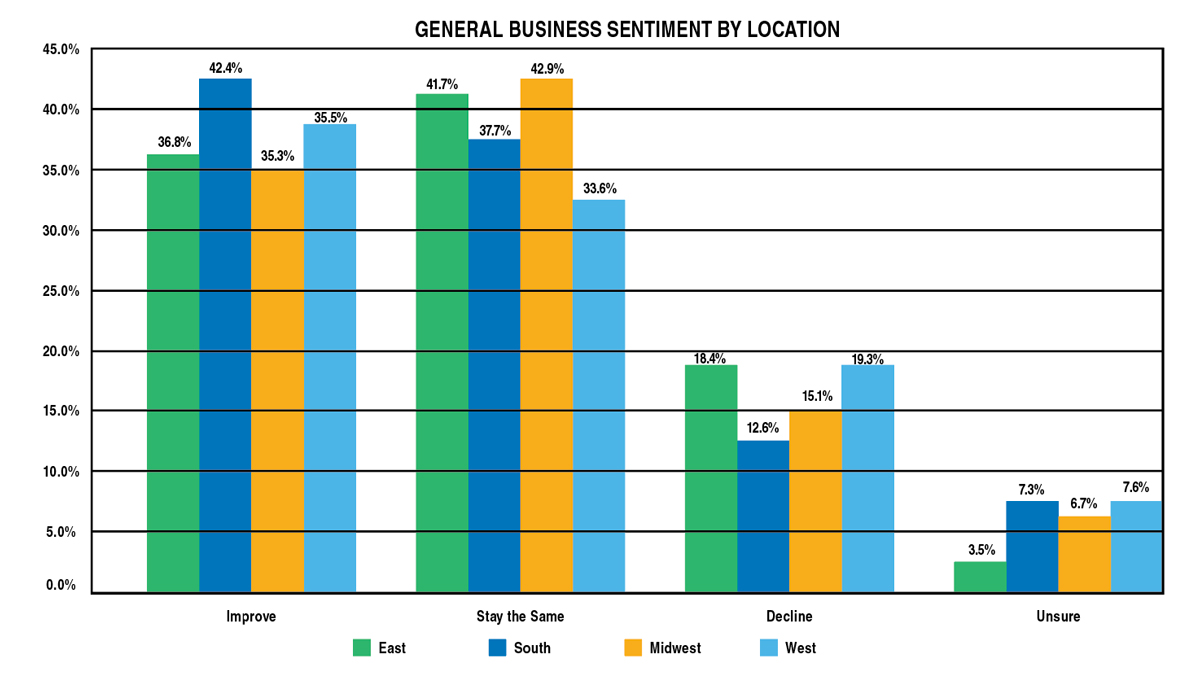
Respondents to the 2025 CSI annual survey who are engaged in garage, shed, and carport construction are more positive about 2025 than the survey takers in last year’s survey were about 2024. This year, 40% of respondents thought the general business environment in the construction industry would improve in 2025, compared to 32.5% last year. That’s a 23% increase year over year. Survey takers could respond with “improve,” “stay the same,” “decline,” or “unsure.” Only the percentage saying either improve and decline changed significantly from year to year, indicating a clear shift to a more positive sentiment about the business climate.
In addition to asking companies that are engaged in garage, shed, and carport construction what they felt the general business climate would be in the construction industry in 2025, we wanted to know how they felt about different market segments. The vast majority of our respondents (74.3%) work in the single-family residential market, so their familiarity and understanding in that area is likely stronger than in the other markets.
In the residential market, 40% of our survey takers felt 2025 would be a better year than 2024, 47.1% expected it to be about the same, and 12.9% thought it might decline. The only market segment to outstrip single-family residential in terms of expectation is the commercial one. There, 44.3% of respondents engaged in garage, shed, and carport construction felt 2025 would be better than 2024.
High percentages of respondents felt the agricultural (61.4%) and the industrial (55.7%) market segments would stay the same year over year. And the final measure of sentiment, a decline in activity, was thought to happen by about an equal number of participants regardless of the market segment.
Company Size and Growth Projections
On average, 58.5% of our respondents engaged in garage, shed, and carport construction said their gross sales increased in 2024 compared to 2023. Commercial and industrial companies were most likely to report increases. 65.2% of commercial and 69.2% of industrial companies said they had year-over-year increases.
Interestingly, 15.4% of companies serving this niche from the industrial market segment said they had declines in gross sales in 2024. That’s above the average across all market segments of 11.8%, so for industrial companies it was feast or famine, with only 15.4% reporting their gross sales stayed the same.
There wasn’t a high percentage of survey takers who said their gross sales jumped significantly, or more than 25%. Just over 15% of agricultural companies and industrial companies said they had a large jump.
There were 65 respondents engaged in garage, shed, and carport construction to the question about projected gross sales for 2025, and most of them worked in multiple market segments. The fewest worked in the industrial segment and they were the most likely to expect year-over-year growth in 2025 with 84.6% saying so. The least likely, were those companies in the single-family residential market – who also happened to be the greatest number of respondents – where 44.2% thought they would see increased growth in 2025.
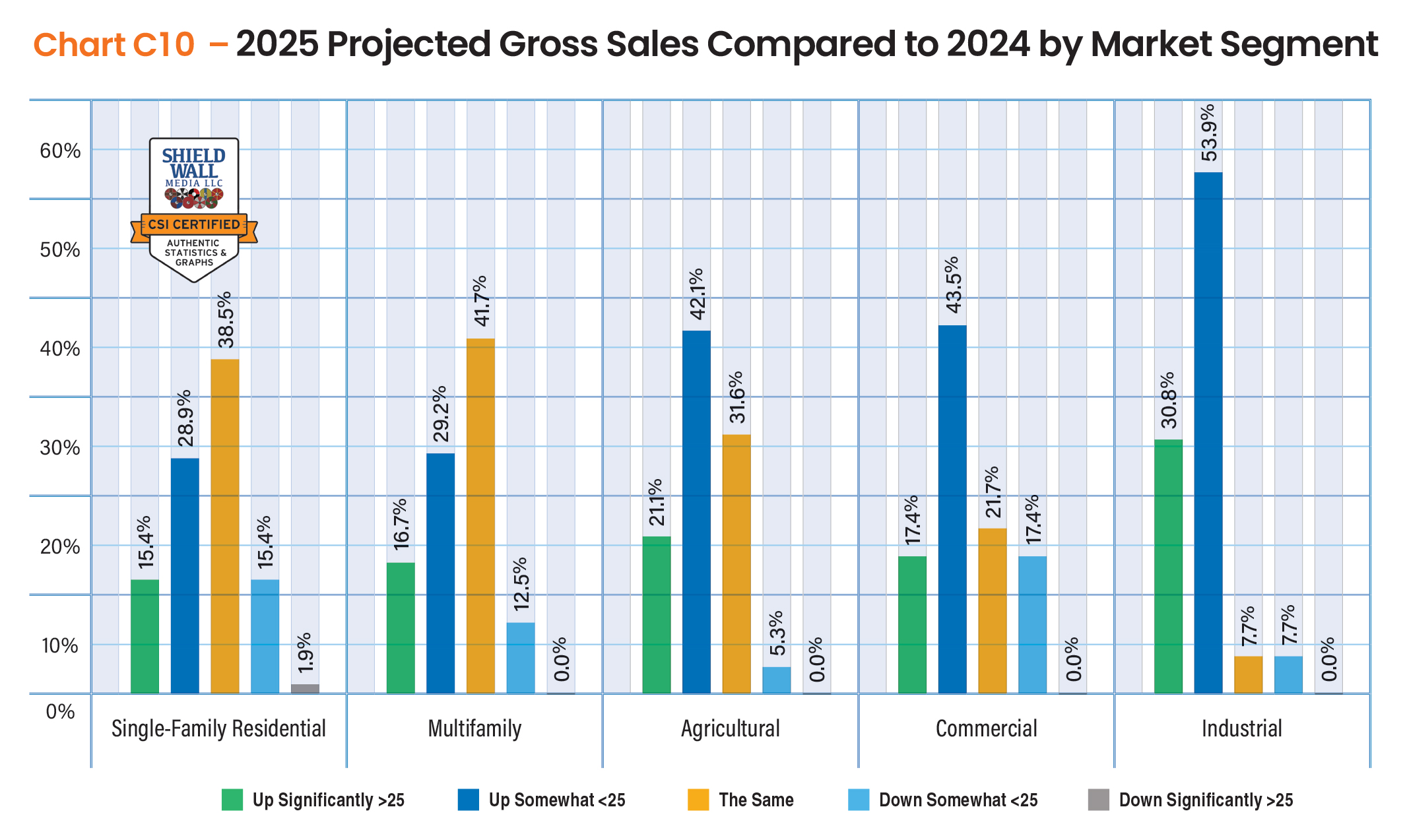
Companies engaged in garage, shed, and carport construction who were working in the agricultural market segment were least likely to report anticipated declines next year. Only 5.3% of them thought their gross sales would drop this year.
Future Opportunities and Challenges
Above, we reported that companies engaged in garage, shed, and carport construction working in single-family residential markets were least likely to anticipate growth in 2025, so it’s not surprising that they – along with multifamily and commercial companies – were unlikely to have plans to expand their businesses this year. However, 51.9% in single-family residential had no plans to expand their businesses in 2025 or even beyond
Companies in the agricultural market (36.8%) who did garage, shed, and carport construction were most likely anticipate expansion this year and next year.
The problem that has vexed the construction industry for almost three decades, a shortage of skilled labor, continues on without an end in sight. For companies engaged in garage, shed, and carport construction, the same holds true. More than half (56%) plan to add construction employees next year, and 47.2% look to bring on more support employees.
Companies that wanted to expand their offerings in products or move into working on new building types in 2025 totaled 42.9%. Of the options we offered survey takers, the top seven were rounded out by a need to add construction-related tools. Just under 40% identified jobsite equipment and trucks as a need to be addressed in 2025. Material handling equipment was selected by 33.5% of respondents engaged in garage, shed, and carport construction as needing to be added this year. Rounding out the top seven was capital equipment (32.6%), which is a catch all that includes metal forming equipment and other items.
Artificial intelligence is a wave that has swept across the construction industry since ChatGPT was launched Nov. 30, 2022, but among respondents engaged in garage, shed, and carport construction AI did not rank in the top three of technological or product innovations that they thought would impact their businesses. Manufacturing automation ranked number one with 44.1% of survey takers saying it would have the biggest impact.
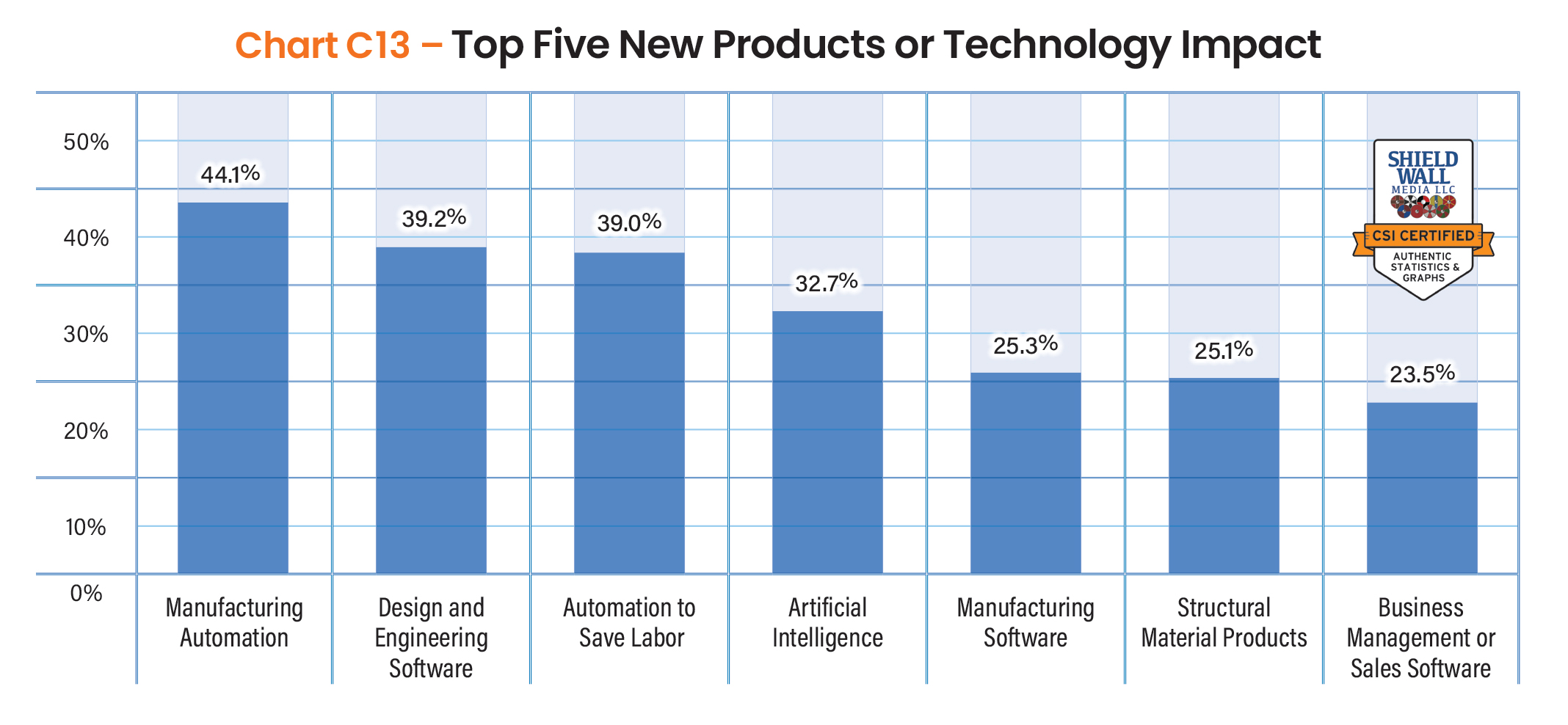
Of course, manufacturing automation also now, by default, includes AI, as do the other two innovations respondents thought would have the biggest impact: design and engineering software (39.2%) and automation to save labor (39.0%).
After AI (32.7%) there is a bit of a drop in the percentage of respondents in this category regarding what innovations will impact their businesses. Manufacturing software (25.3%), structural material products (25.1%) and business management or sales software (23.5%) round out the top seven with drone imagery, 3D printing, and augmented reality not making the top of the list.
Across the board, regardless of the type of building our survey takers were engaged in, material costs ranked as the highest concern on their list of challenges for 2025. Among companies engaged in garage, shed, and carport construction, 70.6% thought rising material costs would be a challenge. In last year’s survey, material costs were only identified by 54.3% of respondents as a challenge, and last year the issue ranked fifth after the three employee-related issues and inflation.
Inflation contributes to rising material costs, and 65.9% of respondents identified that as one of the biggest challenges, ranking it higher than companies engaged in other building types such as metal roofing.
Even though respondents in this area identified construction employees and support employees as the two resources they are most likely to add in 2025, they did not rank retaining (48.8%) or finding (44.6%) employees at the top of the challenge list. For the companies engaged in these kind of buildings, it’s interesting to note that retaining employees ranks higher than finding them, which is the opposite of respondents in the other sections.
The final three on the top seven list of challenges companies engaged in garage, shed, and carport construction anticipate facing in 2025 are interest rates (43.8%), rising employee related expenses (43.6%), and energy and transportation costs (41.0%).
Given how important low borrowing rates are to this segment of the industry, the concern about interest rates is understandable, but the needle doesn’t seem to have moved on this as a challenging aspect of the business for companies in this niche. Last year, a nearly identical 45.3% of survey takers identified this as a challenge for the upcoming year.