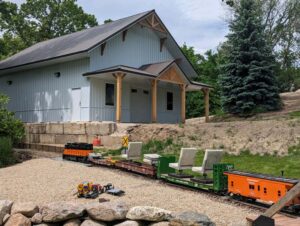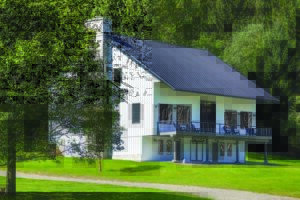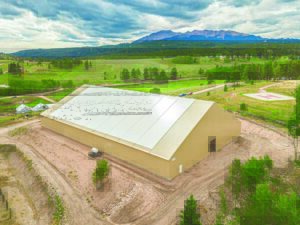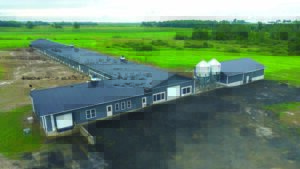
Lightweight and versatile, cold-formed metal buildings require less substantial foundations than conventional red iron buildings and serve as excellent outbuildings for equipment storage, small manufacturing, machine shops, and other purposes. Open clear spans make them ideally suited for hangars as well, allowing unfettered movement throughout the interior.
Not to be confused with metal building systems or pre-engineered metal buildings, cold-formed steel buildings use lightweight framing bent at room temperature instead of heavy red iron.
Characteristics of the Cold-formed Metal Buildings Industry
The response rate to the 2025 CSI annual survey among companies who do primarily cold-formed metal buildings was much stronger than for the 2024 survey, with 69 respondents saying they were engaged in constructing cold-formed metal buildings. Among those survey takers who said these were their primary type of buildings, 37.7% did single-family construction and only 5.8% did industrial.
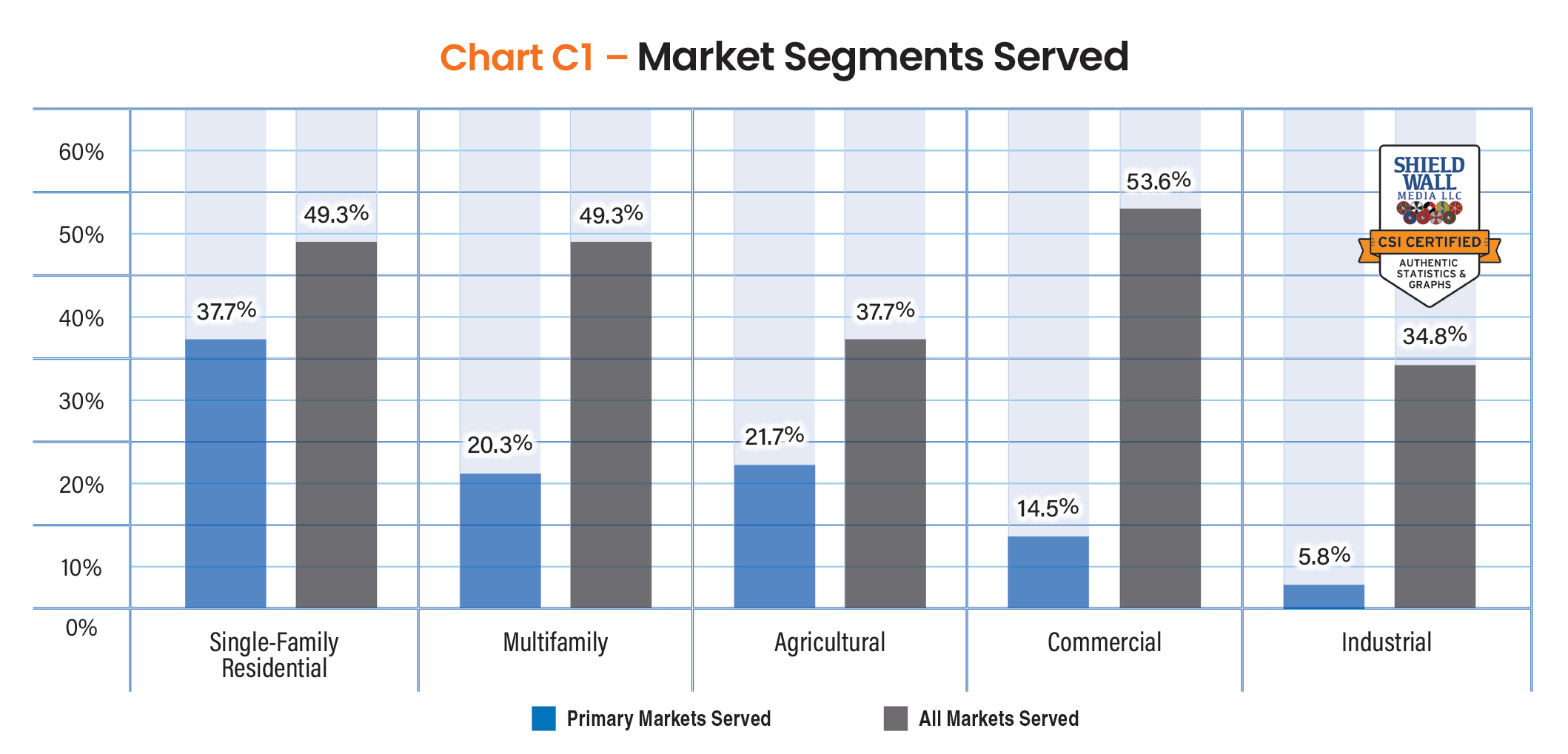
Among the companies engaged in cold-formed metal building construction, 53.6% did commercial construction and 34.8% did industrial work. In single-family and multifamily, 49.3% of respondents said they worked in at least one of those market segments.
Throughout this survey, companies located in the Midwest have been the majority of participants, and the same is true with those engaged in cold-formed metal buildings. A third of the respondents were based in the Midwest. However, while in other sections, the next most likely region for respondents to be located is the South, among these companies only 18.8% were located there, but 29% were located in the West.
More than half (51.4%) of respondents said they were builders or contractors. Cold-formed metal buildings is a type of business that easily lends itself to design-build work, though 25.7% of companies engaged in this kind of construction were also designers. Distributors (11.4%) and manufacturers (11.4%) made up the rest of the participants.
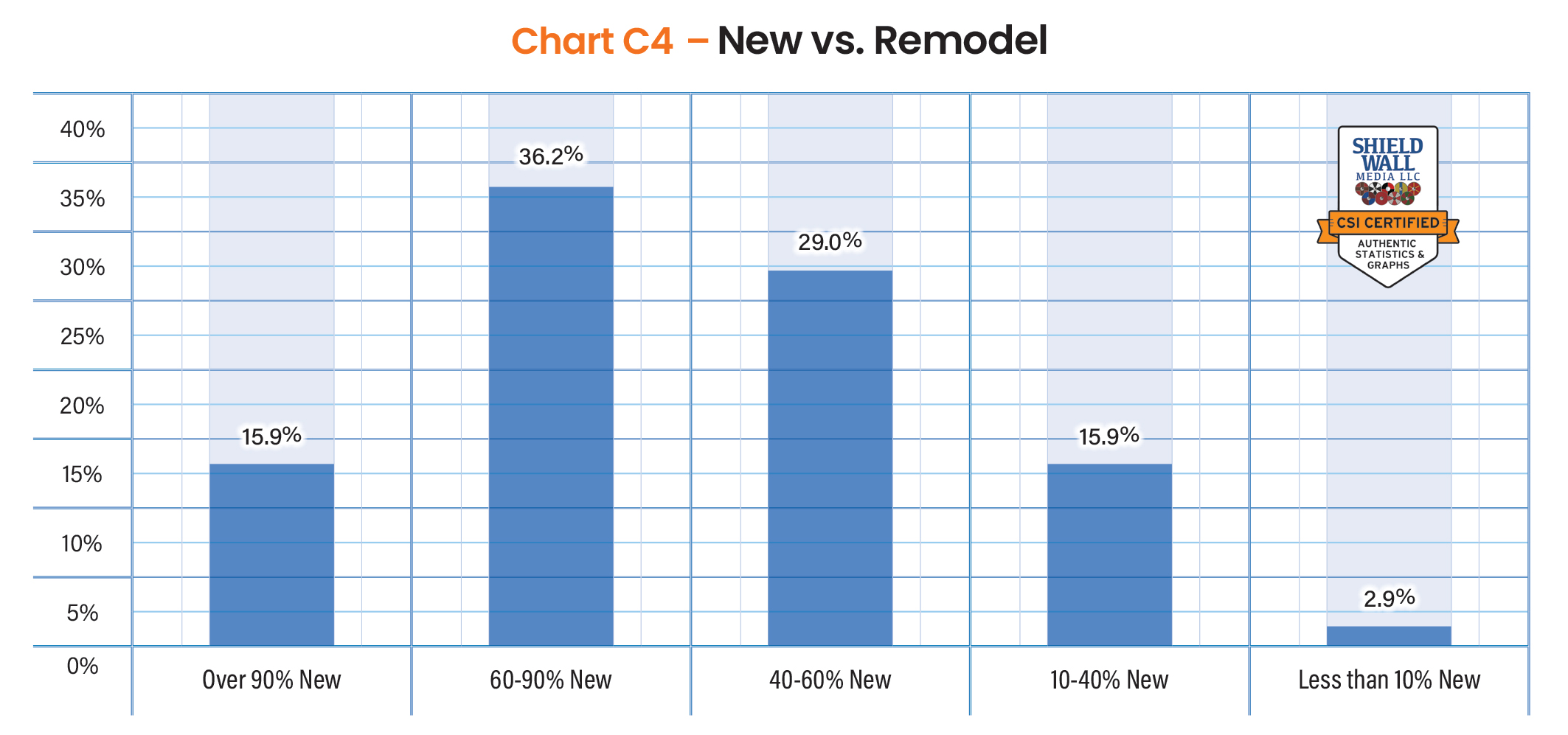
Cold-formed metal buildings do not lend themselves easily to remodeling other than maintenance and repair for something like punctured or dented wall panel. Half of the respondents engaged in cold-formed metal building construction do at least 60% of their work in new construction and only 18.8% do at less than 40% new construction. Because this type of building is often found in agricultural or rural settings, it’s not surprising the companies doing the work offer quite a number of services across multiple market segments.
When we compared the average job size among companies engaged in cold-formed metal building construction from the 2024 survey to this year’s survey takers, we found significantly more have average job sizes under $25,000. Last year, 32.7% of respondents reported job sizes that small, but this year 56.5% said their average job size was under $25,000. As has been mentioned elsewhere, we did have a large number of handymen responding this year, which likely drove down the job size.
Projected Industry Growth
We asked respondents how they felt the general business climate would be across the construction industry in 2025, and companies engaged in cold-formed metal building construction had predominantly the same expectation as the survey takers from last year’s CSI annual survey with a notable exception. Around 40% felt it would improve, slightly fewer thought it would stay the same, but a significantly higher number thought the general business climate would decline in 2025. Last year 14.3% of respondents saw a decline coming, but this year, 21.4% anticipated a poor business climate. That’s nearly a 50% increase.
Beyond just the general business environment, we surveyed companies engaged in cold-formed metal building construction how they felt individual market segments would perform in 2025. Our respondents were more bullish on the commercial (56.5%) and industrial (53.6%) market segments, saying that construction activity would increase in those segments. Both residential (47.8%) and agricultural (43.5%) segments had below half of survey takers saying those markets would increase.
For the most part, though, few companies engaged in cold-formed metal building construction thought any given market would decline. No more than 13% expected slower activity in an segment.
After hitting a peak in late 2021, the producer price index (PPI) for cold rolled steel and strip had been steadily declining until the end of 2024. Based on a 1982 index that equals 100, the PPI for cold-rolled steel jumped to 711.611 in Nov. 2021, but closed out 2024 at 322.156. That is a clear trend downward in a major commodity affecting the cold-formed metal building industry.
The U.S. Bureau of Labor Statistics has not yet released data for 2025 as of the writing of this report, so market reaction to tariffs against China, Canada, and Mexico by the Trump administration have not yet been reflected and may affect sentiment about the 2025 business climate.
Company Size and Growth Projections
On average, 54.8% of our respondents engaged in the cold-formed metal building construction said gross sales increased in 2024 compared to 2023. Nearly 20% said gross sales were up significantly. Those survey takers working in single-family residential markets were most likely to report increased gross sales, with 70.6% saying they were up and 23.5% saying they were up more than 25%.
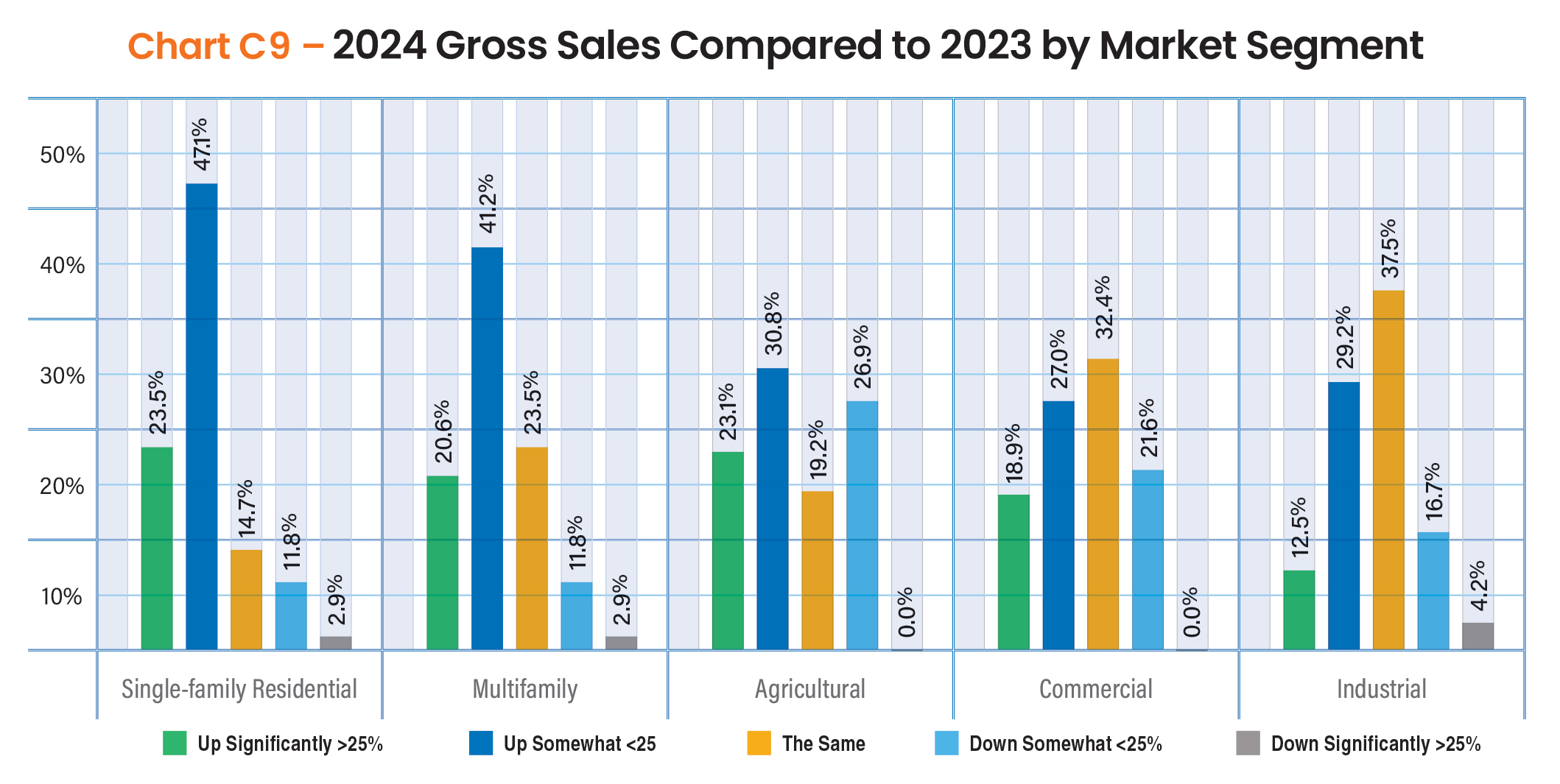
Companies working in the other market segments were about equally inclined to report gross sales were down, with between 20% and 26% saying sales declined. But 26.9% of companies working in the agricultural market who were engaged in cold-formed metal building construction told us gross sales were down significantly.
Chance Shalosky, roofing product manager, ProVia, points to “uncertainty and high construction costs” in 2024, which he says “negatively impacted the roofing segment of our business.”
When we asked respondents engaged in cold-formed metal building construction what they expected gross sales to be in 2025, they were remarkably consistent from market segment to market segment. On average. 65.6% of them expected gross sales to increase year over year. At the low end, 62.5% of companies working in the industrial market expected them to increase, and at the top end, 70.6% of single-family residential market companies looked for an increase. Only companies in the multifamily market expected significant increases, with 35.3% saying gross sales would jump more than 25% in 2025.
Future Opportunities and Challenges
It’s one thing to expect your business to increase, and it’s a much stronger sentiment to take action and plan to expand your business. Nearly 90% of the companies engaged in cold-formed metal building construction planned to expand their businesses in the future with 86.7% reporting that likelihood. Even more impressive was the percentage of respondents who said they plan to expand soon. In 2025, 43.8% of survey takers had plans to expand. Companies in the single-family residential market were most likely to plan to expand in 2025 with 52.9% reporting that, and commercial companies were least likely with 35.1% reporting expansion plans.
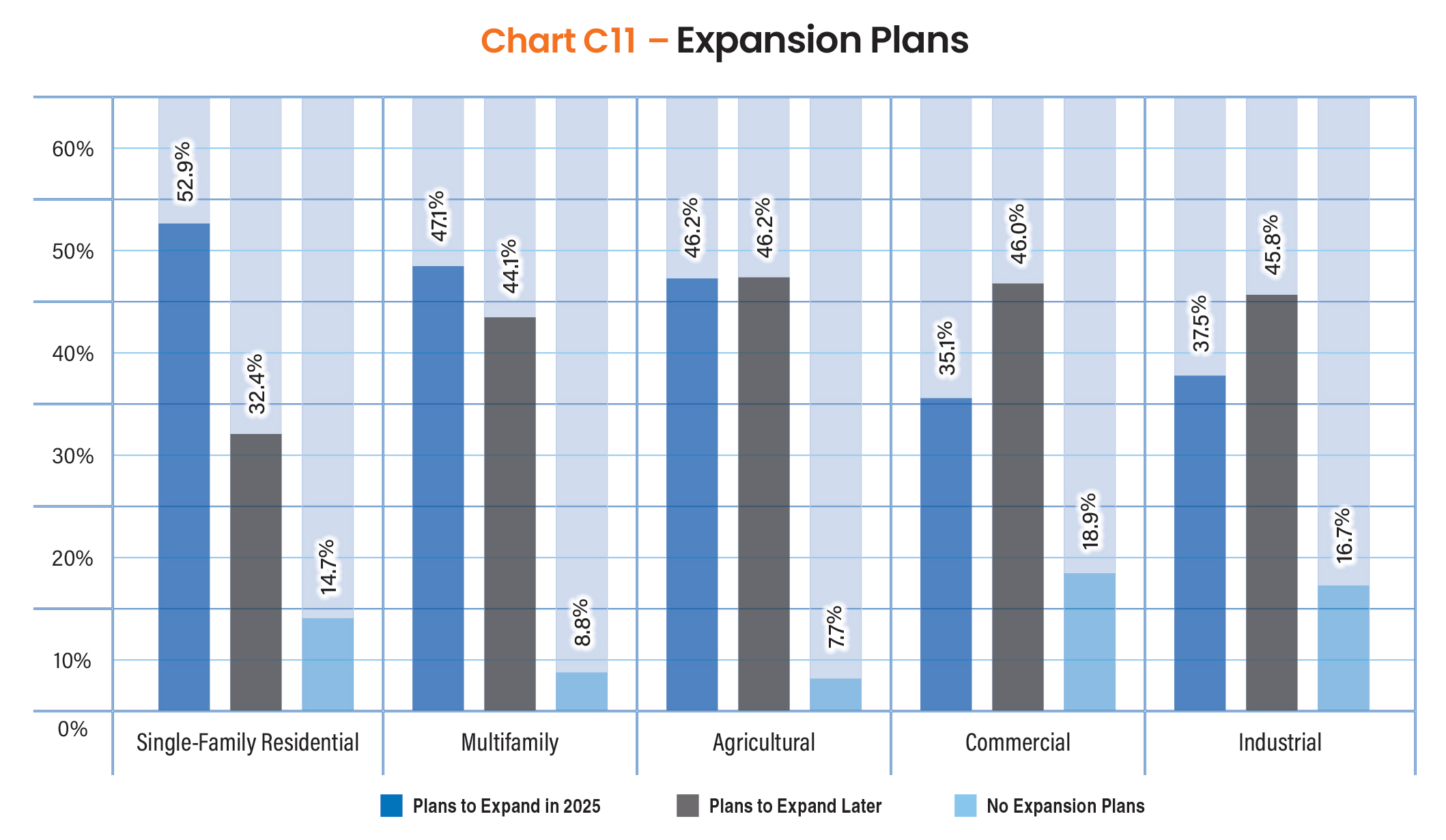
Respondents engaged in cold-formed metal building construction who work in the commercial and industrial markets were most likely to say they had no plans for expansion. 18.9% of commercial companies and 16.7% of industrial respondents reported they do not plan to expand their companies.
Expansion plans require resources. With 86.7% of companies having expansion plans in sight, the need for resources is imminent. In fact, some resources will need to be added in 2025, and not just to meet expansion plans but to meet current market demands. In the least surprising insight of all insights, 56.9% of respondents engaged in cold-formed metal building construction plan to add support employees and 50.8% will add construction employees in 2025. The great resource shortage of the modern construction era is labor.
Compared to companies engaged in other types of building construction, those engaged in cold-formed metal building construction were generally more likely to plan to add new products or building types in 2025, with 49.1% reporting as such.
After those three resources that included employees and new products, there was a drop-off in the likelihood of respondents saying they would add resources. The next four of the top seven were all related to financial capital. The general capital category of resources garnered 37.1% of respondents engaged in cold-formed metal building construction saying they would add that resources. Manufacturing equipment (34%), metal forming equipment (32.4%), and jobsite equipment (32.4%) all had companies engaged in cold-formed metal building construction saying they would add that resource.
We asked a number of industry leaders what surprised them in the past year. Shalosky says, “Over the past year, the regulatory emphasis on durability and the capacity of building products to withstand extreme weather was an unexpected shift. This change reflects the growing impact of severe weather events and necessitates innovation in product development and strategy. It provides opportunities for growth in markets focused on enhanced durability and safety standards, aligning with our commitment to high-quality, resilient products.”
Innovation comes from variety of technologies that can have an impact on a business, and respondents engaged in cold-formed metal building construction identified seven innovations they thought would impact their businesses. Design and engineering software was selected by 49.4% of respondents and was the most often chosen option.
Close behind were manufacturing software (44.6%) and artificial intelligence (44.5%). AI has been on the list in every section of this survey as a technology that will impact businesses and often about half of the respondents identified it.
To address Shalosky’s point directly, structural material product innovations were selected by 31.4% of respondents as likely to have an impact on their businesses. But make no mistake, AI will be part of all the other innovations, and all the other innovations will be used to address the need for resilient building products.
If you could put into one word the biggest challenge that comes through across the entire 2025 CSI annual report, it is concern about rising material costs. The concern shows in anecdotal evidence during conversations with respondents, and it arises time and again in the numbers.
Among companies engaged in cold-formed metal building construction, 74% identified material costs as a challenge they will face in 2025. This was far and away the challenge with the greatest percentage of respondents. The second, third, and fourth challenges – finding employees (51.4%), rising employee related costs (49%), and retaining employees (47.6%) – fell far behind in the percentage of respondents identifying them as challenges in 2025.
For years, finding employees – especially skilled construction workers – has been the number one challenge in the industry, and it’s been a problem for companies engaged in any kind of building construction. But interest rates (46.6%), inflation (40%), and supply chain issues (35.7%), which round out the top seven challenges, will all contribute to the rising material costs. As will rising employee costs.
If, as Shalosky says, the industry needs to “focus on enhanced durability” then those rising material costs and labor shortages will make that goal even more challenging.