Originally Published as: Choosing the Right Door for the Job: A Field Guide to Agricultural Doors
On a working farm or ranch, a door is never just a door. It’s the difference between a tractor that gets in and out without a scratch and one that clips the frame on the way through. It’s the line between a chicken house that stays warm through a Minnesota January and one that loses heat — and birds — overnight. Choosing the wrong door for an agricultural application doesn’t just cost money upfront. It costs time, productivity, and sometimes livestock.
This guide walks through the most common door types used in agricultural buildings, their ideal applications, the materials that hold up best in farm environments, and the questions every builder and owner should ask before the first nail goes in.
Why Agricultural Doors Are Different
Commercial and residential doors are engineered for very specific load tolerances, traffic patterns, and aesthetic expectations. Agricultural doors operate in a different world entirely. They must handle:
Extreme temperature swings — from sub-zero winters to sweltering summer heat
High humidity and moisture from animals, feed, and weather
Corrosive environments caused by manure gases, fertilizers, and cleaning chemicals
Heavy, irregular traffic — from people on foot to combines with 12-foot headers
Dust, chaff, bedding material, and other particulates that clog hardware
The occasional rough treatment that comes with busy farm operations
A door that checks all the boxes for a suburban garage will often fail within a few years in an active barn or equipment shed. Understanding that gap is the starting point for making a good selection.
The Main Types of Agricultural Doors
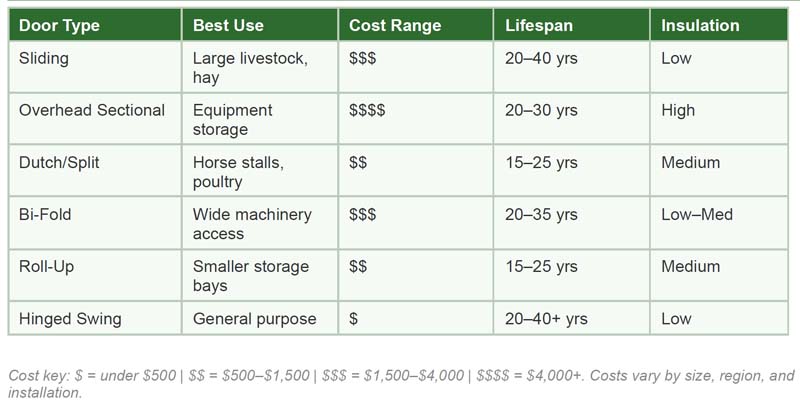
There is no single “best” agricultural door — the right choice depends on the structure, the use case, and the budget. Here is a breakdown of the most common types:
Sliding Doors
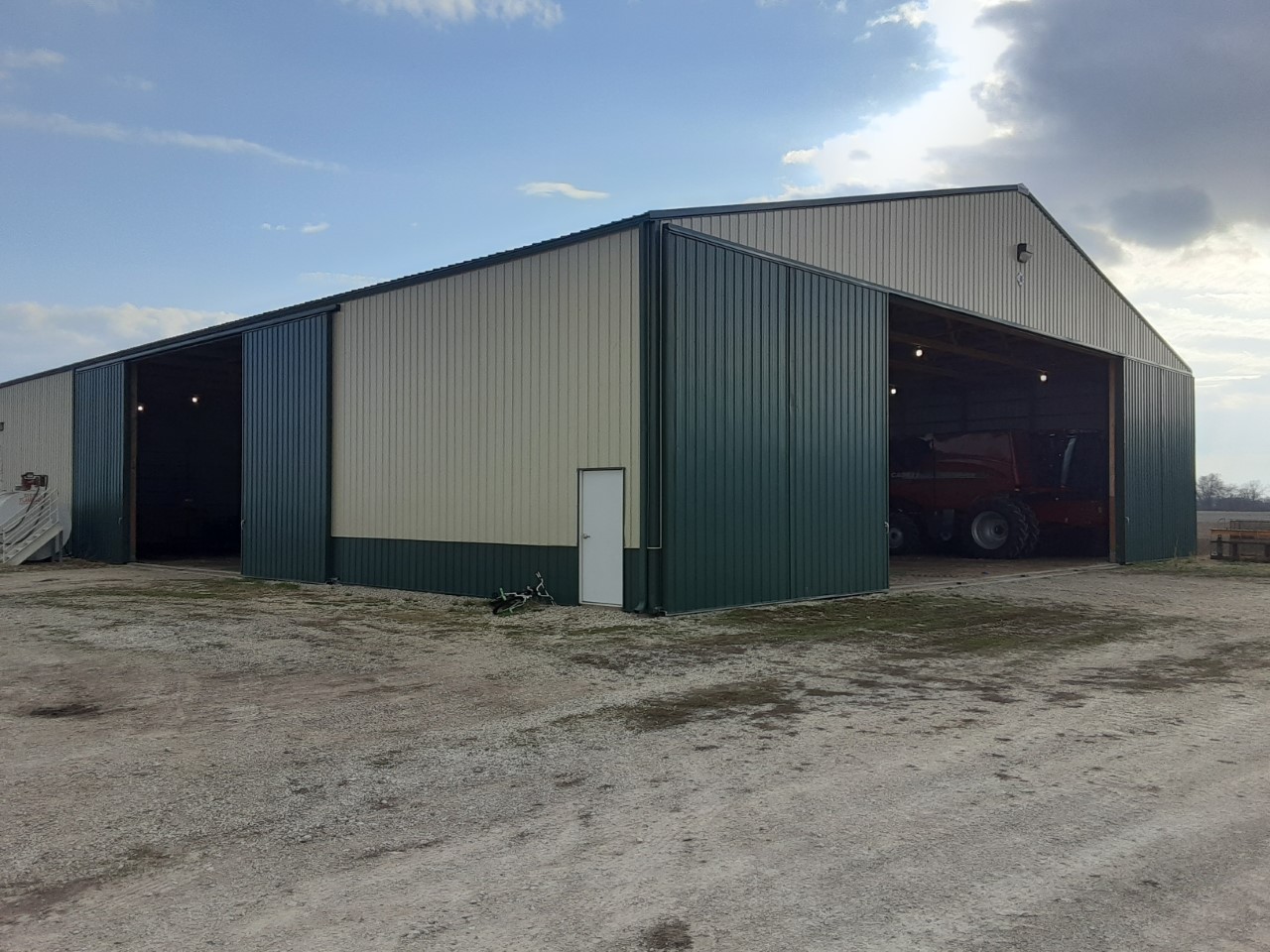
The sliding door is one of the oldest and most trusted designs in agricultural construction — and for good reason. A properly built sliding door can span 12, 16, even 20 feet of opening without the overhead clearance required by a sectional or bi-fold. This makes it especially well-suited to hay storage, large livestock barns, and older structures where the framing wasn’t designed with overhead doors in mind.
The key vulnerabilities of sliding doors are their track hardware and the bottom guide. In heavy-use environments, the top roller carriages take a beating, and the bottom guide — if recessed in concrete — fills quickly with manure, bedding, and debris. Builders should specify heavy-duty galvanized or stainless hardware rated for agricultural use, and consider a surface-mounted bottom guide that can be cleaned easily.
The key vulnerabilities of sliding doors are their track hardware and the bottom guide. In heavy-use environments, the top roller carriages take a beating, and the bottom guide — if recessed in concrete — fills quickly with manure, bedding, and debris. Builders should specify heavy-duty galvanized or stainless hardware rated for agricultural use, and consider a surface-mounted bottom guide that can be cleaned easily.
Most standard sliding door components—tracks, latches, guides, and frames—aren’t wind rated. That’s a major gap in the industry. Right now, pre-engineered, warrantied wind-rated systems are rare, with companies like I Beam Sliding Doors leading the way. Standard off-the-shelf parts simply aren’t built for those demands, which explains the ongoing frustration many builders face.
Jon Fehr of I Beam Sliding Doors puts it plainly: “The sliding door industry needs to step up. Hardware and structural components should perform on par with sectional or aircraft-style doors. As it stands, most standard frames and hardware don’t meet UL or ASTM E330 standards, and insurers are starting to take notice—sometimes refusing coverage on buildings with underperforming door systems. Treating sliding doors as a temporary or ‘cheap fix’ isn’t just short-sighted—it can create real liability issues. When engineered correctly, sliding doors can match or exceed the value of overhead doors. But that only happens when the industry moves beyond low-cost shortcuts and commits to better-built systems.”
Overhead Sectional Doors
For equipment storage — especially in heated shops and machinery storage buildings — the insulated sectional overhead door has become the standard. Modern agricultural-grade sectionals are available with R-values of 12 to 17, dramatically reducing heating costs in climates where a shop needs to stay above freezing year-round.
The trade-off is cost and maintenance. Torsion springs must be properly sized for the door weight and will need replacement over time. Opener systems require power and can fail in outage situations — a serious problem if a tractor needs to get out during a storm. Builders should always include a manual override and specify heavy-duty springs rated for high-cycle agricultural use.
Dutch Doors and Split Doors
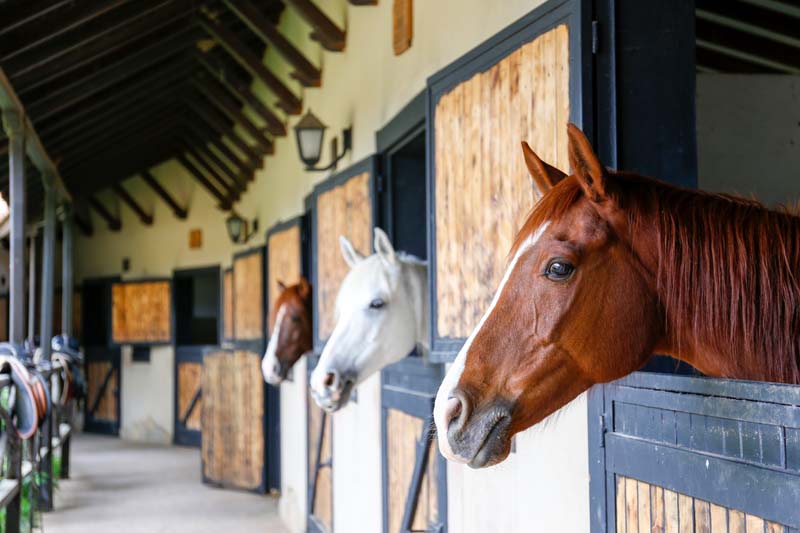
Dutch doors — split horizontally so the top and bottom halves operate independently — are the workhorses of horse barns and poultry operations. They allow ventilation and animal contact while keeping animals contained. In a farrowing house or calf hutch application, the ability to open just the top for observation and feeding without allowing escape is genuinely invaluable.
Construction quality matters enormously with Dutch doors. The split mechanism must be tight enough to prevent drafts when closed but easy enough to operate with one hand when you’ve got a feed bucket in the other.
Bi-Fold and Hydraulic Bi-Fold Doors
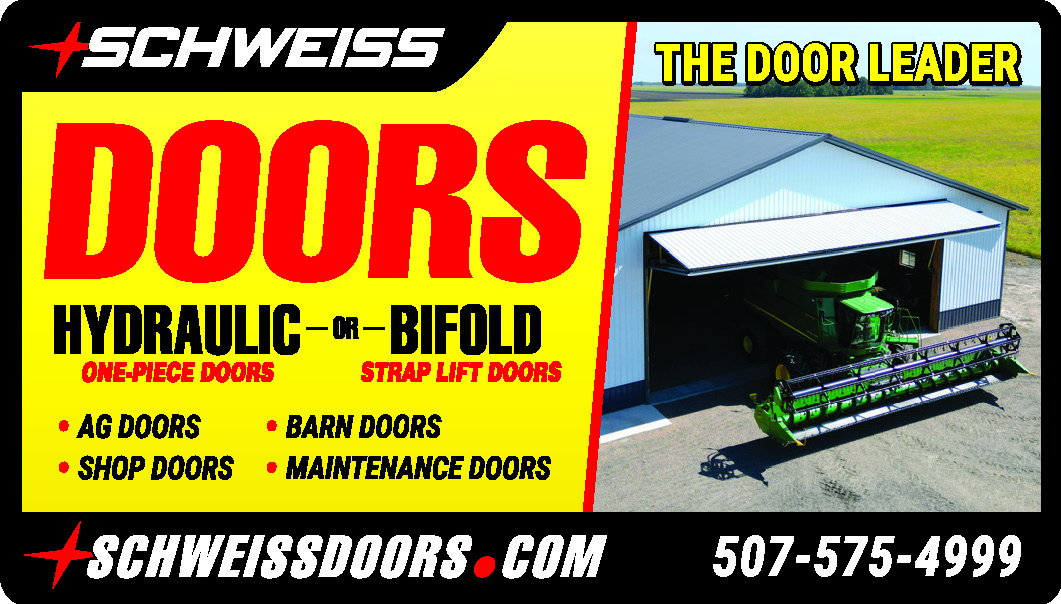
When the priority is maximum clear opening for wide or tall equipment, bi-fold doors deliver. A bi-fold system can open a 40-foot or wider bay to full width in seconds, which matters when a planter is coming in from the field and a storm is rolling in from the west.
Hydraulic bi-folds, once found mostly in commercial aviation hangars, have made significant inroads in high-end agricultural applications. They are expensive and require more maintenance than passive sliding systems, but for large commodity operations or custom farming businesses with significant equipment investments, the operational convenience justifies the cost.
Material Selection:
What Holds Up in the Field
Material choice is as important as door type in agricultural applications. The three primary options each have genuine tradeoffs:
Steel
Galvanized and painted steel is the dominant material in modern agricultural door construction for good reason: it’s strong, relatively affordable, and available in a wide range of gauges. For exterior sliding doors, 16- or 18-gauge is common. For overhead sectionals, look for doors with a galvanized steel skin, thermal break in the panel, and polyurethane foam core for insulated applications.
The primary enemy of steel in agricultural settings is the combination of moisture and manure gases. Hydrogen sulfide and ammonia accelerate corrosion on cut edges and scratched surfaces. Specify cut-edge protection, and plan for touch-up painting as part of the annual maintenance routine.
Wood
Rough-sawn lumber doors — often pine, fir, or cedar — remain popular for sliding barn doors, particularly in regions with established timber resources and in operations where aesthetics matter. A well-built wood door on quality hardware can outlast a cheap steel door by decades.
Wood does require more maintenance: painting or sealing every few years, swelling and shrinking with seasonal moisture changes, and eventual replacement of deteriorated boards. Tongue-and-groove construction with a solid Z-brace backing minimizes racking and helps the door hold its shape over time.
Fiberglass and Composite
Fiberglass and composite doors are gaining traction in high-humidity and high-corrosion environments — particularly in poultry and hog operations where chemical wash-downs are routine. They don’t rust, rot, or absorb moisture, and their surfaces resist the caustic cleaning agents used in biosecurity protocols.
The knock on fiberglass has traditionally been cost and impact resistance. A steel door takes a hit from a loader bucket and dents. A fiberglass door may crack. For high-traffic equipment areas, steel typically remains the better choice. For animal housing and wash-down environments, fiberglass deserves serious consideration.
Hardware: Where Agricultural Doors Succeed or Fail
The best door panel in the world will under perform if it’s hung on inadequate hardware. In agricultural applications, hardware selection deserves the same attention as the door itself.
Roller carriages: Specify double-wheeled carriages rated for the door weight, with sealed bearings. Open bearings pack with chaff and grit within a season.
Track: Heavy-duty galvanized track in 8- or 10-gauge is the minimum for exterior sliding applications. Lighter track sags between mounting points under a heavy door.
Latches and locks: Simple barrel bolts fail quickly in farm environments. Specify heavy-duty padlock hasps or locking latches rated for outdoor use with livestock-resistant security.
Bottom seals: Critical for keeping rodents, cold air, and water out. Brush seals hold up better than rubber in high-debris environments and don’t freeze to the threshold.
Spring counterbalances: For manually operated overhead doors, springs must be properly tensioned for the door weight. An improperly balanced door becomes dangerous and puts excessive wear on opener motors
Key Questions Before You Spec the Door
Before finalizing door specifications on any agricultural project, builders should walk through these questions with the owner:
What is the largest piece of equipment that needs to pass through this opening — now and in 10 years? Spec for growth.
Will the building be heated? If so, an insulated door and thermal break framing pays back quickly in fuel savings.
What animals will be in this space? Animal curiosity and strength can destroy hardware not designed for the application.
What is the cleaning protocol? Wet environments demand different materials and hardware than dry storage.
Is power reliable at this location? If not, automatic openers need careful consideration and manual backup.
What is the prevailing wind direction? A door that opens into the wind requires heavier hardware and positive latching.
How many cycles per day will this door see? A door opened twice a day has very different hardware requirements than one opened 30 times.
Final Thoughts
Agricultural door selection is ultimately a conversation between the builder, the owner, and the realities of how a building will actually be used. Generic specifications copied from one project to another are a recipe for callbacks, frustrated clients, and doors that don’t last.
The good news is that the agricultural door market has matured significantly in recent decades. Heavy-duty hardware, well-engineered steel panels, and specialty products for poultry, livestock, and equipment applications are all readily available from suppliers who understand farming. The builder’s job is to ask the right questions, match the product to the application, and install it correctly the first time.
Get that right, and a barn door can outlast the building it’s hung in.
Resources
- I-Beam Doors https://ibeamdoor.com/
- Haas Doors https://www.haasdoor.com/